
How to Build a Campaign Production Timeline That Holds
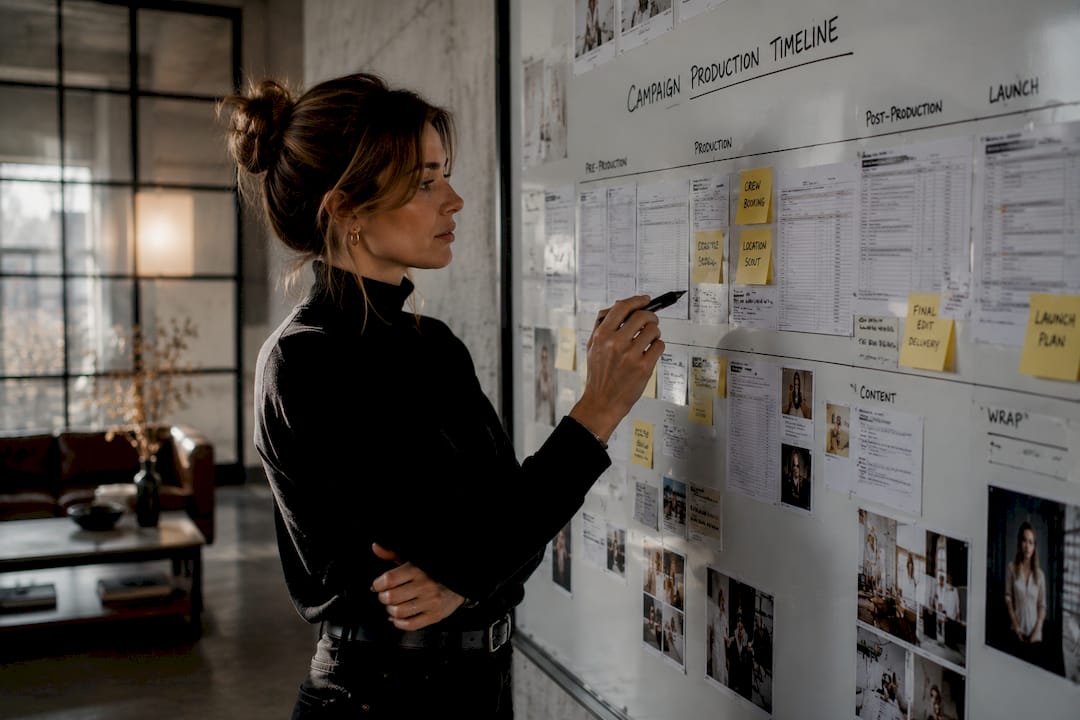
Plan a campaign production timeline the way a stylist plans a fitting: backward from the moment it has to be finished. For an agency-managed fashion, beauty, or commercial campaign, budget 4–8 weeks from signed brief to final delivered asset. Compressed sprints run 2–3 weeks with premium fees attached. Extended campaigns with multiple locations or international casting stretch past 12 weeks.
Production sits at the end of that arc on purpose. Casting has to close, samples have to arrive, and creative has to be approved before anyone calls “action.” Every week lost upstream gets absorbed downstream, usually on someone’s shoot day.
Three moves start the clock correctly:
-
Set the launch date first, then count backward to today.
-
Define deliverable counts, aspect ratios, and usage rights before contacting talent.
-
Confirm sample or wardrobe readiness against the shoot date, not the brief date.
Quick math: if hero images need retouch sign-off two weeks before launch, and retouching needs 5–7 days once selects are locked, your shoot day cannot land later than three weeks out. Work back from there.
Key Takeaways
A campaign production timeline succeeds when casting locks early, briefs are signed before contact with talent, and hero frames are approved before full-set retouching begins.
| Point | Details |
|---|---|
| Set your baseline | Plan 4–8 weeks for a standard agency-managed campaign, 2–3 weeks compressed, 12+ weeks for extended or multi-market productions. |
| Lock the brief early | Send a two-page brief at least seven days before the shoot to prevent last-minute casting and sample decisions. |
| Approve hero frames first | Signing off on 3 hero images before full-set retouching can save 5–7 days in post-production. |
| Build in real buffers | Hold at least one reserve day for weather or reshoots, and a full buffer day per location on multi-site shoots. |
| Work with a managed talent partner | ANT Management coordinates casting, fittings, and on-set talent as one workflow, reducing the rebooking risk that most often derails a launch date. |
Table of Contents
-
What Does a Full Campaign Production Timeline Look Like Stage by Stage?
-
How Should You Structure the Shoot-Day Schedule and Call Sheet?
What Does a Full Campaign Production Timeline Look Like Stage by Stage?
A campaign moves through six stages: brief and strategy, creative development, pre-production, production, post-production, and delivery. Each stage has its own rhythm, and skipping ahead on one almost always means paying for it on another.
-
Brief and strategy (3–5 days). The commercial goal, deliverables, and campaign window get locked here. Nothing moves forward until this is signed.
-
Creative development (1 week). Mood boards, casting direction, and location concepts get approved. This is where the vision gets resolved, not on set.
-
Pre-production (1–2 weeks). Casting closes, fittings happen, crew books, permits get filed.
-
Production (1–3 shoot days). The shortest stage on the calendar and the one everything else protects.
-
Post-production (2–3 weeks). Selects, retouching, grading, and formatting for each channel.
-
Delivery (2–5 days). Final file handoff, archiving, and usage documentation.
For a standard campaign, that’s roughly 5–6 weeks. A compressed timeline (think a last-minute product drop) folds creative development into the brief stage and runs a rush post-production track, landing at 2–3 weeks. An extended campaign, especially one with international talent or multiple locations, adds 2–4 weeks of lead time purely for logistics and travel.
Rolling calendars help here more than most brands realize. Keeping a 6–12 month campaign calendar aligned to your trading or product launch dates means production planning starts before anyone feels the pressure of a deadline. Build buffers wherever a decision depends on a third party: a sample shipment, a permit office, a model’s other bookings. Anywhere control leaves your hands, add days, not hours.
What Belongs in the Pre-Production Checklist?
Pre-production is where a production schedule template earns its keep, because this is the stage where unresolved decisions turn into shoot-day chaos. A tight brief, per industry templates, runs two pages or less and covers six items: commercial goal, deliverables with usage rights, brand references, casting and styling direction, production constraints, and success criteria.
Lock these before anyone touches a camera:
-
Deliverable counts, aspect ratios, and usage rights across every channel (paid social, print, in-store).
-
The campaign window: when assets go live and how long the usage license covers.
-
Sample availability dates, confirmed against the shoot date, not the order date.
-
Mandated locations or studios, especially if a brand has contractual exclusivity with a venue.
-
Agency-sourced talent clauses, including any non-negotiable casting requirements.
-
Casting shortlist (4–6 models) with comp cards and a scheduled fit test before the shoot, which cuts down on reshoots caused by wardrobe surprises.
-
Crew confirmations: photographer, stylist, hair and makeup, digital tech, plus insurance, transport, and any location permits.
The rule worth repeating to every stakeholder: if a decision costs more than 30 minutes of shoot time to undo, it belongs in the brief, not in a group chat the night before.
Pro Tip: Send the brief at least seven days before the shoot. A brief delivered any later than that compresses every casting and sample decision into a window too small to absorb surprises.
How Should You Structure the Shoot-Day Schedule and Call Sheet?
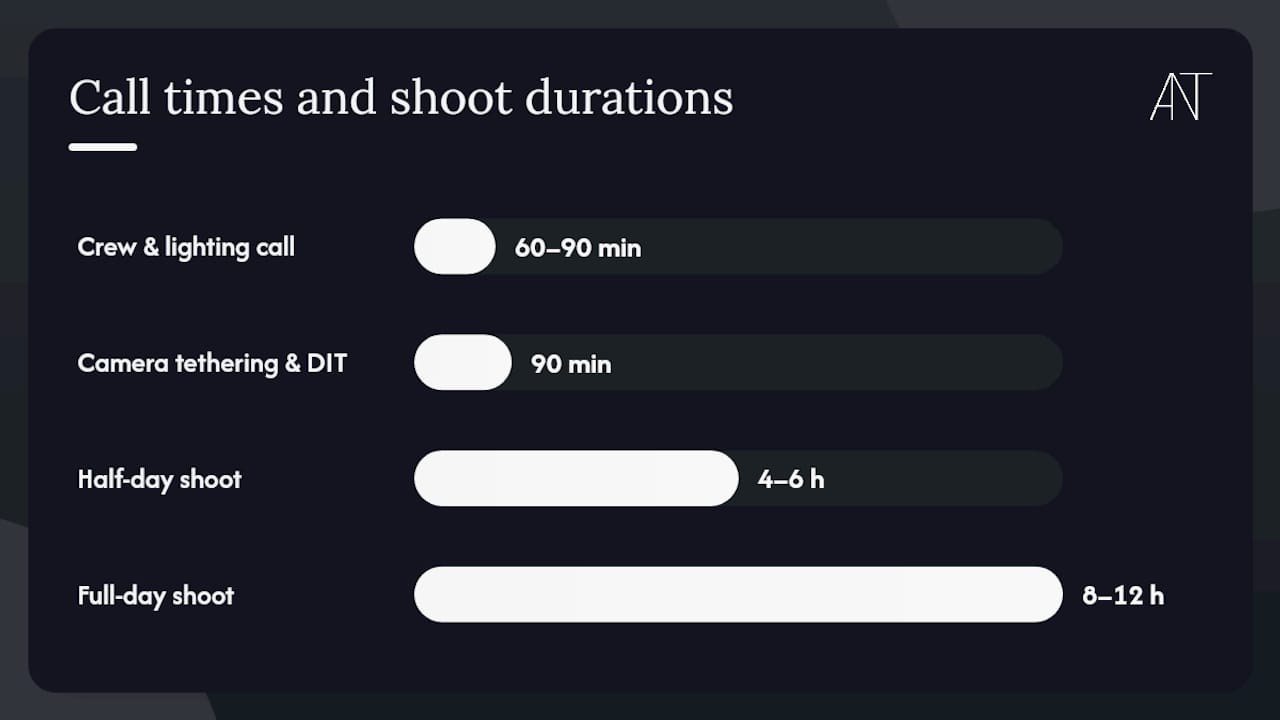
The call sheet is the single document that keeps a shoot day from unraveling, and every producer worth booking treats it that way. Staggered arrival times aren’t a scheduling quirk. They tell you exactly how technically demanding the day is: lighting crew and a digital imaging technician (DIT) arriving 90 minutes before talent signals a heavier tether-and-test setup than a quick beauty shoot with natural light.
-
Crew and lighting call, 60 to 90 minutes before talent. Camera tethering, DIT checks, and lighting builds happen here, out of the pressure of billable model time.
-
Talent arrival and hair/makeup, staggered by look complexity. A model with three looks arrives earlier than one with a single hero shot.
-
Priority setups first. Lock the hero and commercial-critical frames in the first third of the day, while energy and light are both at their best.
-
Secondary and detail shots, midday through afternoon. Use this window for behind-the-scenes content or alternate angles once the priority list is banked.
-
Wrap and confirm coverage. Cross-check the shot list against what’s actually in the camera before talent is released.
A half-day shoot (4–6 hours) usually covers one look and a tight priority list. A full day (8–12 hours) supports multiple looks or locations within one site. Multi-day productions sequence by location or talent availability, front-loading the most weather-dependent or logistically fragile days first.
Pro Tip: Use any lull between setups productively. Confirm the next day’s call sheet, review selects from the morning, or walk the next location instead of letting the crew idle.
How Long Should Post-Production and Approvals Take?
Post-production typically runs 2–3 weeks, and most of that time gets spent waiting on approvals, not editing. Selects usually take 2–3 days, retouching 5–10 business days depending on volume, color grading a few days more, and channel-specific formatting another 2–3 days before final delivery.
The single fastest way to compress this stage without raising revision risk: approve three hero frames before releasing the full set. That sequencing alone can save 5–7 days in retouching, because the retoucher isn’t guessing at brand preferences across dozens of images at once.
-
Selects: photographer and creative director narrow the shot list to finalists within 48–72 hours of the shoot.
-
Hero frame approval: brand rep signs off on 2–3 lead images before full-set retouching starts.
-
Retouching and grading: full set goes through color and skin work once the hero look is locked.
-
Formatting and delivery: exports get sized and compressed per channel spec (social crops, print resolution, web optimization), then archived with usage terms attached.
Keep raw files and a retouch history archived separately from final delivered assets. It’s the fastest way to resolve a usage dispute or a reformatting request six months after launch.
Who Owns Which Decisions During Production?
Clear authority prevents the kind of on-set stalling that eats entire mornings. The producer owns logistics: schedule, crew, transport, permits. The creative director owns the visual outcome. The photographer owns execution of that vision through camera and lighting choices. The stylist owns garment presentation and fit. The brand rep owns commercial sign-off, the final word on whether an image meets the brief.
Two documents carry that authority in writing: the brief, which defines what “approved” means before the shoot starts, and the call sheet, which assigns who’s on set and when. Small productions can run with a producer doubling as stylist liaison; large campaigns need each role staffed separately, with sign-off logged in writing, not verbally on set, since verbal approvals are the first thing disputed during a revision disagreement.
What Does a Sample Campaign Timeline Template Look Like?
Here’s a milestone list you can paste directly into a project management tool or shared calendar:
-
Week 1: Brief sign-off and casting shortlist finalized.
-
Week 2: Casting locked, fit tests scheduled, samples ordered.
-
Week 3: Samples arrive, crew and permits confirmed, call sheet drafted.
-
Week 4: Shoot day(s) executed.
-
Week 5: Selects delivered, hero frames approved.
-
Week 6: Full retouch delivered, channel formatting complete, launch.
A compressed version collapses weeks 1 and 2 into a single sprint and pays rush fees on retouching. An extended version adds 2–4 weeks for international casting, multi-location travel, or a second shoot day held in reserve for reshoots. Paying more for expedited retouching or premium talent availability is almost always the fastest way to buy back a week you’ve lost upstream.
How Do You Handle Delays, Weather, and Talent Availability?
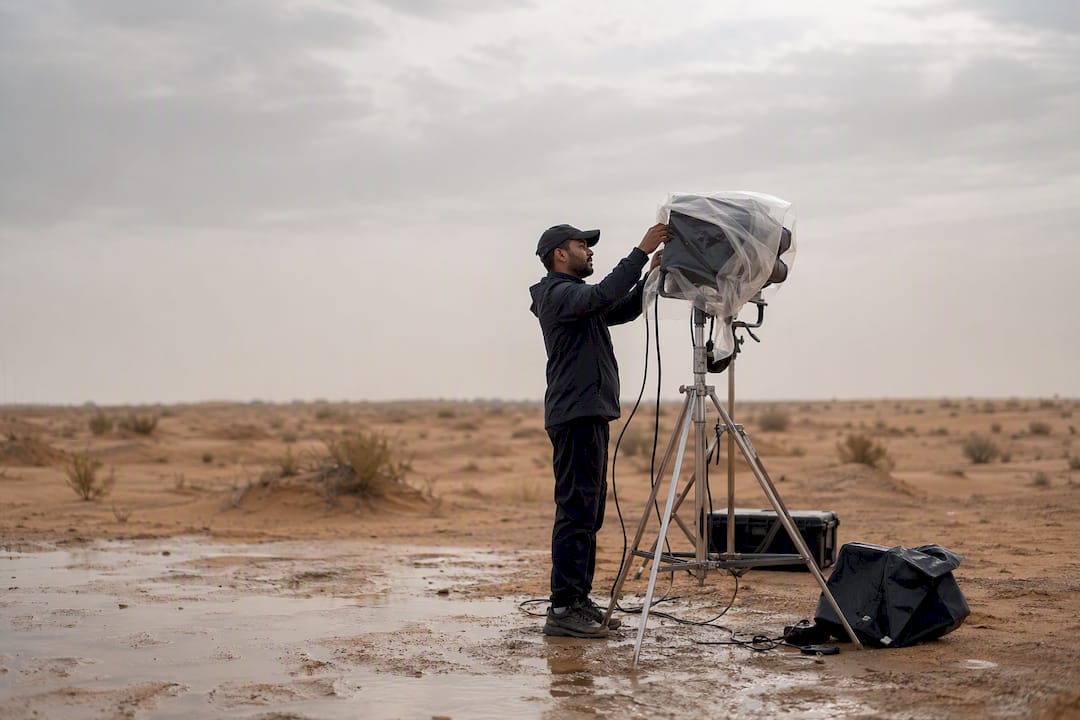
Every campaign production timeline needs a built-in shock absorber, because the two most common disruptions, weather and talent availability, are also the two hardest to fully control. Outdoor shoots need a rain date held in reserve, ideally within 48–72 hours of the primary date, so crew and location bookings don’t have to be rebuilt from scratch.
Talent availability risk gets managed earlier, at the casting stage. A shortlist of 4–6 models with confirmed fit tests, rather than a single locked choice, means a last-minute conflict doesn’t collapse the shoot date. Agencies that maintain deep rosters across multiple markets can usually offer a same-tier replacement within days rather than restarting casting from zero.
Build contingency into the calendar itself, not just into people’s heads. A standard campaign should hold at least one buffer day between the final shoot day and the first post-production milestone. Extended or multi-location campaigns should hold a full reserve day per location. Permits that depend on municipal approval (street closures, public parks, private estates) deserve their own buffer, since government turnaround times rarely match production urgency.
The instinct to save the buffer day for “if we need it” is the wrong one. If the shoot runs clean, that day becomes early selects or an extra hero-frame review round. If it doesn’t run clean, the entire downstream schedule survives intact instead of collapsing into a scramble that pushes the launch date.
How Should Departments Communicate Across Each Phase?
A campaign fails less often from bad decisions than from good decisions made too late or shared too narrowly. Each phase needs one clear owner responsible for pushing updates outward, rather than every department checking in independently and duplicating the same status question five times a week.
During brief and creative development, the producer and creative director should sync daily until the brief is signed, then drop to a twice-weekly check during pre-production. Casting updates, sample tracking, and permit status all route through the producer, who becomes the single point of contact rather than the brand rep chasing four separate vendors.
On shoot day, the call sheet itself becomes the communication protocol. Everyone works from the same document, same call times, same shot priority list, which eliminates the need for constant verbal check-ins that eat into shoot time.
Post-production communication tightens around approval gates specifically. Selects go to the creative director and brand rep together, not sequentially, so feedback rounds don’t stack on top of each other. A shared, dated feedback thread, whether that’s a project management tool or a simple tracked document, prevents the common failure where two stakeholders give contradictory notes on the same image without seeing each other’s comments.
How Do You Plan Location Logistics, Permits, and Transport?
Location logistics deserve their own line item in pre-production, not an afterthought folded into “crew confirmations.” Permits alone can take anywhere from a few days to several weeks depending on the jurisdiction and the type of location, public street, private estate, government-owned park, so permit applications should go in the moment a location is chosen, not once casting closes.
Transport planning covers three separate needs: crew and equipment movement, talent transport (particularly for international bookings), and wardrobe or sample transport, which often gets overlooked until a rack of garments is stuck in traffic an hour before call time. Multi-location shoots need a transport plan that accounts for setup and strike time at each site, not just driving time between them.
On-site management on the day itself means having one person, usually the producer or a location manager, responsible for permit paperwork on hand, parking and load-in coordination, and any liaison with property owners or municipal officials. A location that looked perfect in a scout photo can still fall apart on shoot day without someone managing foot traffic, noise restrictions, or a landlord who wasn’t told the shoot ran two hours over.
When Should Equipment and Technical Setup Happen?
Lighting tests and tech rehearsals belong earlier in the schedule than most brands assume, sometimes a full day before the shoot itself, especially for setups involving multiple lighting units, motion, or a new studio space. A same-day-only test compresses troubleshooting into the hours you actually need for capturing images.
Camera tethering and DIT setup should be confirmed as milestones on the pre-production checklist, not just crew line items on the call sheet. If the call sheet lists a DIT and a first photo assistant, that’s a signal the shoot involves real technical complexity, and the crew call time should be staggered earlier to match.
For location shoots, a tech scout, walking the site with the photographer and lighting team before the shoot day, catches problems a location photo never reveals: insufficient power access, unexpected shadow patterns at the actual shoot time, or a ceiling too low for a planned rig. Building that scout into the pre-production week costs a day but often saves an entire reshoot.
How Does the Timeline Connect to Budget and Resources?
Every week saved or lost on the timeline has a budget consequence, and treating the schedule and the budget as two separate documents is where most overruns start. Rush casting costs more because agencies prioritize based on urgency and fee. Rush retouching costs more per image. Extra shoot days cost crew day rates, location fees, and often overtime.
Resource allocation checks should happen at each stage gate, not just once at kickoff. Before casting locks, confirm the casting budget matches the talent tier the brief calls for. Before the shoot day, confirm crew day rates and equipment rental costs match what was quoted during pre-production, since scope creep (an extra look, an additional location) tends to sneak in during creative development. Before retouching starts, confirm the post-production budget accounts for the actual select count, not the estimate from the original brief.
The trade-off worth naming plainly: money buys back time. A brand that needs to shave two weeks off a standard timeline can almost always do it, by paying premium casting fees for faster availability, booking rush retouching, or adding a second edit bay to run selects and grading in parallel. Timeline compression is a budget conversation as much as a scheduling one.
How Long Should the Final Review and Revision Cycle Take?
Final review should be structured around gates, not open-ended feedback windows that invite endless rounds of notes. A standard revision cycle allows one full round of notes on the hero frames, a second smaller round if needed, and a hard cutoff before the full-set retouch begins.
Client feedback turnaround typically runs 24–48 hours per round for hero frame approval, since that decision is small enough (2–3 images) to move fast. Full-set feedback after retouching needs a longer window, often 3–5 business days, because reviewing dozens of finished assets across formats takes more attention than reviewing a handful of proofs.
The gate that protects the launch date is the one separating hero frame approval from full-set release. Once hero frames are signed off, the visual direction for the entire campaign is locked, which means full-set revisions should be limited to consistency fixes (color matching, cropping, minor retouch notes) rather than reopening creative decisions. A brand rep who tries to relitigate styling choices at the full-set stage is the single most common cause of a blown launch date, and building that boundary into the approval workflow from the start heads it off before it happens.
The ANT Management Perspective on Holding the Timeline
Timelines don’t break from bad planning. They break from casting friction, absorbing days no one budgeted for. A network wide enough to shortlist the right models fast, backed by a program like ANT Camp training talent to arrive fitting-ready, removes the single most common source of schedule drag before it starts.
— ANT
Book Production Support That Protects Your Launch Date
Everything in this timeline assumes casting closes on schedule, samples fit the first time, and the crew on set knows exactly what “approved” looks like. That’s the part most brands underestimate, and it’s the exact gap ANT Management exists to close.
As a Dubai-based agency with reach across Europe, the US, and Asia, ANT Management handles casting, fittings, and on-set talent coordination as one managed workflow instead of a string of separate vendor relationships. Every model comes through a rigorous curation process, and many are developed through ANT Camp, the agency’s training program, which means less time lost to reshoots caused by an unprepared booking. One project owner coordinates talent, timeline, and sign-off from brief to final delivery, so your production schedule stays intact instead of drifting week by week.
If your next campaign is on the calendar, get a production quote from ANT Management and lock your casting timeline before the shoot date closes in.