
Talent Shortlist Criteria: How to Choose Who Makes the Cut

A strong talent shortlist is decided before a single portfolio is opened. Define the role in writing, split your criteria into essential and desirable, score every candidate against the same scorecard, and verify availability and safety credentials before anyone reaches the client. For most briefs, three to five names per role is the right number. What follows is the full method, adapted from hiring practice to the realities of booking models, hostesses, photographers, stylists, stunt performers and crew.
Casting is often described as instinct, and instinct has its place: the quality of a face in motion, the rhythm of a walk, the ease of someone who understands a lens. But instinct unstructured drifts toward whoever entered the room most recently. A shortlist built on criteria keeps that instinct honest and makes the final choice defensible to a creative director, a procurement team or a client who was not there.
TL;DR
- Write the role before you look at faces: deliverables, usage, location, dates, and the two or three qualities the brief cannot live without.
- Separate essential criteria (pass or fail) from desirable ones (scored), and weight the scored ones before reviewing anyone.
- Criteria differ by role: a hostess, a stylist and a stunt coordinator are judged on different proof, so use a role-specific scorecard.
- Verify availability, credentials and, for children and stunts, safeguarding and safety records before the shortlist is final.
- Keep it to three to five candidates per role, and let a diverse, trained panel score independently.
Table of Contents
- What a talent shortlist is for
- Start with the brief, not the portfolio
- Essential versus desirable: the two-column rule
- Criteria by role
- Build a weighted scorecard
- Assess portfolios, experience and professionalism consistently
- Safety-critical roles: stunts and child talent
- Keep the shortlist diverse, fair and free of bias
- How many people belong on the shortlist
- The pre-finalization checklist
- Our perspective
- Two ways to put the criteria to work
- FAQ
- Sources
What a talent shortlist is for
A shortlist is a decision tool, not a gallery. Its job is to reduce a wide field to the few people who can genuinely deliver the brief, so that the final choice is a matter of chemistry and creative nuance rather than basic eligibility.
That distinction matters because the two decisions use different muscles. Eligibility is objective: is the person available on the shoot dates, comfortable with the usage, experienced in the format, properly documented? Creative fit is subjective and rightly so. A good shortlist settles the first question completely so the second can be asked with full attention.
Guidance on fair selection from the professional recruitment world makes the same point in its own vocabulary: selection criteria should be relevant, clear, fair and objective. Those four words translate directly to casting. Relevant to the brief, clear enough that two people would score the same way, fair to every candidate, and objective wherever objectivity is possible.

Start with the brief, not the portfolio
Every criterion should trace back to something written in the brief. If you cannot point to the line that justifies a requirement, it is a preference, and preferences belong in the desirable column.
Before reviewing anyone, fix these elements in one page:
- The deliverable: campaign imagery, a runway show, a film role, a three-day activation, a product demonstration.
- The usage: channels, territories and duration, because they change which talent are available and at what level.
- The setting: studio, desert location, hotel ballroom, exhibition floor, set with action sequences.
- The logistics: dates, call times, travel, language requirements, dress or grooming standards.
- The creative intent: the mood, the movement, the personality the work must carry.
If the brief is still loose, tighten it first. Our guides to writing a casting brief and to the one-page model brief template show how to compress all of this into a document that talent and agencies can act on at once. The same discipline applies to performers on the other side of the process: a call for performers application packet shows how much cleaner a submission becomes when the role is defined in specific terms before anyone applies.
Essential versus desirable: the two-column rule
The most common shortlisting error is treating every criterion as equal. A brief that lists fifteen qualities with no hierarchy produces a shortlist of compromises, because nobody meets all fifteen and the loudest voice in the room decides which gaps are acceptable.
Split the list instead:
- Essential criteria are pass or fail. Miss one and the candidate is out, regardless of how striking the portfolio is. Typical examples: available on all shoot dates, legally able to work on the project, fluent in the required language, holds the required credential for the role.
- Desirable criteria are scored. They distinguish good from exceptional: category experience, a particular look or physicality, comfort on camera or in front of crowds, social following for influencer work.
Keep essentials few, ideally three to six. Every essential criterion removes people from the field, and removing someone for a reason that was not truly necessary is how a brief loses its best candidate.
Criteria by role
The same scorecard cannot judge a runway model and a stunt coordinator. Below is a working set of criteria per role, which you can adapt to your brief.
| Role | Essential criteria | Desirable criteria (scored) |
|---|---|---|
| Fashion and commercial models | Availability on shoot dates, measurements or sizing that match the garments, usage rights agreed | Editorial or category experience, range of expression, comfort with movement direction, polish on set |
| Kids and teen models | Guardian consent, chaperone arrangements, schedule within permitted working hours | Ease with direction, ability to hold focus, previous set experience, sibling or family casting needs |
| Hostesses and promoters | Language fluency, grooming and uniform fit, availability for full event hours | Brand-ambassador presence, product knowledge speed, crowd handling, previous activation experience |
| Influencers | Audience match to the campaign market, content format fit, disclosure compliance | Engagement quality, content style, past brand partnerships, turnaround reliability |
| Photographers and videographers | Equipment suited to the format, insurance or permits where required, delivery timeline | Visual language that matches the brief, lighting and direction skills, editing capacity |
| Stylists | Access to the required wardrobe sources, availability for prep and shoot days | Editorial point of view, fit and alteration skill, calm under tight turnarounds |
| Stunt performers and coordinators | Verified experience for the scripted action, safety training, risk assessment practice | Previous work on comparable sequences, collaboration with directors and camera teams |
Two patterns are worth noticing. For presence-led roles such as hostesses and models, the desirable column carries most of the weight, so scoring discipline matters. For safety-led roles, the essential column does the heavy lifting and the creative judgment comes second.
Build a weighted scorecard
A scorecard converts a room full of opinions into a comparable number, without pretending that numbers replace judgment.
- List the desirable criteria, no more than six.
- Assign weights that add up to 100. A product launch featuring a demonstration might weight on-camera ease at 30, category experience at 25, look and fit at 25, and flexibility at 20.
- Score each criterion from 1 to 5 with a one-line description of what a 1, a 3 and a 5 look like. This is what makes two reviewers score alike.
- Multiply, total, and rank. Then discuss. The ranking opens the conversation; it does not end it.
Fix the weights before you open the first portfolio. Weights chosen afterward tend to rationalize a favorite. The same warning appears in casting commentary: define the role precisely first, so the criteria cannot quietly bend toward whoever impressed you earliest.
Assess portfolios, experience and professionalism consistently
Portfolios show a ceiling. They rarely show a floor. A single exceptional image can hide an inconsistent day on set, so layer your evidence.
- Portfolio: look for range and relevance to the brief, not volume. Ask for work in a comparable format, lighting or setting.
- Moving image: for anything involving movement, speech or presence, a short video clip or a recent set reel says more than a stills book.
- Experience: ask for two or three comparable jobs, with the type of client and the scope of the day.
- Professionalism: punctuality, speed of reply, clarity in confirming details and whether they arrive prepared. These are visible during the booking process itself, before the shoot.
- References: one short reference from a recent producer settles most doubts.
If you book through an agency, much of this is handled in the vetting stage, which is the point of using one. On the ANT Talent App, profiles are verified and clients can book vetted talent directly, so the first screening is already done before you apply your own criteria.
Safety-critical roles: stunts and child talent
Where physical risk or safeguarding is involved, credentials move from the desirable column to the essential one and the shortlist is not final until they are checked.
Stunt coordinators and performers
Ask for evidence, not assurances. In the United States, the SAG-AFTRA eligibility process requires 500 eligible working days to meet the minimum general standards for presenting as a stunt coordinator. Even where your production sits outside that system, the benchmark is a useful reference point for how much real-world experience the industry considers a baseline.
Beyond hours, check that the person has handled sequences comparable to your script, can produce a risk assessment, and can name production references. We go deeper in our guides on stunt coordinator requirements and what to verify before booking a stunt coordinator. For productions in the UAE, plan for approvals as well: see the notes on stunt permits and script approval.
Children and teens
Shortlisting child talent is as much about the environment as the child. Confirm guardian consent, working-hour limits under the rules where you are filming, and who the chaperone will be. Industry guidance on sensitive scenes states that a chaperone should always be present when child performers are involved in intimate content, and that chaperones and parents should be brought into pre-production meetings where needed. Treat that as the standard for any scene that asks more of a young performer than standing in the frame.
Keep the shortlist diverse, fair and free of bias
A shortlist reflects the field it was drawn from. If outreach is narrow, the list will be too, however fair the scoring.
The recruitment guidance cited above recommends objective, competency-based criteria, training for panel members, and wider outreach to under-represented groups. It also calls for diverse, trained panels that use a consistent framework. Applied to talent, that means:
- Score from the written criteria, not from impressions of the person.
- Have each reviewer score alone first, then compare.
- Ask for candidates across ages, backgrounds and body types when the brief genuinely allows it, rather than adding them afterward.
- Where language or cultural fluency is truly needed, write it down as a criterion with its reason, as in our note on shortlisting bilingual talent.
For a fuller treatment, see our practical guide to diverse casting for productions.
How many people belong on the shortlist
Three to five per role is the working range for most commercial briefs. Fewer than three removes real choice and leaves the client approving a single recommendation. More than five tends to dilute attention and slow the decision, with each added name arriving without a clear reason to be there.
Adjust by situation:
- Single hero role: five, with a clear first and second choice.
- Ensemble or crowd roles: the shortlist may exceed the headcount by about half, to leave room for availability drops.
- Event staffing: build in reserves. A hostess team of ten benefits from two or three confirmed backups.
- Safety-critical roles: keep it short and fully verified. Two thoroughly checked coordinators beat five unchecked ones.
When the clock is tight, speed and quality are not opposites if the criteria exist. Our model casting process for brands shows how a defined brief shrinks the briefing stage from days to hours.
The pre-finalization checklist
Before a shortlist goes to the decision maker, confirm each of these for every name:
- Availability on all dates, including travel and prep days.
- Usage and exclusivity terms understood and accepted.
- Essential criteria met, with evidence on file.
- Safety or safeguarding checks complete for stunts, children and any hazardous setting.
- Terms understood: overtime, cancellation and payment. ANT’s published booking terms include overtime at 15% per hour and cancellation charges that rise as the date nears, so a client knows the commitments before confirming.
- A named backup for the highest-risk roles.
Then present the shortlist with the scorecard attached. A decision maker who sees why each person is there decides faster and with more confidence.
Our perspective
A shortlist is a piece of creative direction in its own right. It is the first edit of a campaign, made before a camera is switched on, and it decides what the work can become.
At ANT Management we see the same pattern across fashion shoots, film sets, brand activations and stage shows: the briefs that go smoothly are the ones where the role was defined with precision, and where a single agency could answer for everything in front of and behind the camera. That is why we built our service around one source for models, kids, hostesses, influencers, stunt performers and production crew, with a shortlist of available talent returned within an hour during working hours.
Our approach is to treat availability, credentials and fit as one question rather than three. A candidate who looks right but cannot be on set, or who has not been verified for the action in the script, is not a shortlist candidate. We hold talent to that standard so that clients can spend their attention on the creative decision, the rhythm and the movement of the work, instead of on administration.
We book talent for shoots, events and shows in Dubai, across the GCC and anywhere in the world a production takes us.
ANT
Two ways to put the criteria to work
If you want the shortlist built for you, send ANT Management a brief. We return a shortlist of available talent within an hour during working hours, drawn from models, kids, hostesses, promoters, influencers, stylists, photographers, videographers, stunt performers and full production crews. Start from our talent booking page or from creatives and production crew.
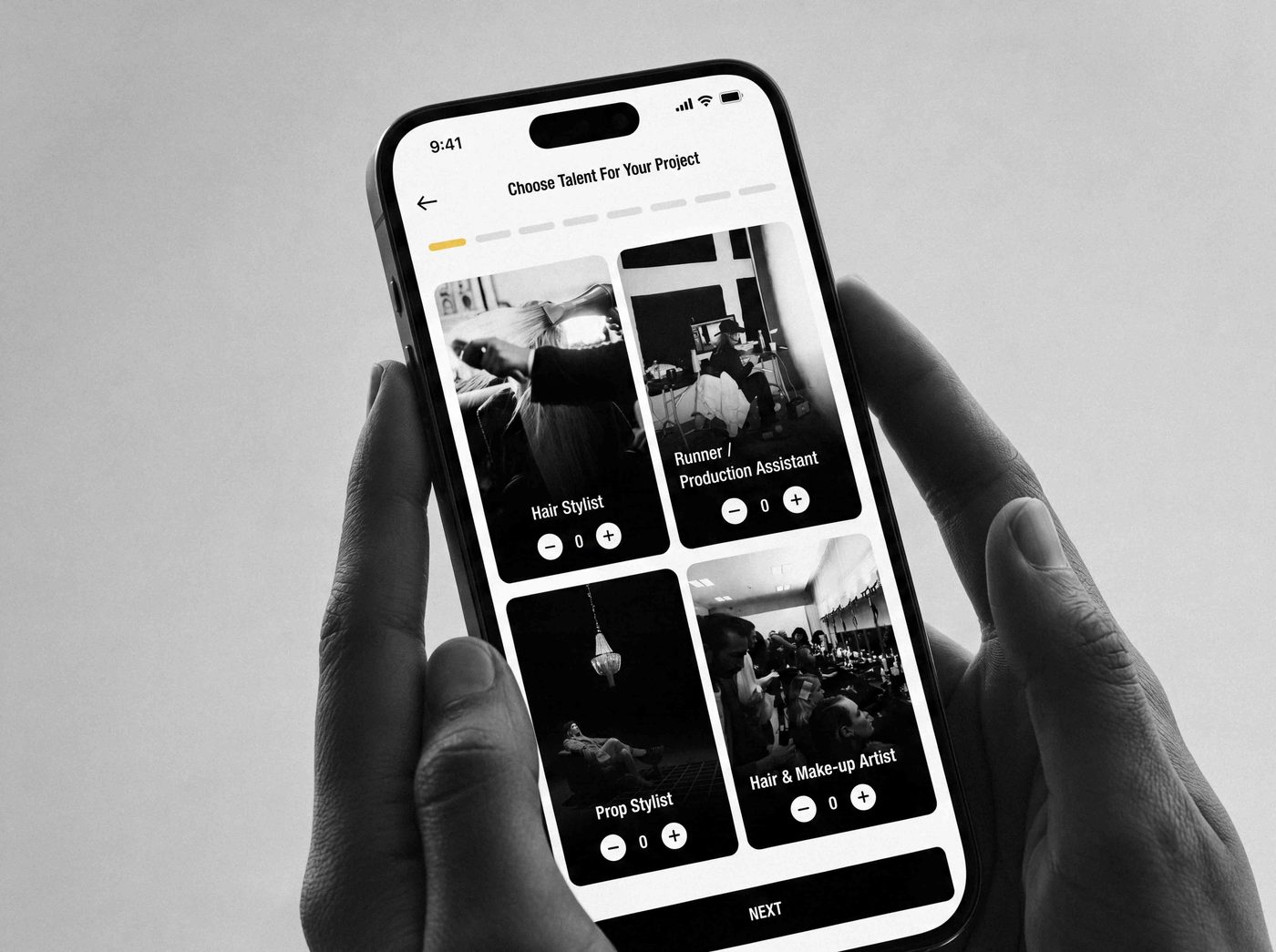
If you would rather apply your own scorecard, the ANT Talent App lets you post a job and book vetted models, actors, influencers and creatives in Dubai in minutes, with escrow-protected payment processed by Stripe. Profiles are verified, coverage extends across the UAE, Kuwait, Qatar and Saudi Arabia, and current prices are shown in the app. Clients who prefer a fully managed service can book through ANT Management directly at info@antmgmt.com.
FAQ
What are the most important criteria for a talent shortlist?
Availability, relevance to the brief, verified experience and professionalism, in that order of elimination. Availability and credentials are pass or fail. Look and creative fit are scored, using weights agreed before reviewing anyone.
How is a talent shortlist different from a casting call?
A casting call gathers applicants; a shortlist narrows them. The call widens the field, and the shortlist applies your criteria to bring it down to a few candidates who can all realistically deliver the job.
Should I weight every criterion equally?
No. Make the essential criteria pass or fail, then give the desirable ones weights that add up to 100, based on what the brief needs most. Set the weights before looking at portfolios so that they cannot be adjusted to favor a particular candidate.
How many candidates should I present to the client?
Three to five per role. That gives a real choice without overloading the decision maker. For safety-critical roles, fewer fully verified candidates are better than a long list of unchecked ones.
What extra checks apply to stunt performers and child talent?
For stunts, ask for evidence of experience with comparable action, risk assessment practice and references, and benchmark coordinators against recognized standards such as the SAG-AFTRA eligibility process. For children, confirm guardian consent, working-hour limits and a chaperone before the shoot day.
Sources
- Fair Recruitment Guide, Recruitment Process Design (UK)
- SAG-AFTRA, Stunt Coordinator Eligibility Process
- Bectu guidance for shooting intimacy, October 2022
- One Application Packet That Lands Calls for Performers in Colorado
Ready to book? Send a booking request to ANT Management, or post a job on the ANT Talent App.
Recommended
Planning a shoot in Dubai?
Prefer to book on your phone?
Post a job on the ANT Talent App and let approved talent come to you.
- Every profile approved by ANT
- Chat with talent in the app
- Payment held until the job is done

Free on iPhone
- 5.0on Google, 200+ reviews
- Since 2022modelling and talent agency
- Worldwideshoots, events and shows anywhere
- Licensed in Dubai. See our licence and booking terms