
Travel Buyouts for Talent: What They Cover and Cost

A travel buyout for talent is a flat sum a brand pays in place of booking and reimbursing a performer’s flights, hotel and meals. The talent receives the money and arranges the journey. The brand gains a fixed line in the budget. The arrangement is clean on paper and surprisingly easy to get wrong: the sum must reflect real travel time, the tax treatment depends on how it is paid, and for influencers a paid-for trip carries a disclosure duty. This guide sets out how to structure one before anyone signs.
TL;DR
-
A travel buyout replaces booked travel with a fixed payment. It works best on short, simple trips; it is a poor fit for long-haul, multi-stop or hazardous-location work.
-
Price travel days separately from shoot days. Negotiators commonly ask for 50% of the daily rate on travel days.
-
A flat allowance with no substantiation can be recharacterized by the IRS as taxable wages, so structure it as an accountable plan.
-
If an influencer’s trip is paid or subsidized by a brand, the FTC expects a clear disclosure in every related post.
-
Write the cancellation, overtime and delay terms into the booking before the buyout figure is agreed.
Table of Contents
What a travel buyout actually is
The phrase has no single legal definition, and that ambiguity is where most disputes begin. In practice, it describes one of three arrangements:
-
A flat travel allowance. The brand pays a lump sum. The talent books flights and lodging independently and keeps any difference.
-
A capped reimbursement. The talent books within a ceiling and submits receipts. This is closer to expense reimbursement than a true buyout.
-
A trip provided in kind. The brand supplies the flight, hotel or both, typically for influencers, in exchange for content.
The third is often confused with the first. It is not the same instrument, and it triggers different obligations, particularly around disclosure. Name which of the three you mean in the first paragraph of the agreement.
It is also distinct from a usage buyout, which pays for the rights to use the imagery. If you are pricing both on one job, our guides on usage rights buyouts and talent usage buyouts for performers explain what each fee should and should not contain. Mixing travel and usage into a single “all-in” figure is a common shortcut that makes both impossible to audit later.
When a buyout makes sense, and when it does not
A flat sum suits a narrow set of jobs. It rewards the talent who travels efficiently and gives the brand certainty. It also transfers risk: if the flight is cancelled, the talent has absorbed the cost, and a talent who arrives exhausted or late is the brand’s problem on set.
| Situation | Buyout | Booked travel |
|---|---|---|
| One-day shoot, short domestic hop | Strong fit | Fine, more admin |
| Multi-city or multi-day location | Weak fit | Preferred |
| Union or guild-covered performers | Check the agreement first | Usually required to follow its terms |
| Stunts or hazardous locations | Avoid | Preferred, with safety and insurance terms |
| Influencer trip with content deliverables | Possible, with disclosure | Common, with disclosure |
| Tight shoot window, no slack for delays | Risky | Preferred, brand controls the schedule |
The pattern is simple: the more the schedule depends on the talent arriving at a precise hour, the more the brand should control the booking.
Pricing the journey: travel days, class and per diem
Travel days are working days of a kind
Brands often treat talent as available the moment the plane lands. Experienced models and creators see it differently. According to art and media law practitioners, the gray area between shoot time and travel time is among the most frequent points of friction in talent contracts, and negotiators often ask for travel day compensation at 50% of the daily rate when transit disrupts professional or personal time.
That figure is a negotiating convention, not a statute. It is a useful starting point, not a rule. Define in writing:
-
What counts as a travel day (departure, arrival, a day with both).
-
Whether a travel day that also includes a fitting or a shoot is billed at the full rate.
-
Whether weather or airline delays extend the paid period.
What the union benchmark looks like
Even if your talent is not covered by a guild agreement, the published terms are a recognized yardstick. SAG-AFTRA’s transportation and location guidance says that on overnight locations, performers are entitled to a daily meal per diem if the producer does not provide meals. The 2025 figures cited there run roughly $14 to $16 for breakfast, $21 to $27 for lunch and $35 to $43 for dinner, up to $92 per day depending on the agreement. The 2025 Commercials Contract memorandum likewise sets a basic $92 per diem meal allowance on locations. Rates are renegotiated, so confirm the current schedule before you quote one.

The same guidance describes travel class: major talent typically flies business or first class, unless a domestic non-stop flight is under 1,000 miles, where elevated coach is acceptable. Baggage fees for equipment are reimbursed by the client. These are the details a buyout figure must absorb. A sum calibrated to a coach seat will not cover a business-class expectation, and the disagreement surfaces at the worst moment, in the booking email.
A worked example
Take a hypothetical two-day shoot in another city, with the talent flying the day before and returning the day after. The daily rate is $2,000.
-
Two shoot days: $4,000.
-
Two travel days at 50%: $2,000.
-
Meal per diem for three overnights at a benchmark of $92: $276.
-
Flights and hotel: either booked by the brand, or priced into the buyout at a quoted market fare.
The figures are illustrative, not a quote, and not what we charge. The point is the structure: the buyout is the sum of lines that can each be defended. A single number with no breakdown is hard to defend when either side questions it.
The tax question brands overlook
Here the buyout most often hurts the brand that thought it was being generous. Tax practitioners warn that if an employer provides a flat travel allowance with no substantiation of expenses, the IRS may recharacterize the payment as taxable wages, reportable on a W-2 and subject to payroll taxes. The same guidance points to the remedy: substantiate actual expenses, or stay within standardized, non-lavish per diem rates.
For models specifically, a CPA firm’s guide to model agency contract tax issues notes that reimbursements for travel paid by the production or agency are generally not taxable to the model when paid under an accountable plan with proper substantiation, while those that fail the test are treated differently.
For federal-style benchmarks, the General Services Administration sets daily rates. One explainer on per diem rules reports a standard continental U.S. rate of $181 a day for fiscal year 2027, split into $113 for lodging and $68 for meals and incidentals, applying from October 1, 2026, to September 30, 2027, with the first and last travel days at 75% of the meals rate under federal rules. Private payers may use that method or another applied consistently.
The practical implications:
-
Ask for receipts, or a simple expense log, even on a flat allowance.
-
Keep the allowance within a recognized benchmark rather than a round, generous number.
-
Separate the fee, which is income, from the travel line, which is reimbursement.
-
Talk to your own accountant. Treatment differs between employees and independent contractors, and between states and countries.
Influencers: a free trip is a material connection
When the trip itself is the compensation, the question stops being tax and becomes disclosure. The FTC’s guidance for influencers states that a relationship with a brand must be clearly disclosed when you endorse a product. The regulation on material connections requires disclosure where a connection might materially affect the weight or credibility of an endorsement and is not reasonably expected by the audience.
The FTC has even used a travel example: a glowing review of a resort means something different if the reviewer knew the hotel had paid for the stay, as the agency’s endorsement Q&A illustrates. And pre-approval does not shield the brand. In its action against a retailer, the FTC complaint against Lord & Taylor concerned paid influencers who posted without disclosing the payment arrangement.
For the brand, this means the contract should oblige the creator to disclose, say how, and let the brand verify. For a wider view of how sponsored travel fits a campaign, these influencer marketing strategies are worth reading alongside the FTC guidance. If you are still deciding whether to send product and trips or to pay creators, our five-point rule for seeding versus paid influencers is built for that call, and the content creator contracts guide covers payment structure.
Clauses to settle before the buyout figure
The number is the last thing to agree. The terms around it decide whether it holds.
Scope and substitution
State exactly what the sum covers: flights, ground transport, lodging, meals, baggage, visas. State what it does not. If the talent travels with an assistant, a stylist or a guardian for a minor, say who pays for them.
Overtime, delays and cancellation
Travel disruption often becomes overtime. Agree in advance how late arrivals, early departures and extended days are charged. For reference, our own booking terms publish fees for overtime, late payment and cancellation: overtime is charged at 15% per hour, cancellation within 48 hours at 50%, cancellation within 24 hours at 100%, and cancellation of confirmed trips at 100%. Late payment carries a 9% monthly fee. Whatever terms you adopt, aligning the buyout with the cancellation schedule prevents the odd case where a brand has paid a travel sum for a trip that no longer exists.
Safety, stunts and hazardous locations
Specialists advise pairing any hazardous stunt or hazardous location clause with explicit transport and safety standards, since standard travel policies rarely cover the specialized insurance that high-risk creative work needs. A flat buyout should never stand in for that cover. If your production involves stunts, the booking should specify insurance and transport arrangements separately.
Territory and term
If the trip produces imagery, the usage terms (duration, territory, media) belong in a separate clause from the travel terms, as deal-negotiation guidance lays out. Travel to a location does not enlarge or reduce the rights you have bought.
Our perspective at ANT
We work across borders every week, and the pattern is consistent: the brands that struggle with travel are rarely those that spend too little. They are the ones that never wrote down what the money was for.
A buyout is attractive because it feels like one decision instead of fifteen. But travel is a chain of small commitments, a flight time, a pickup, a call time, a rest day, and talent is at the center of every link. On a first booking, or any job where the schedule is tight, we prefer the brand to book and the briefing to state every movement. On repeat relationships with experienced talent, a defined allowance with a short breakdown can work well.
The measure of a good arrangement is not the sum. It is whether the performer arrives rested, informed and paid fairly, and whether the brand can explain every line of the invoice to its finance team. That is why we handle talent selection, coordination and briefing as one connected service rather than a booking alone, and why we put the terms in front of clients early. Travel is part of the creative result: a model who has spent fourteen hours in transit appears in the frame as exactly that.
— ANT
Booking talent for a trip with ANT
If your campaign involves travel, we can help you decide between a buyout and booked travel, brief the talent and coordinate the logistics. Start with our booking terms, then browse talent, influencers or stunt performers, or reach the full range from antmgmt.com. Fees are quoted per project; we do not publish talent prices.
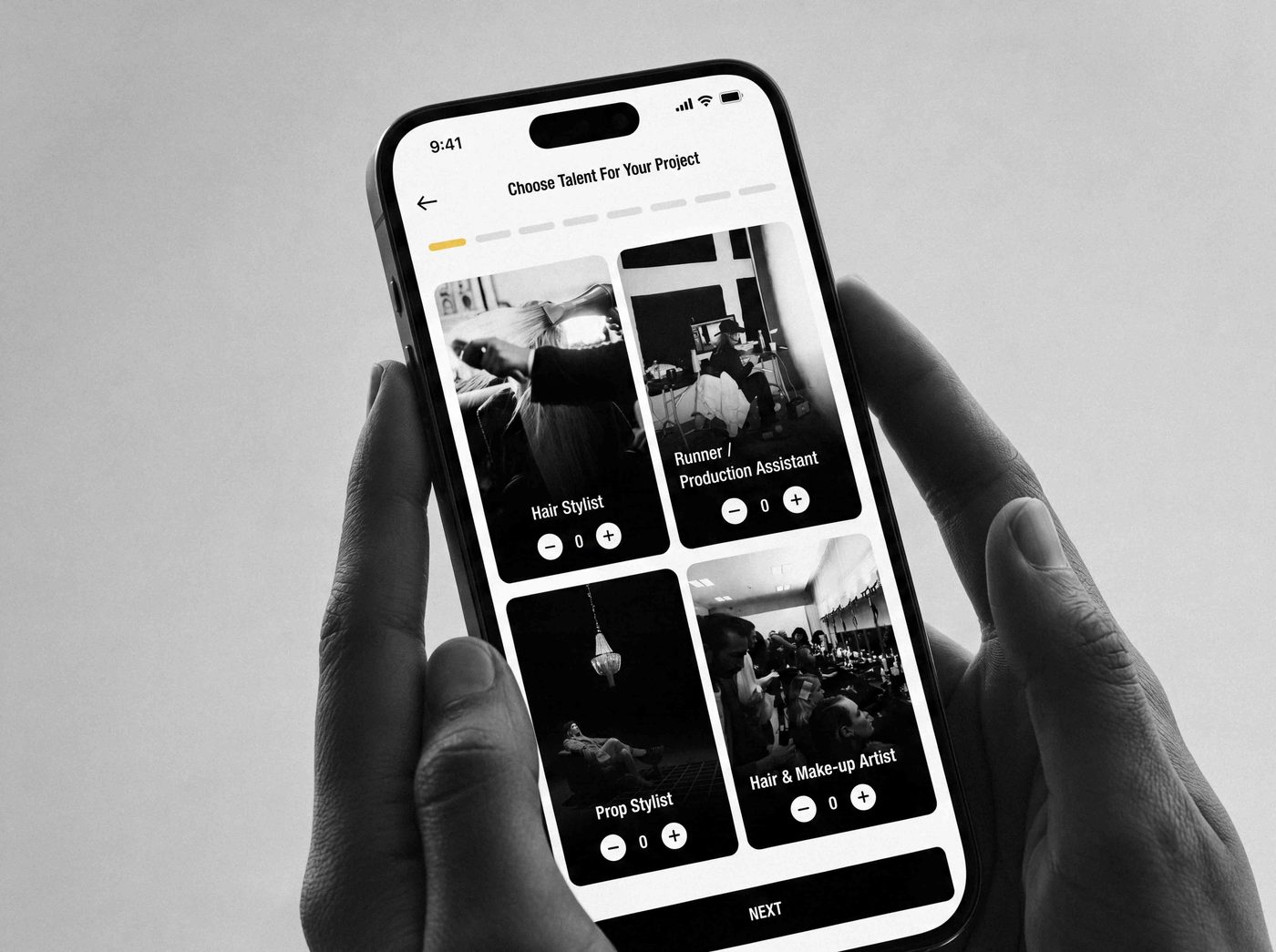
Book talent for your trip in minutes on the ANT Talent App. Post a job and book vetted models, actors, influencers and creatives in Dubai and across the UAE, Kuwait, Qatar and Saudi Arabia. Every booking is paid into an escrow processed by Stripe, so travel and fees are settled securely inside the app. Post your first job on the ANT Talent App. Prefer a managed service? Email info@antmgmt.com and our team will handle the booking and travel for you.
New to the process? Our model booking brief template shows what to include so travel details are settled from the first message, and the on-set etiquette checklist helps day one run smoothly after the journey.
A short checklist before you sign
-
Name the arrangement: allowance, capped reimbursement or in-kind trip.
-
Define travel days and their rate.
-
Set class of travel and who pays for companions.
-
Choose a per diem benchmark and confirm it is current.
-
Require substantiation or use a standardized rate for tax purposes.
-
Add disclosure obligations for any influencer receiving a paid trip.
-
Align cancellation and overtime terms with the travel sum.
-
Keep usage rights in a separate clause.
-
Review with your accountant and, for union talent, the relevant agreement.
FAQ
What is it called when a company gives you money for a trip?
It depends on the structure. A fixed sum without receipts is typically called a travel allowance or flat buyout, while repayment of receipted costs is a reimbursement. A per diem is a daily allowance for meals and incidentals. The label matters because the tax treatment differs.
Is a travel buyout taxable for the talent?
It can be. A flat payment without substantiation risks being treated as wages, while expenses reimbursed under an accountable plan generally are not. Rules vary by classification and jurisdiction, so confirm with a tax professional before paying.
How much should we pay talent for travel days?
There is no universal figure. A common negotiating position is 50% of the daily rate for days spent in transit, and union agreements set their own terms. Agree the definition of a travel day in writing.
Do influencers have to disclose a sponsored trip?
Yes. The FTC says a relationship with a brand must be clearly disclosed when endorsing a product, and a brand-provided trip is such a connection. Build the disclosure requirement into the contract.
Should a buyout cover stunt or hazardous work?
No. Transport, safety and insurance for hazardous work should be specified on their own, because standard travel terms rarely cover them. Discuss these with your producer and insurer.
Sources
Recommended
Planning a shoot in Dubai?
Prefer to book on your phone?
Post a job on the ANT Talent App and let approved talent come to you.
- Every profile approved by ANT
- Chat with talent in the app
- Payment held until the job is done

Free on iPhone
- 5.0on Google, 200+ reviews
- Since 2022modelling and talent agency
- Worldwideshoots, events and shows anywhere
- Licensed in Dubai. See our licence and booking terms