
Beat 25 Business Day Delays: Dubai Shooting Permits for Filmmakers

Yes, commercial shoots in Dubai require a permit from the Dubai Film and TV Commission, and the process begins with script approval before any camera rolls. Most scripted or commercial productions need written clearance from the Dubai Film and TV Commission before filming, and airports, financial districts, and private landmarks often require their own supplemental approvals layered on top.
TL;DR:
- Permits from the Dubai Film and TV Commission are mandatory for all commercial shoots, with script approval potentially taking up to 25 business days before permits are processed.
- International production companies must work through a registered local partner to submit permits, and no direct applications are typically accepted from foreign entities.
- Airport filming, especially airside requests, can require an additional 15 working days for clearance, with separate permits needed for land and airspace restrictions.
- Applying for locations like Dubai International or private sites requires multiple layers of approval, often involving separate security passes, permissions, and property owner consent.
- Shooting without a permit risks confiscation, fines, legal penalties for privacy violations, and potential damage to future permit access with local authorities.
Table of Contents
- Who issues permits and which activities the DFTC covers
- Timelines: script approval, permit processing, and scheduling lead times
- Required documents and script approval details
- Location-specific rules: DXB/DWC airports, DIFC and high-profile sites
- Fees, insurance, security and legal risks
- How to apply step-by-step and when to hire local production support
- ANT MANAGEMENT: how a local talent and production partner helps permits clear faster
- Renewal and validity period of shooting permits
- Penalties and consequences of shooting without a permit
- Guidelines for drone usage and aerial filming permits
- Coordination with Dubai police and civil defense for large productions
- Environmental and cultural sensitivity considerations during filming
- Practical red flags and fast fixes from producers who shoot in Dubai
- Working with ANT MANAGEMENT on production logistics
- FAQ
- Sources
- Official pages to start applications and check rules
Who issues permits and which activities the DFTC covers
The Dubai Film and TV Commission stands as the primary authority for commercial filming across the emirate, and its definition of “commercial activity” runs wide. Still photography, moving footage, audio recordings, and hybrid content all fall under its remit once the output serves a commercial purpose, whether that is an advertising campaign, a branded documentary, or a fashion editorial destined for paid placement.
Foreign production companies cannot typically submit applications directly. The Dubai Film and TV Commission generally requires international productions to work through a registered local production house, which handles submission, liaises with the Commission on the producer’s behalf, and carries local accountability for compliance. Independent photographers working on editorial or personal projects sometimes fall outside this requirement, but any commercial intent changes the equation quickly.
Timelines: script approval, permit processing, and scheduling lead times
Script approval is the bottleneck most producers underestimate. The Dubai Film and TV Commission states that script review can take up to 25 business days, and only after that approval lands does the location permit itself move forward, typically clearing in 1 to 2 business days once the full application is complete.

Airport shoots stretch the timeline further. Landside filming at Dubai International or Dubai World Central can process within 3 working days, but airside requests, which involve runways, gates, or restricted zones, need 15 working days according to Dubai Airports.
Build a production calendar around the UAE business week and public holidays, since Fridays, weekends, and Islamic holidays shift every deadline. A shoot planned for four weeks out can collapse into a two-week scramble once script review, location permits, and airport clearances stack in sequence rather than in parallel.
Required documents and script approval details
Paperwork determines whether an application clears in days or sits in review for weeks. Scripts can usually be submitted in Arabic or English, but every scene, location, and shot itinerary needs to be spelled out rather than summarized, since reviewers cross-reference the script against the permit request line by line.
A complete application package generally includes:
- A formal request letter on company letterhead stating purpose, dates, and locations.
- A storyboard or shot list matched to the script’s scene breakdown.
- An equipment list naming every camera, lens, drone, or lighting rig, including brand and serial number.
- Passport and visa pages for every crew member, plus passport-style photos.
- No-objection certificates for freelance crew working outside their sponsored employer.
- A valid production trade license for the applying company.
Scanned documents should be clear, uncropped, and saved as PDFs where possible, since blurred passport scans or cropped visa stamps are a common cause of rejection. Insurance documentation and liability coverage are frequently requested by location owners even when the Commission itself does not mandate a specific policy, so producers should carry proof of coverage to every site visit regardless of whether it was explicitly requested in writing.
Pro Tip: Build a single shared folder with every crew member’s passport, visa page, and photo before you start the application, since gathering these one by one after a rejection costs more time than the permit review itself.
Location-specific rules: DXB/DWC airports, DIFC and high-profile sites
Airports add a layer of approval that sits above the standard Dubai Film and TV Commission permit. Dubai Airports requires a formal pre-approval request submitted on official letterhead, listing purpose, date, time, location, a storyboard summary, crew size, and a full equipment inventory, and this pre-approval has to clear before a producer can even approach the Commission for the location permit itself.
Airside and landside shoots carry different rules:
- Landside filming, covering terminal lobbies and public-facing areas, typically processes within 3 working days.
- Airside filming, covering runways, gates, and restricted operational zones, needs 15 working days and additional security clearance.
- Every crew member needs a security pass, and separate equipment passes cover laptops, tablets, and camera gear carried into restricted areas.
Financial districts like DIFC layer on their own supplemental approvals rather than accepting a Commission permit alone. The DIFC photoshoot request process involves a separate submission and on-site identification checks for crew, and review can move in as little as one working day once the request is in.
Landmark sites such as Burj Khalifa and most private venues require direct permission from the property owner or managing entity in addition to any government permit. A Commission approval covers the public filming activity, but it does not grant entry rights to private property, so producers need a signed agreement with the venue before scheduling the shoot day.
Fees, insurance, security and legal risks
Permit fee schedules and insurance minimums vary by location and production type, so confirming current figures directly with the Dubai Film and TV Commission before budgeting avoids surprises on shoot day. Airports and restricted districts often collect a refundable deposit against security passes and equipment passes, returned once gear and badges are checked back in at the end of the shoot.
Legal exposure runs higher than many producers expect. Federal Decree-Law No. 34 of 2021 can criminalize photographing or recording people without consent when intent to infringe privacy is established, carrying penalties that include imprisonment and significant fines. Model releases for every identifiable bystander, careful framing that avoids capturing non-consenting individuals, and a written release process for talent all reduce this exposure meaningfully.
How to apply step-by-step and when to hire local production support
A workable application sequence looks like this:
- Confirm your shoot locations and whether they sit on public land, inside a restricted district, or on private property.
- Draft the full script with scene-by-scene location detail and submit it for script approval.
- Assemble crew documentation, equipment lists, and any required NOCs while script review is underway.
- Submit the complete permit application to the Commission once script approval clears.
- File supplemental requests for airports, DIFC, or private venues in parallel, since their timelines run independently.
- Confirm security and equipment passes, insurance proof, and on-site logistics before the shoot date.
International productions almost always need a registered local production house to submit on their behalf, since the Commission generally does not accept direct applications from foreign entities. A capable local partner handles document translation, liaises with location owners, and manages the inevitable back-and-forth when a reviewer requests a revised shot list.
Pro Tip: Build a two-week buffer into any shoot date tied to a hard deadline, since script review alone can consume most of a month and a single missing document restarts the clock.
ANT MANAGEMENT: how a local talent and production partner helps permits clear faster
We coordinate the pieces that permit applications depend on long before a camera arrives on set. Booking talent through an agency means model releases, crew documentation, and NOCs for freelance contributors are organized from the start rather than chased after a reviewer flags a gap, and relationships with location owners and production crews shorten the back-and-forth that slows most first-time applicants.
Before engaging a local partner, have your script locked, your shot list drafted, and your shoot dates narrowed to a realistic window, since the permit timeline depends on how quickly that information reaches the Commission.
Renewal and validity period of shooting permits
A Dubai shooting permit is tied to the dates, locations, and script approved in the original application rather than issued as an open-ended license. When a production schedule shifts, whether a shoot day moves by a week or a new scene gets added mid-production, the permit generally needs to be amended or reissued to reflect the change rather than treated as still valid under the old approval.
Multi-day shoots spanning several weeks should list every planned date in the original submission rather than applying day by day, since re-submitting mid-production adds the same review lag that slowed the first application. Productions that run long, such as a commercial campaign with reshoots scheduled months later, typically need to reapply for script and location approval rather than extend the original permit, since the Commission reviews each production cycle on its own merits.
Builders of longer formats, including episodic content or multiphase campaigns, benefit from treating each phase as its own application rather than assuming one approval carries the whole project. This matters most for international productions working through a local production house, since the house’s accountability is tied to the specific permit on file, not to the production as a general concept.
Confirming validity dates directly with the Dubai Film and TV Commission before a shoot date shifts, rather than assuming flexibility, avoids a crew showing up to a location without active clearance.
Penalties and consequences of shooting without a permit
Filming commercially without the required Commission approval carries real consequences, not just a warning. Unpermitted shoots risk equipment confiscation, on-site shutdown by authorities, and fines, and a production caught without clearance at a sensitive site such as an airport or a government building faces a far steeper response than a typical public location.
Beyond the immediate shoot-day risk, an unpermitted production can damage a local production house’s standing with the Commission, which matters for every future application that company submits. Since most international productions depend on that local partner to file on their behalf, a single violation can complicate access for unrelated future projects.
Photography that captures identifiable individuals without consent carries separate legal exposure under Federal Decree-Law No. 34 of 2021, independent of whether the location itself was permitted. A production can hold a valid Commission permit for the site and still face liability if bystanders were filmed without consent and the footage is used commercially.
The practical takeaway is straightforward: the time cost of applying properly is almost always lower than the cost of a shutdown, confiscated gear, or a legal claim tied to an unauthorized recording. Producers working on tight deadlines sometimes weigh the risk of shooting first and asking forgiveness later, and that calculation rarely favors skipping the permit once the potential fines, equipment loss, and reputational fallout with local partners are added up.
Guidelines for drone usage and aerial filming permits
Aerial filming adds a distinct approval layer on top of the standard shooting permit, since drones intersect with aviation safety rules in addition to the Commission’s filming regulations. Any aerial shoot needs clearance that accounts for restricted airspace, proximity to airports, and the specific drone model and weight class being flown, and this clearance is separate from the script and location approval covering ground-based filming.
Flights anywhere near Dubai International or Dubai World Central fall under the same airside sensitivities that govern ground crews working at those airports, meaning lead times stretch well beyond a standard ground shoot. A drone operator planning to fly within range of flight paths should expect the kind of extended review that Dubai Airports applies to airside activity generally, rather than assuming aerial footage is a lighter-touch add-on to an existing permit.
Equipment documentation matters as much for drones as for any other gear on the equipment list. Serial numbers, model specifications, and operator certification should be included in the application package, since a drone flown without matching documentation on file is one of the faster ways to trigger a rejection or an on-site stop.
Producers planning aerial sequences should treat the drone component as its own mini-application built into the broader permit request, submitted early enough that its review does not become the item holding up an otherwise-ready shoot. Coordinating aerial segments with ground crew scheduling, rather than bolting them on last minute, keeps the production from losing the entire shoot day to an unresolved airspace clearance.
Coordination with Dubai police and civil defense for large productions
Large-scale productions, particularly those involving stunts, pyrotechnics, street closures, or significant crowds, typically need direct coordination with Dubai Police and civil defense authorities in addition to the standard Commission permit. A shoot that closes a public road, stages a vehicle chase, or involves controlled special effects crosses into territory that the Commission alone does not clear, since public safety oversight sits with these separate authorities.
Civil defense involvement tends to center on fire safety and crowd management, especially for productions using open flame, smoke effects, or large temporary structures on location. Police coordination covers traffic management, public safety during street scenes, and security for high-profile shoots where crowd control becomes a factor.
Productions involving stunt work carry an additional safety planning requirement, since a coordinated stunt sequence needs sign-off that accounts for performer safety, equipment rigging, and contingency planning beyond what a standard filming permit addresses. Engaging stunt performers and coordinators who are experienced with Dubai’s safety review process smooths this layer considerably, since they understand what civil defense and police reviewers expect to see in a safety plan before approving a complex sequence.
Building this coordination into the production timeline early, rather than treating it as a late addition once the Commission permit is in hand, keeps a large shoot from stalling in the final stretch before filming begins. A production involving multiple authorities benefits from a single point of contact managing all three relationships (Commission, police, and civil defense) so that scheduling conflicts between their respective reviews surface early rather than on shoot day.

Environmental and cultural sensitivity considerations during filming
Dubai’s filming guidelines extend beyond paperwork into how a production behaves on location, particularly around cultural norms and environmental impact. Content involving religious sites, government buildings, or culturally sensitive imagery faces additional scrutiny during script review, and the Commission’s emphasis on reviewing scripts before granting approval exists partly to catch such sensitivities before a crew is on the ground.
Modesty expectations around public filming, particularly involving models or talent in revealing wardrobe, warrant direct conversation with the Commission or the local production house handling the application, since what reads as acceptable editorial styling in one market can require adjustment for a Dubai shoot. Productions that build this consideration into pre-production, rather than discovering it on location, avoid last-minute wardrobe or staging changes that disrupt a shoot day.
Environmental considerations apply most directly to shoots in natural or protected areas, including desert locations popular for fashion and commercial work. Vehicle access, waste management, and disturbance to natural terrain are all factors location owners and relevant authorities weigh, and a production plan that addresses cleanup and access routes in advance moves through approval more smoothly than one that treats the location as an afterthought.
Respecting these norms is not just a compliance formality. It shapes how willingly future permits get approved for the same production company or local partner, since the Commission and location owners track how previous productions behaved on site.
Practical red flags and fast fixes from producers who shoot in Dubai
The applications that stall usually share the same gaps: missing NOCs for freelance crew, equipment lists without serial numbers, or crew holding visas that do not match their role on set. When a rejection lands close to a shoot date, escalating directly through the local production house, rather than resubmitting blind, tends to resolve it faster. Location constraints are often negotiable when a producer proposes a specific alternative rather than asking for a blanket exception.
— ANT
Working with ANT MANAGEMENT on production logistics
Talent, stunt coordination, and full production crews can be brought together under one point of contact, which matters most when permit timelines are already tight. Instead of chasing separate bookings for models, stunt performers, and crew while also managing script approval, producers can consolidate that coordination into a single relationship.
Before reaching out, have your script draft, shoot dates, and a rough sense of talent and crew needs ready, since that is what lets us move quickly on casting and coordination in parallel with your permit application. Our services most relevant to permit-driven productions include:
- Talent booking for fashion, commercial, and editorial casts.
- Stunts booking for action sequences requiring safety-reviewed coordination.
- Creatives booking and full production crew for on-site technical support.
- Influencer marketing for campaign-integrated content needs.
Visit Antmgmt to start a conversation about your production and the talent or crew it needs.
FAQ
Is filming in Dubai legal?
Filming in Dubai is legal and common, but commercial productions need a permit from the Dubai Film and TV Commission before shooting. Personal, non-commercial photography generally faces fewer restrictions, though public privacy laws still apply to anyone captured on camera.
What is the strictest rule in Dubai?
Among filming-specific rules, privacy protections stand out as the strictest for photographers and filmmakers. Federal Decree-Law No. 34 of 2021 can criminalize photographing or recording someone without consent when privacy infringement is intended, with penalties that include imprisonment and fines.
What is the 3,000 dirham rule?
This figure is not documented in official Dubai Film and TV Commission or Dubai Airports guidance we reviewed, and definitions of it vary across informal sources. Producers should confirm any specific fee or fine amount directly with the Dubai Film and TV Commission rather than rely on unverified figures.
Is it illegal to film the Burj Khalifa?
Filming the Burj Khalifa from public areas is generally permitted for personal use, but commercial shoots need both a Commission permit and separate permission from the venue’s managing entity, since government approval does not grant access to private property. Producers planning a commercial shoot there should secure venue agreement before applying for the location permit.
Sources
- Dubai Film and TV Commission
- Filming & photography — Dubai Airports
- Legal risks of photography under Federal Decree-Law No. 34 of 2021 — Mondaq
Official pages to start applications and check rules
Start formal applications and confirm current rules directly through official channels: the Dubai Film and TV Commission’s script approval page covers script submission and timelines, the Commission’s main portal handles permit cases and direct contact, and Dubai Airports’ filming guidance covers DXB and DWC approval rules. Crew hired under the correct visa status also depends on proper employment visa processing, which is worth confirming well before shoot dates are locked.
Recommended
Planning a shoot in Kuwait?
Prefer to book on your phone?
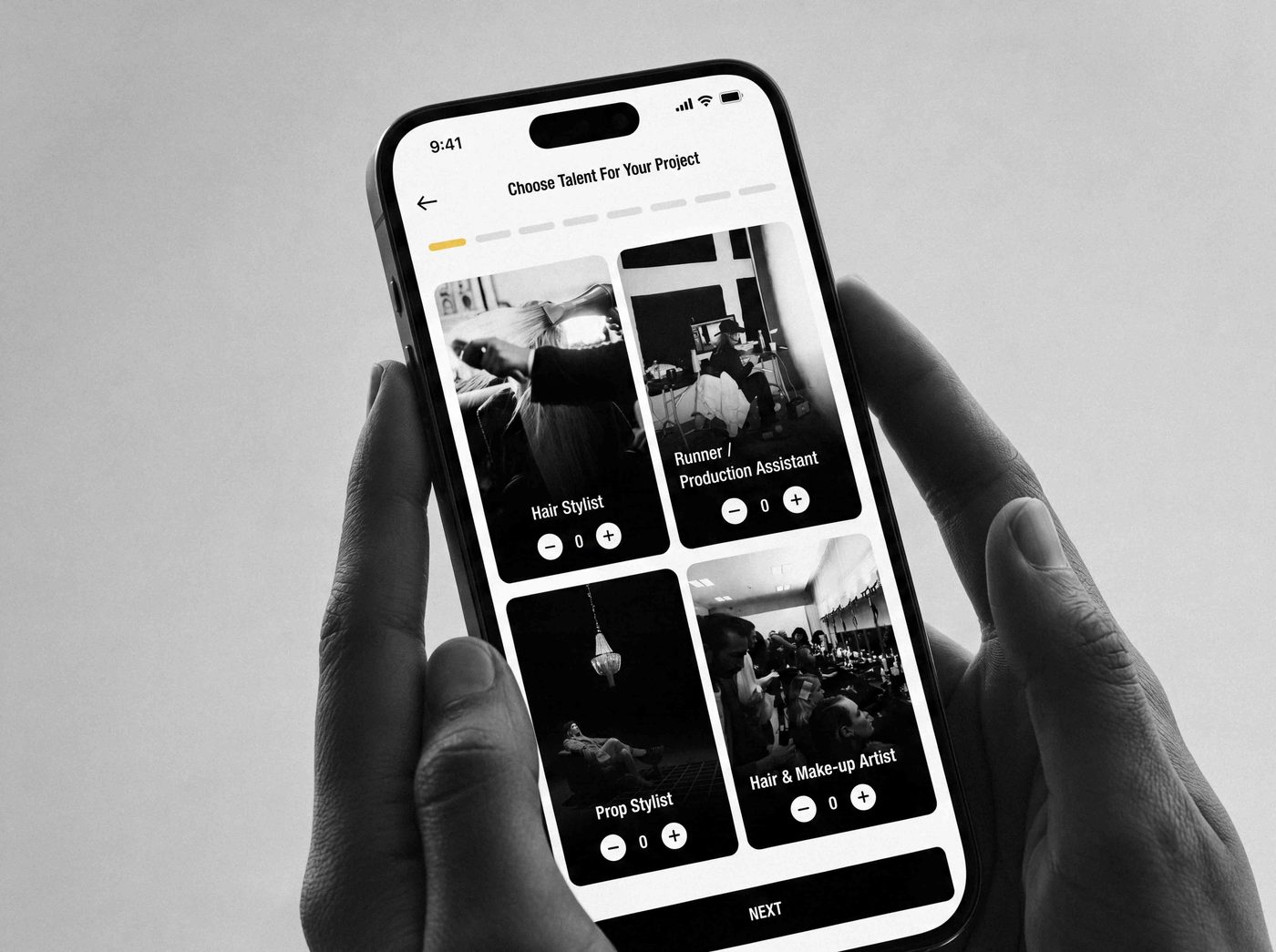
Post a job on the ANT Talent App and let approved talent come to you.
- Every profile approved by ANT
- Chat with talent in the app
- Payment held until the job is done

Free on iPhone
- 5.0on Google, 200+ reviews
- Since 2022modelling and talent agency
- Worldwideshoots, events and shows anywhere
- Licensed in Dubai. See our licence and booking terms