
UAE Stunt Permits: 25 Business Days for Script Approval, Then What?

Filming a stunt or aerial sequence in the UAE requires clearing three permit categories: script approval paired with a ground filming permit, aerial or drone (UAS) approvals through the GCAA, and stunt-specific clearances covering safety and props. The first move for any production is appointing a UAE-licensed production company and submitting the full script for approval, since that step alone can take up to 25 business days.
TL;DR:
- Ground permits require at least 15 working days after script approval, while aerial or special effects additions can extend the schedule further.
- A UAE operator must hold the UOA; registration takes about three weeks, and each flight needs separate airspace approval, usually after 14 working days.
- Each stunt needs its own risk assessment and method statement, plus a named coordinator, relevant credentials, and insurance covering stunt or special effects work.
- A changed vehicle, performer, location, or undeclared prop can trigger renewed review, so route revisions through the local production company before filming.
Table of Contents
- Which permits apply: ground filming, aerial filming, and stunt-specific approvals
- Step-by-step application process and timeline (script approval to permit application to on-set rules)
- Drone and aerial filming: registration, UOA, airspace approval, and SORA when needed
- Stunt-specific safety, insurance, and on-set control requirements
- Authorities by emirate and other approvals you might need
- How ANT Management supports stunt and aerial shoots in the UAE
- Safety protocols and compliance standards specific to UAE stunt permits
- Details on required qualifications and certifications for stunt performers
- Coordination with local emergency services and on-set medical provisions
- Procedures for modifying approved scripts or stunt plans after permit issuance
- Post-filming reporting and documentation obligations related to stunt permits
- A production-tested checklist and common traps to avoid
- ANT Management: stunt talent and permit-ready documentation
- FAQ
- Sources
- Authoritative links for permit forms, script approval, and UAS rules
Which permits apply: ground filming, aerial filming, and stunt-specific approvals
Every stunt or aerial shoot in the UAE sits across overlapping layers of clearance, and knowing which layer governs which scene saves weeks of back-and-forth with authorities. The ground filming permit covers any public-facing shoot: streets, parks, beaches, and government-adjacent sites, and it cannot be issued until script approval clears through the National Media Authority’s e-service channel. Aerial filming runs on a separate track entirely, split between a federal aviation layer (the GCAA governs drone operator licensing and airspace access) and the emirate-level ground permit that still applies to whatever the drone is filming below. Stunt work gets pulled out as its own category because it introduces physical risk to performers, crew, and bystanders that a standard filming permit was never built to assess.
Each permit, once granted, typically names specific details that productions must then honor on the day:
- Locations and dates: the exact address, shoot window, and any time-of-day restrictions.
- Personnel: named cast, crew, stunt coordinators, and drone operators covered by the approval.
- Equipment: cameras, rigging, vehicles, and props cleared for use on site.
- Scope: the specific scenes or shots approved, not a blanket allowance for improvisation.
Step-by-step application process and timeline (script approval to permit application to on-set rules)
Sequencing matters more than speed here, since each approval depends on the one before it. Treat the process as a chain, not a checklist you can tackle in parallel.
- Submit the full script for approval. The complete script and shot itinerary go to the relevant authority in Arabic or English depending on the production’s origin, and approval can take up to 25 business days, so this step should start the moment a shoot date is even loosely penciled in.
- Confirm your applicant is a UAE-licensed production company. Authorities generally will not process permits for unlicensed entities, so international productions typically partner with a licensed local company or fixer who holds the commissioning relationship and signs the application.
- Assemble the documents pack. This includes the shoot itinerary, location NOCs, crew lists with passport copies, equipment and props inventories, and for stunt scenes, stunt coordinator CVs and method statements.
- File through the correct e-services portal. Ground filming permits move through the National Media Authority’s system, which lists required documents including Digital ID, passport, and photo; allow a minimum of 15 working days for standard ground permits, and considerably longer when aerial or special-effects elements are layered on top.
- Carry physical and digital proof on set. Printed or e-copies of every permit, NOC, and emergency contact list should travel with the production lead, since spot checks are a normal part of UAE filming operations.
Pro Tip: File script approval and the drone operator authorization in the same week, since both run on multi-week clocks that rarely compress no matter how urgent the shoot date feels.
Drone and aerial filming: registration, UOA, airspace approval, and SORA when needed
Aerial units answer to the General Civil Aviation Authority, and that relationship is distinct from whatever ground permit covers the same location. Any organization intending to fly drones for professional filming work needs a Unmanned Aircraft Operator Authorisation, commonly called a UOA, before a single rotor spins over a UAE set.
- UOA registration: typically takes around three weeks to process and establishes the operating entity’s accountability to the GCAA.
- Per-flight operational approval: a separate airspace clearance is needed for each shoot, factoring in visual-line-of-sight limits, maximum height, and whether the location sits in a red or green zone.
- Timelines: expect roughly 14 working days for operational permission once the UOA is in place, longer near airports, government buildings, or other restricted airspace.
- SORA requirements: complex operations, especially flights near people, buildings, or other aircraft, often trigger a Specific Operations Risk Assessment, which adds meaningful lead time and should be budgeted for early rather than discovered mid-schedule.
- Local accountability: international drone pilots generally cannot hold the UOA directly; a UAE-based operator must take accountability and submit a Letter of Conformity for each aircraft used, a requirement tied to MOIAT oversight of imported unmanned aircraft.
Stunt-specific safety, insurance, and on-set control requirements
Stunt sequences bring their own layer of paperwork precisely because the risk profile changes the moment a fall, a fight, or a vehicle maneuver enters the shot list. Authorities expect to see named accountability before they approve anything physical.
- Named stunt coordinator and SFX supervisor: both should be identified by name with CVs and relevant licenses submitted alongside the permit application.
- Risk assessments and method statements: each individual stunt needs its own written breakdown of the hazard, the control measures, and the emergency response plan.
- Insurance coverage: public liability and employer’s liability policies with specific stunt or special-effects endorsements are standard expectations, and certificates should be ready to produce during the application rather than after.
- Props and weapons declarations: even deactivated firearms or rubber replicas count as controlled props requiring full inventory disclosure, and productions should expect police spot checks or an escort requirement for weapons-heavy or large-scale stunt scenes.
- On-day controls: medical cover, marshals, traffic management where public roads are involved, and visible permit numbers on site are all part of standard compliance.
Pro Tip: Keep insurance certificates, stunt CVs, and risk assessments in one submission-ready folder from day one, since authorities frequently request the same documents twice across script approval and the final permit stage.
Authorities by emirate and other approvals you might need
Routing matters as much as paperwork. Dubai shoots go through the Dubai Film & TV Commission, Abu Dhabi runs through its Creative Media Authority, and federal or cross-emirate productions often need an additional layer from national media bodies. Beyond the core film authority, expect to loop in police, the Roads and Transport Authority for any road closure, municipality offices for parks and beaches, and port or airport authorities when shoots sit near aviation or maritime zones.
- Private venues, free zones, and gated estates require their own written consent on top of government permits.
- A UAE-licensed production company can usually centralize these multi-authority requests, cutting down the number of separate conversations a production has to manage.
How ANT Management supports stunt and aerial shoots in the UAE
Permit reviewers move faster when the paperwork in front of them is already complete. Through our stunt talent booking and full production crew booking services, we supply stunt performers and coordinators with CVs and licenses prepared for direct submission, along with talent coordination that keeps crew lists and documentation aligned with what authorities expect to see.
Safety protocols and compliance standards specific to UAE stunt permits
Compliance for stunt work in the UAE centers on documented control, not improvisation. A permit application for a stunt sequence typically needs to demonstrate that every hazard has an identified owner: a named coordinator responsible for choreography, a safety lead responsible for the set, and a medical provision responsible for response. Risk assessments are expected to be stunt-specific rather than generic, meaning a vehicle rollover and a high-fall sequence each carry their own written method statement rather than a single blanket document covering the whole shoot day.
Heat and environmental conditions factor into compliance planning as well, given the climate productions are working within for much of the year; a heat management plan for outdoor stunt work is a common expectation on top of the physical risk assessment. Call sheets distributed to cast and crew should reference the approved permit number, and any safety briefing on the day should walk through the specific stunt, not a general safety talk disconnected from what is actually being filmed.
Compliance also extends to equipment condition: rigging, harnesses, and vehicles used in stunts should have maintenance or inspection records available, since authorities and insurers alike may request evidence that equipment was fit for purpose before the stunt was performed. None of this replaces the formal risk assessment submitted with the permit application, but it reflects the operational discipline authorities expect to see maintained once filming is underway, not just on paper during the approval stage.

Details on required qualifications and certifications for stunt performers
Authorities reviewing a stunt permit application want to see that the people performing the stunt are qualified for the specific action involved, not simply experienced performers in a general sense. A stunt coordinator’s CV submitted with the application should reflect direct experience coordinating comparable sequences, whether that is vehicle work, high falls, fire, or combat choreography, since a generalist background does not always satisfy a reviewer evaluating a specialized hazard.
Individual stunt performers are generally expected to carry documentation relevant to their specific discipline: a fire performer’s certification differs from a precision driver’s license, which differs again from a high-fall performer’s harness and rigging training records. Where a stunt involves a vehicle, a valid UAE driving qualification appropriate to the vehicle class is typically part of the expected paperwork, alongside any specialized stunt-driving credentials the performer holds.
Casting decisions here are not purely creative. Choosing performers with documented, discipline-specific qualifications shortens the review conversation with permit authorities, since a reviewer who can match a named performer to a relevant certification has less reason to request clarification or delay approval. This is part of why productions increasingly treat stunt casting as a compliance step as much as a creative one, sourcing coordinators and performers whose paperwork is already aligned with the specific action the script calls for.
Coordination with local emergency services and on-set medical provisions
Stunt sequences typically require a medical provision proportionate to the risk involved, and that provision should be arranged and documented before the shoot day rather than treated as a contingency. For lower-risk stunts, an on-set first responder or qualified paramedic with appropriate equipment may satisfy expectations; for higher-risk sequences involving vehicles, heights, fire, or weapons, productions often arrange a dedicated ambulance or medical team on standby at the location for the duration of the stunt.
Where a stunt involves road closures, vehicle work at speed, or any activity with potential public impact, coordinating with local police in advance is standard practice, and that coordination can extend to a police presence or escort on the day itself, particularly where weapons or large-scale action sequences are involved. This dovetails with the props and weapons declarations covered earlier in the permit application, since the same disclosure that triggers a police review of controlled items often also triggers a conversation about what emergency support will be present on set.
Productions should also confirm the nearest hospital or trauma center relative to the filming location and have that information documented in the safety plan, alongside clear communication protocols for how an incident would be reported and escalated. This is less about satisfying a specific line item on the permit application and more about the operational reality that stunt work carries genuine physical risk, and the permit process exists in large part to confirm that risk has been planned for rather than assumed away.
Procedures for modifying approved scripts or stunt plans after permit issuance
Once a script and its associated stunt plan receive approval, changes are not simply noted and carried forward informally. A material change to a stunt sequence, whether that is a different vehicle, an added performer, a new location for the action, or a change in the nature of the hazard itself, generally requires notifying the approving authority and, in many cases, resubmitting the relevant portion of the application for review.

Minor adjustments, such as a shift in shoot time within the same day or a small change to blocking that does not alter the risk profile, typically carry less friction, but productions should not assume any change is minor without checking first. The safer practice is to route every proposed change through the same production company or fixer who filed the original application, since that party already has the relationship and documentation history with the relevant authority.
This matters particularly for stunt work because the original approval was granted against a specific risk assessment and method statement. Swapping a stunt performer for someone without an equivalent credential on file, or changing a prop from a declared inventory item to something undeclared, can invalidate the basis on which the permit was issued. Building in a buffer of a few days before the shoot date to handle any last-minute script or stunt plan adjustments is a more reliable approach than hoping changes can be absorbed without authority sign-off.
Post-filming reporting and documentation obligations related to stunt permits
Permit obligations do not end when the cameras stop rolling. Many productions are expected to retain copies of the approved permits, risk assessments, and insurance certificates for a period after filming, both for their own records and in case an authority follow-up or incident review requires them. Where a stunt involved any deviation from the original method statement, even a minor one, documenting what actually happened on the day against what was approved is good practice and, in some cases, an explicit expectation tied to the permit conditions.
If an incident occurred during the stunt, however minor, authorities generally expect a report documenting what happened, how it was handled, and what medical or safety response was deployed. This is separate from any insurance claim process and should be treated as part of the production’s compliance obligation rather than an optional formality.
Productions working across multiple emirates or with international crew should keep this closing documentation centralized with whoever managed the original applications, since a clean paper trail from script approval through to post-filming sign-off is what protects a production if questions arise on a future application.
A production-tested checklist and common traps to avoid
The checklist holds up across every UAE stunt shoot: script approval first, aerial authorization in parallel, a named stunt coordinator, proper insurance, every NOC accounted for, and a licensed local partner managing it all. Start the script early. The traps that sink schedules are always the same: a drone request filed too late, a props declaration missing a single item, or SFX coverage that looks sufficient until someone reads the fine print.
— ANT
ANT Management: stunt talent and permit-ready documentation
We book stunt performers, coordinators, and full production crews, providing CVs, licenses, and coordination support suited for permit applications. If a UAE shoot needs permit-ready talent fast, our stunt booking page and main booking portal are where to start.
- Stunt performers and coordinators with documentation provided.
- Full production crew booking alongside stunt talent.
- Coordination and briefing support across multi-emirate shoots.
FAQ
How do I get a filming permit in Dubai?
Filming in Dubai starts with script approval through the relevant authority, which can take up to 25 business days, followed by a ground filming permit application submitted through official e-services. A UAE-licensed production company typically handles the application on the production’s behalf.
What are the new laws in the UAE for 2026?
Permit rules referenced here reflect the current script approval, ground filming, and drone authorization processes published by the relevant authorities. Productions should confirm current requirements directly with the National Media Authority or the relevant emirate film commission before applying.
Can you film the Burj Khalifa without a permit?
Filming at any major landmark or government-adjacent site in the UAE requires both script approval and a ground filming permit naming that specific location. Unauthorized filming at high-profile sites is not something productions should attempt, given the compliance expectations covered throughout the permit process.
Are stun guns legal in the UAE?
This article does not cover personal weapon legality in the UAE outside the filming context. For productions, any weapon or prop resembling one, deactivated or not, must be declared in the permit application’s props inventory, and police routines or an escort are commonly part of approval for such items.
What qualifications does a stunt coordinator need for UAE approval?
Authorities expect a named stunt coordinator with a CV demonstrating direct experience in the specific type of stunt being filmed, submitted alongside the permit application. Relevant licenses or certifications for the discipline involved, such as precision driving or rigging, strengthen the submission and reduce review delays.
Sources
- Applying For Script Approval — Dubai Film & TV Commission
- UAS registration and operator authorisation — GCAA
- Ground filming permit within the country — National Media Authority (NMA)
- Lights, Camera, Rebate! Abu Dhabi film rebate and considerations — Bird & Bird / Twobirds
- Lights, camera, action — Things to know about filming in Dubai — Tamimi
Authoritative links for permit forms, script approval, and UAS rules
- Applying For Script Approval, Dubai Film & TV Commission
- UAS registration and operator authorisation, GCAA
- Ground filming permit within the country, National Media Authority
- Lights, Camera, Rebate! Abu Dhabi film rebate, Bird & Bird / Twobirds
- Lights, camera, action, Tamimi
- Lights, Camera, Rebate!, Lexology
Recommended
Planning a shoot in Kuwait?
Prefer to book on your phone?
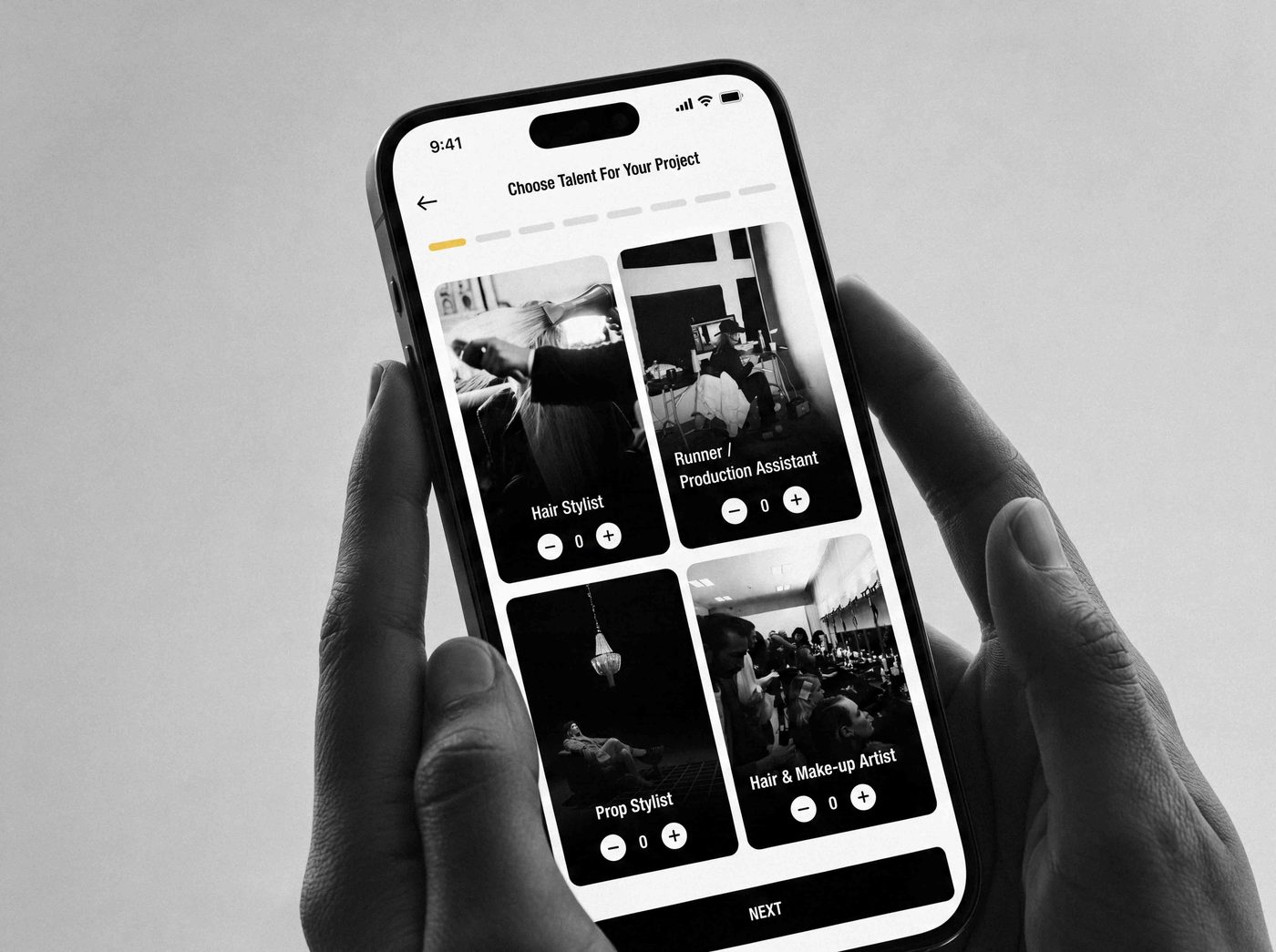
Post a job on the ANT Talent App and let approved talent come to you.
- Every profile approved by ANT
- Chat with talent in the app
- Payment held until the job is done

Free on iPhone
- 5.0on Google, 200+ reviews
- Since 2022modelling and talent agency
- Worldwideshoots, events and shows anywhere
- Licensed in Dubai. See our licence and booking terms