
Plus Size Model Casting: The Agency Playbook for U.S. Brands
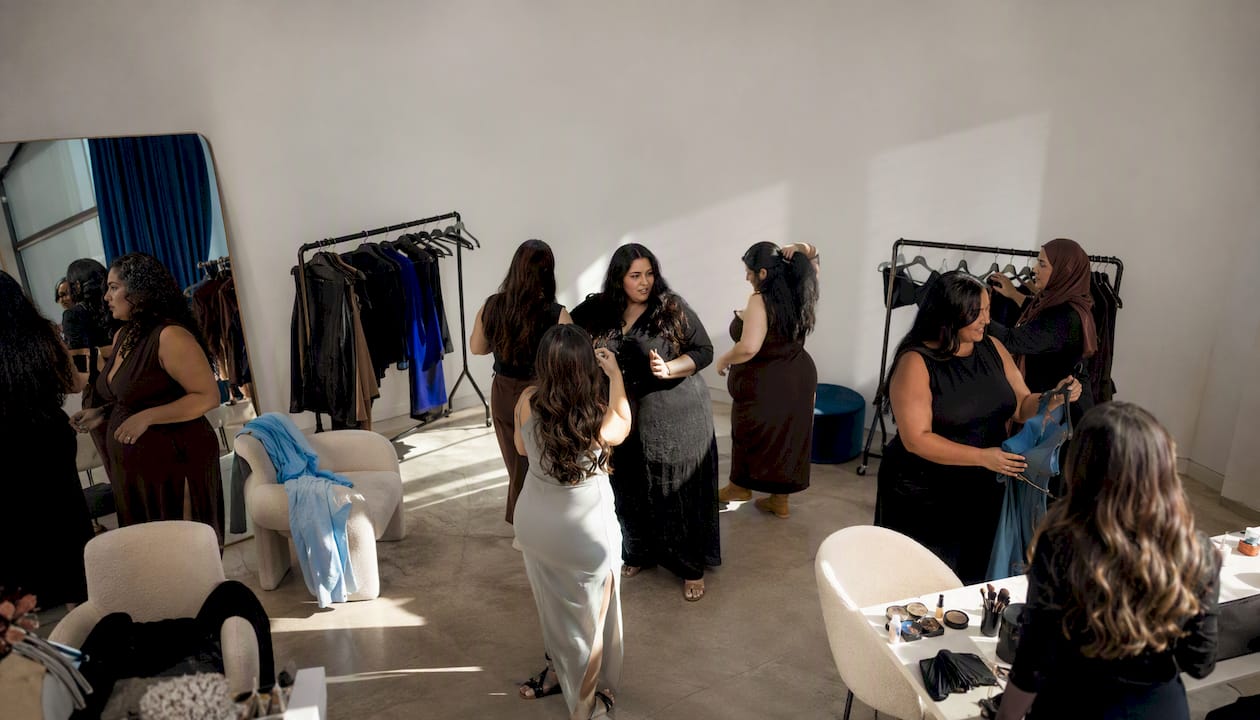
For U.S. brands and event organizers that need curated plus-size talent, legal protections, and production support, agency-led casting is the recommended route. Brief a vetted agency, request a roster with curve model requirements matched to your project, and confirm written usage rights and safety policies before signing anything.
- Agency casting delivers pre-screened talent, insurance coverage, and contract scaffolding that direct hires cannot replicate.
- The New York State Fashion Workers Act (effective June 19, 2025) places direct legal obligations on brands as clients, not just on agencies.
- ANT Management offers full-service plus size model casting with global roster depth and legal-aware contracting.
- Immediate next step: submit a creative brief to a registered agency or request a sample roster with day rates and usage terms.
Key Takeaways
Agency-led plus size model casting is the recommended route for U.S. brands that need curated talent, legal protections, and production support, particularly for New York shoots governed by the Fashion Workers Act.
| Point | Details |
|---|---|
| Choose your route deliberately | Match agency casting to editorial and prestige work; use platforms for fast commercial or event bookings. |
| Budget for 10–20% above base rate | Agency commissions and client-side markups push all-in costs well above the quoted day rate. |
| NY Fashion Workers Act applies to you | Clients must pay 1.5× for work over eight hours, obtain written AI/likeness consent, and cannot delegate these duties to the agency. |
| Demand escrow and sequential-liability carve-outs | Trust-holding of production funds protects you if an agency defaults on payments to talent or crew. |
| ANT Management | Offers curated curve model rosters, legal-aware contracts, and production support; submit a brief to receive a roster and rates within 48 hours. |
Table of Contents
- When does agency casting outperform direct booking?
- How does the agency casting process work, step by step?
- What does plus size casting actually cost?
- What legal protections must your contract include?
- How do you vet a plus size modeling agency?
- How do you run an inclusive, professional shoot for plus-size talent?
- ANT Management’s perspective on inclusive casting
- ANT Management: full-service casting for curve and plus-size talent
- Sources
When does agency casting outperform direct booking?
The answer turns on three axes: budget, timeline, and use case. Brands can choose between agency, marketplace, or direct hires, and the right path depends on what the project actually demands.
Budget axis. Traditional agencies carry layered commissions. Market data shows agencies typically add 10–20% commissions, with client-side markups pushing all-in costs higher, while direct-booking platforms can reduce those markups significantly. If your budget is tight and the shoot is commercial or event-driven, a platform may serve you better.
Timeline axis. Agency castings for editorial or runway work run two to four weeks from brief to confirmed talent. Direct platforms can turn around a booking in 48–72 hours for simpler commercial needs.
Use case axis. Editorial campaigns, brand prestige launches, and runway shows benefit from agency curation, insurance, and creative direction alignment. Commercial shoots, pop-up events, and trade shows often tolerate a faster, lower-cost platform approach.
Quick decision checklist:
- Does the project require editorial-grade curation or brand-safety vetting? → Agency.
- Is the timeline under one week and the usage purely commercial/event? → Platform or direct booking.
- Does the shoot take place in New York State, triggering Fashion Workers Act obligations? → Agency with documented compliance is strongly preferred.
If two of the three axes point toward agency casting, that is your route.
How does the agency casting process work, step by step?
The workflow moves in four distinct phases, each with clear client deliverables.
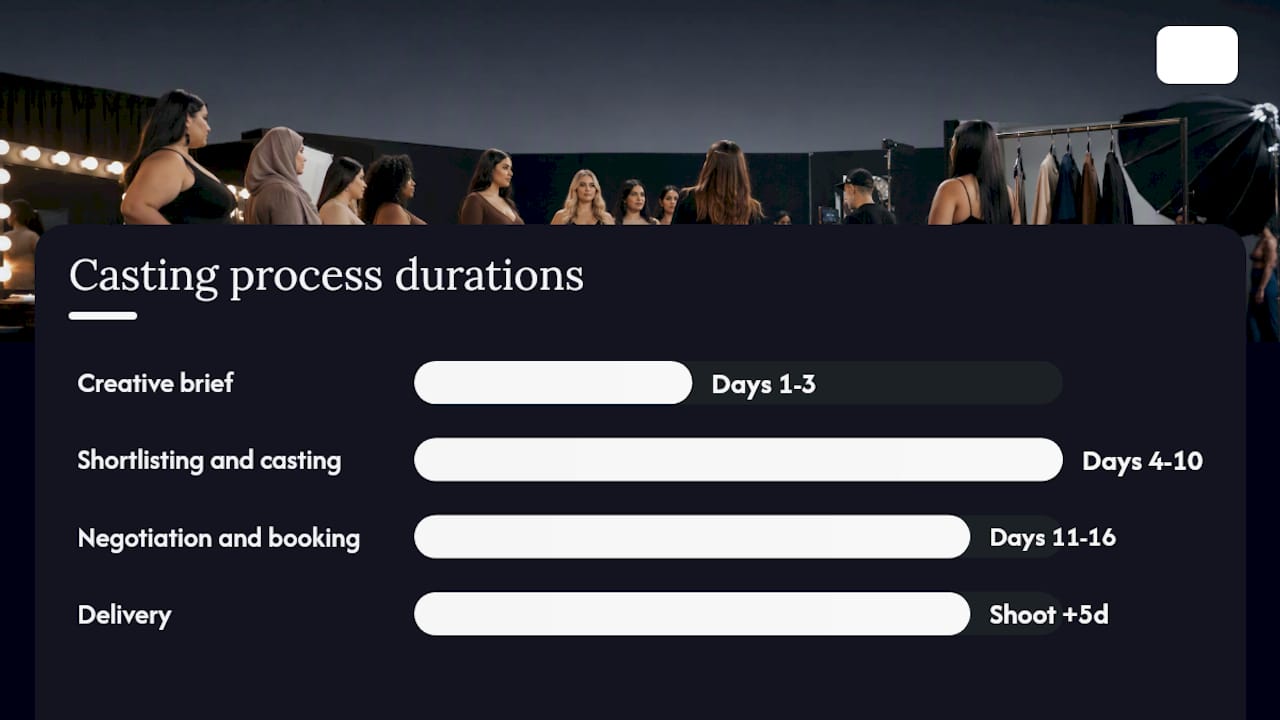
Phase 1: Creative brief (Days 1–3). Deliver a written brief covering campaign goals, usage windows (digital, print, OOH), deliverables, styling direction, shoot city, and sample sizes. For curve model casting, specify size range (commonly US 14–24), fit preferences, and any mobility or wardrobe requirements. Mood boards accelerate shortlisting.
Phase 2: Shortlisting and casting (Days 4–10). The agency pulls from its roster, runs availability checks, and presents a curated selection with composite cards, day rates, and usage fees. Virtual fittings or in-person casting calls narrow the field. Casting notices for plus-size talent in major markets like New York, Los Angeles, and Miami typically specify age range, height, and presentation format.
Phase 3: Negotiation and booking (Days 11–16). Confirm day rates, usage buyouts, exclusivity windows, and cancellation terms in writing. The agency issues a booking confirmation; the client countersigns and pays the deposit.
Phase 4: Delivery (Shoot day + post-production). Collect signed model releases, confirm image rights, and receive final digital files and talent invoices. Releases must specify medium, territory, and duration.
| Phase | Duration | Client must provide |
|---|---|---|
| Creative brief | Days 1–3 | Brief, mood boards, sample sizes |
| Shortlisting and casting | Days 4–10 | Approval feedback within 24 hours |
| Negotiation and booking | Days 11–16 | Signed terms, deposit payment |
| Delivery | Shoot day + 5 days | Release sign-off, final payment |
What does plus size casting actually cost?
Agency commissions and client-side markups are common additional costs beyond the model’s quoted day rate.
Typical cost structure:
- Model day rate: varies by market and experience tier
- Agency commissions and client markups: both increase the total cost above the base rate
- Producer or casting director fees: separate line item
- Usage buyouts: negotiated per medium, territory, and duration
- Travel and accommodation: client-funded for out-of-market talent
For productions involving multiple talent and vendors, the AMA’s national guidelines recommend trust-holding of production funds so talent and crew are paid even if an intermediary defaults. Request escrow or trust-holding language in your contract before signing.
Direct-booking platforms typically charge lower all-in fees, making them attractive for event staffing and commercial work where curation depth matters less than speed.
What legal protections must your contract include?
This is where brands most frequently expose themselves. Under the Fashion Workers Act, brands and ad agencies acting as clients now carry direct legal obligations and cannot rely solely on agencies for compliance. That shift is material.
Must-have contract clauses:
- Usage rights: specify medium (digital, print, broadcast), territory, and duration
- Exclusivity: define the category and window precisely
- Cancellation and rescheduling: penalties, notice periods, kill fees
- Model releases: signed before any image is distributed
- Indemnities and insurance: require certificates of insurance from the agency
- Digital/AI likeness consent: written, explicit, and separate from the general release
New York State Fashion Workers Act obligations (effective June 19, 2025). The NY Department of Labor confirms clients must pay 1.5× the hourly rate for model work exceeding eight hours in a 24-hour period, obtain written consent for digital or AI likeness use, and ensure safe workplaces. Model management companies must register with the state. Brands cannot delegate these duties to the agency.
Sequential liability. Some agency contracts leave the advertiser ultimately liable for production payments if the agency defaults. The AMA guidelines recommend trust-holding of production funds and explicit sequential-liability carve-outs. Demand these in writing.
Pro Tip: Request the agency’s NY DOL registration number before signing. If they cannot produce it for New York work, treat that as a disqualifying gap.
How do you vet a plus size modeling agency?
Structured vetting takes less than a week and prevents far costlier problems later.
Ask these questions directly:
- Can you share a current roster of curve models with composite cards and recent campaign credits?
- What references can you provide from brands that ran plus-size campaigns with your agency?
- What is your cancellation policy and kill-fee structure?
- How do you hold production funds, and do you offer escrow or trust arrangements?
- What written safety and on-set accommodation policies do you maintain for plus-size talent?
- Are you registered with the NY DOL (for New York work)?
Red flags that should stop the engagement:
- Opaque or verbal-only pricing with no written rate card
- Refusal to provide references or proof of completed bookings
- No written model releases in their standard contract package
- Absence of any on-set safety or accommodation policy
- Unwillingness to discuss escrow or trust-holding terms
- No clear digital/AI likeness consent process
Industry codes of conduct, such as Model ID’s agency code, set a useful baseline: itemized payment statements, respect for digital rights, and transparent contract terms are minimum standards, not differentiators. Use them as your floor, not your ceiling.
How do you run an inclusive, professional shoot for plus-size talent?
Production logistics for inclusive sizing models require deliberate planning, not last-minute improvisation.
On-set logistics checklist:
- Source plus-size sample garments in the correct size range before shoot day
- Confirm private, accessible changing areas with adequate space and seating
- Allow extended call times for fittings (typically 30–45 minutes longer than standard)
- Provide wardrobe rails at accessible heights and adequate lighting in fitting areas
- For maternity-focused campaigns, consult stage-by-stage sizing guidance to anticipate fit adjustments across trimesters
Crew conduct and language. Direction should be body-positive and movement-focused. Touch for fittings requires verbal consent before contact. Call sheets must include the anti-harassment contact and emergency procedures.
Schedule planning. New York Fashion Workers Act overtime rules apply from hour nine of a 24-hour period. Build buffer time into the schedule rather than relying on overtime to absorb delays.
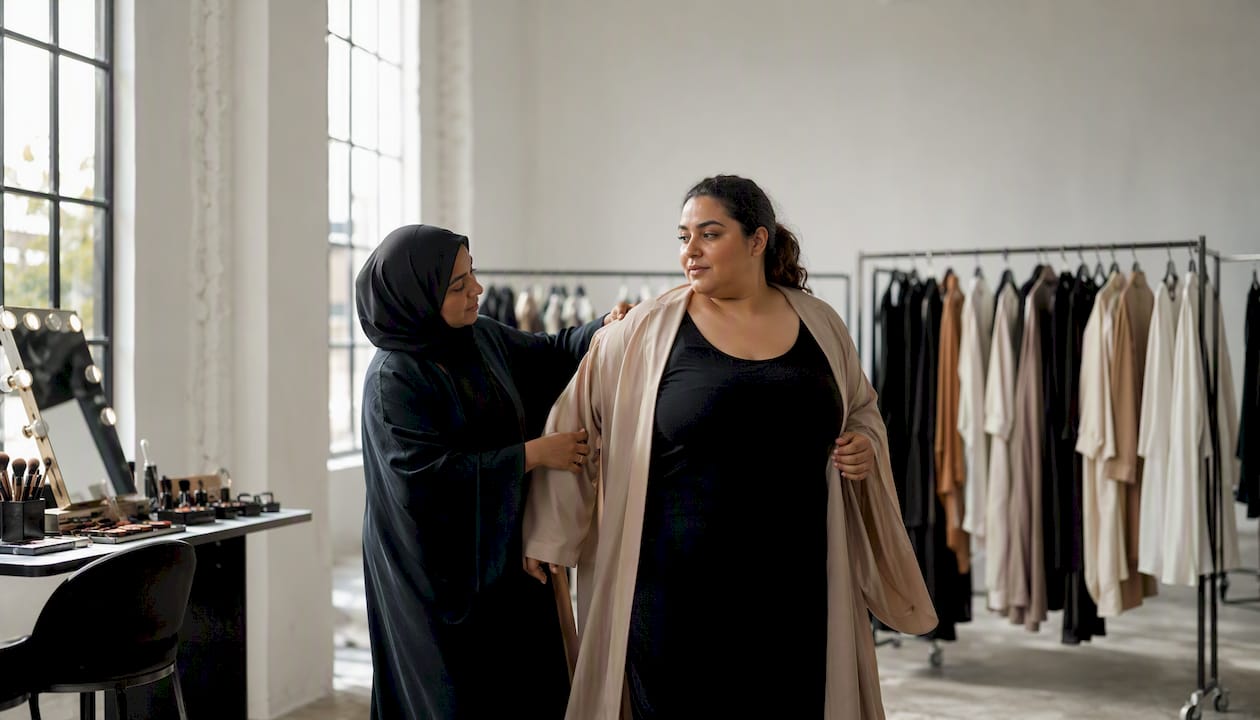
Pro Tip: Run a 15-minute pre-shoot orientation with talent and key crew. Align on the day’s creative direction, confirm comfort levels with specific poses or wardrobe, and introduce the anti-harassment contact by name. It costs almost nothing and prevents friction that can derail a full shoot day.
ANT Management’s perspective on inclusive casting
The most consistent gap ANT Management observes in plus-size casting briefs is specificity. Brands arrive with a general sense of “curve-inclusive” without defining size range, fit priorities, or usage windows. That ambiguity costs time and money at every subsequent phase.
ANT Management’s approach begins with a structured brief review: size range, campaign goals, usage rights, and on-set logistics are confirmed in writing before any roster is presented. Legal safeguards, including digital likeness consent and sequential-liability protections, are built into the standard contract framework. Production support extends through shoot day, not just to booking confirmation.
To request a casting brief review or sample roster, contact ANT Management directly with your project timeline, usage requirements, and size specifications.
ANT Management: full-service casting for curve and plus-size talent
ANT Management brings curated global talent, legal-aware contracting, and end-to-end production support to brands that cannot afford gaps in any of those three areas.
Where direct-booking platforms offer speed, ANT Management offers depth: a rigorously curated roster of curve and plus-size models selected for editorial range, commercial versatility, and professional reliability. Contracts include written digital/AI likeness consent, sequential-liability protections, and on-set safety policies as standard, not as negotiated add-ons. For New York productions, compliance with the Fashion Workers Act is built into the engagement framework from day one.
To get started, submit your project brief with your campaign goals, size range, usage windows, and shoot timeline. ANT Management will return a curated roster with day rates and usage terms within 48 hours.
Sources
The following primary and industry sources underpin the legal and operational guidance in this article.
- Hiring a Model or Ad Talent in NY? What Brands and Ad Agencies Need to Know About the Change to NY Law | Loeb & Loeb LLP
- Responsibilities of Fashion Management and Clients | Department of Labor
- Top modeling agencies in the United States — Which should you actually book in 2026? | OBVIOUS MAG