
Influencer Brand Safety: A Vetting and Response Playbook

Influencer brand safety is the discipline of making sure a creator’s content, conduct and audience will not harm the brand that pays for them. It runs through four stages: vetting before outreach, a contract that anticipates trouble, monitoring while the campaign is live, and a rehearsed response if something goes wrong. A creator is a living medium, and a living medium moves. What follows is how to keep control of that movement without flattening the energy that made the creator worth booking.
TL;DR
- Brand safety in influencer work means alignment of content, tone and audience behavior with your brand, checked before you book and after you launch.
- Vet patterns, not single posts: content history across platforms, the comment section, audience authenticity and earlier competitor deals.
- Put deliverables, usage rights, disclosure duties, indemnification and termination triggers in writing.
- Automated scores are signals for a human reviewer, not verdicts.
- Decide your crisis steps before launch: assess, pause scheduled content, communicate from owned channels, and let PR and Legal respond together.
Table of Contents
- What brand safety means when the media is a person
- Vetting: reading the creator like an editor reads a portfolio
- What tools can and cannot do
- The contract: where safety becomes enforceable
- Disclosure: the most preventable risk
- Monitoring while the campaign runs
- When something goes wrong
- Our perspective: safety starts with who you book and how
- Booking vetted creators with ANT
- FAQ
- Book talent with confidence
- Sources
What brand safety means when the media is a person
In display advertising, brand safety is largely about the page next to your ad. In influencer marketing the page is a human being, and the risk travels with them. Brand safety here means the creator’s content reflects topics aligned with the brand and the audience’s behavior does not create reputational risk. Misalignment in content, tone or community can change how a brand is perceived, often faster than a campaign can be rebuilt.
The concern is shared by the industry’s largest buyers. A 2018 World Federation of Advertisers study found that 64% of marketers worried about consumer trust and 59% about brand safety risks in managing influencers. Its 2025 research shows the gap between intent and practice: 70% of multinational brands now always use contracts, up from 63% in 2019, yet only 42% monitor compliance with standards or rules. Most brands sign the paper. Fewer watch what happens afterward.

It helps to separate two ideas. Safety is the floor: no hate speech, no violence, no fraud. Suitability is the finer cut: a creator can be perfectly safe and still wrong for a heritage jeweler or a family-focused hospitality group. Good vetting answers both.
Vetting: reading the creator like an editor reads a portfolio
A brand-safety review is closer to editorial curation than to a background check. You are reading a body of work for rhythm, consistency and the moments where it breaks.
Content history
Start with what the creator has actually published. Guidance on creator risk management says to look for hate speech, discrimination, violence or disinformation, to review the content history and audience authenticity, and to check earlier partnerships with competitors. PRSA’s guidance for communicators adds past posts for controversy, alignment with brand values and professionalism, supported by verification and analytics tools.
Patterns matter more than isolated moments. A guide to reviewing content history advises focusing on campaign-relevant patterns and interpreting context, such as satire or the norms of an earlier period. A decade-old joke that the creator has since addressed is a different signal from a recurring habit of provocation. Sample across every platform the creator uses, because tone often shifts between a polished feed and a looser short-video account.
The comment section
The audience is part of the media buy. Reading comments shows how a creator manages their community and whether it is hostile or healthy. Look at how the creator handles disagreement, whether they correct themselves when wrong, and whether replies are real conversation or a wall of generic emoji. Repetitive, off-topic comments are one of the quieter signs of inauthentic engagement.
Audience fit and credibility
Sprout Social’s vetting guide recommends testing audience-interest overlap and audience location against the campaign’s target segments, then checking engagement quality, comment authenticity, visual style, tone, storytelling, earlier sponsored-post performance, format fluency and cultural sensitivity. Location deserves emphasis for regional work. A creator with a large following that sits mostly outside the market you are selling into is a poor fit however handsome the numbers.
Credibility is also a commercial matter, not only a protective one. A peer-reviewed study by researchers affiliated with Qatar University, the University of Birmingham and Cairo University reports that credibility and similarity to the consumer strengthen follower identification, and that credibility directly improves attitudes toward the brand and creator collaboration. Safe and effective turn out to be the same instinct.
A working vetting checklist
| Check | What you are looking for | Red flag |
|---|---|---|
| Content history | Consistent tone across platforms and years | Repeated discriminatory, violent or misleading content |
| Comments | Real conversation, healthy moderation | Hostile threads, spam, bot-like replies |
| Audience | Location and interests that match the campaign | Audience concentrated outside your market |
| Past partnerships | Clear, labeled sponsored posts | Recent deals with direct competitors, undisclosed ads |
| Response behavior | Corrections and calm handling of criticism | Doubling down, deleting and denying |
| Professionalism | Punctual, briefed, easy to coordinate | Missed deadlines, vague communication |
The last row is easy to overlook. Brand safety includes operational reliability. A creator who vanishes before a deliverable is a risk of a different kind, and our notes on avoiding no-shows with online casting platforms apply equally here.
What tools can and cannot do
Software can scan thousands of posts in seconds, and it should be part of the process. It should not be the whole process.
The IAB’s brand safety and suitability guidance warns that bid-stream data can be unclear, incomplete or inaccurate, that URL-based tools produce false positives and false negatives, and that advertisers can still pay for post-bid blocks. It recommends asking verification partners how they map to standard taxonomies and how granular their tools are. Those questions transfer neatly to creator-screening software.
One vendor’s own documentation is candid about the limits. Later Influence states that its audience-authenticity alerts and content-warning AI are signals for investigation, not automatic disqualifiers, that suitability depends on campaign-specific guidelines, and that audience insights are unavailable for creators who have not authenticated their profiles. In practice:
- Configure the tool with your own sensitivities before trusting a score.
- Treat every flag as a prompt to read the actual post and its context.
- Expect gaps wherever a creator’s data is private or unverified.
- Keep a named human accountable for the final yes or no.
The contract: where safety becomes enforceable
Vetting tells you who the creator is today. The contract governs what happens if that changes. PRSA’s guidance recommends contracts that specify deliverables, usage rights, disclosure compliance, indemnification and termination conditions, alongside vetting, professional and media liability insurance, a crisis plan and monitoring after onboarding.
For a brand booking talent, five clauses carry most of the weight:
- Deliverables and approvals. Formats, counts, timelines and a review step before anything goes live.
- Usage rights. Where, how long and in which media the content may run. Unclear rights are the most common source of surprise cost, as we explain in our guide to influencer usage rights.
- Disclosure duties. The creator must label the content as advertising according to the rules of the market where it appears.
- Indemnification and insurance. Who bears the cost if content infringes rights or breaches a regulation.
- Reputational termination. A defined trigger, such as conduct that brings the brand into disrepute, with clear payment consequences.
If you license music, footage or other creative assets inside the content, the same discipline applies to them. A marketplace such as music video licensing shows how ready-made creative can arrive with defined terms, and the lesson for creator work is to settle those terms before production, not after a post is live. For payment structure and negotiation ranges, see our breakdown of content creator contracts.
Disclosure: the most preventable risk
Undisclosed advertising is the easiest brand-safety failure to avoid and one of the most common. In the United States, FTC guidance says influencers should clearly disclose material connections, including financial, personal, family or employment relationships. The UK’s advertising regulator takes a similar line: ads must be obviously identifiable, and its report strongly advises clear, upfront use of “Ad” or “#ad”.
Rules differ by market, and the Gulf is moving quickly. From 1 February 2026, anyone advertising online from within the UAE must hold an Advertiser Permit from the UAE Media Council, covering paid and unpaid promotional content regardless of follower count. A brand running a regional campaign should confirm permit status as part of onboarding, and check the current requirements with the regulator before launch.
The WFA’s 2025 Global Guidance on Influencer Marketing frames the territory in five areas: disclosure and transparency, content accuracy, ethical considerations, compliance with local laws and operational best practices. Athlete-fronted beauty launches, like a fragrance campaign built around a UFC champion, are a reminder that when a recognizable face carries a product, the audience needs to know the relationship behind it. Write the labeling standard into the brief, not into a footnote.

Monitoring while the campaign runs
The WFA figure bears repeating: most brands contract, a minority monitor. Monitoring does not need to be elaborate. It needs an owner and a rhythm.
- Before each post goes live: approval against the brief and the disclosure standard.
- In the first 24 hours: a read of the comments, where sentiment turns first.
- Weekly: a scan of the creator’s wider activity for anything that changes the context of your partnership.
- At close: a short review of what held up, which feeds the next vetting round.
Where you plan to amplify creator content through paid media, rights and access matter as much as content. Our whitelisting playbook covers how that arrangement is set up with controls in place.
When something goes wrong
A crisis plan written during the crisis is a plan written under pressure. The guidance is consistent: prepare in advance to assess the situation, pause scheduled content, apologize publicly if appropriate, communicate through owned channels, and have PR and Legal build the response together from the start.
A workable sequence:
- Verify. Confirm what was said or done, by whom, and whether it is authentic.
- Pause. Hold scheduled posts and paid amplification that feature the creator.
- Decide. Brand, PR and Legal agree on the position and who speaks.
- Communicate. Use your own channels, briefly and without defensiveness.
- Review. Apply the contract’s termination and payment terms, then update your vetting criteria.
The same logic holds on a physical production, where the cost of delay is a day of crew and talent rather than a news cycle. Our guide to crisis management on set describes how to keep a shoot moving when a problem surfaces.
Our perspective: safety starts with who you book and how
We book talent for shoots, events and shows anywhere in the world, and the pattern we see is consistent. Brand-safety problems rarely begin with a dramatic scandal. They begin with a thin brief, a rushed shortlist, unclear rights and nobody assigned to watch the work after approval.
The remedy is process, not suspicion. A clear brief gives a creator something to align with. A shortlist built from vetted profiles removes the first layer of guesswork. A contract that names usage, disclosure and termination removes the second. And when payment is held until the job is done, both sides have a reason to deliver what was agreed.
We also hold that safety and creative ambition are not opposites. The most distinctive campaigns are rarely the most cautious, but they are almost always the most clearly briefed. Rigor at the start is what lets a creator move freely inside the frame.
— ANT
Booking vetted creators with ANT
ANT Management is a licensed talent agency in Dubai, rated 5.0 on Google from more than 200 reviews. Send a brief and you receive a shortlist of available talent within an hour in working hours, or post a job on the ANT Talent App and book vetted talent directly. We book influencers and content creators, models, actors and creative crew for shoots and events in Dubai, the GCC and anywhere in the world.
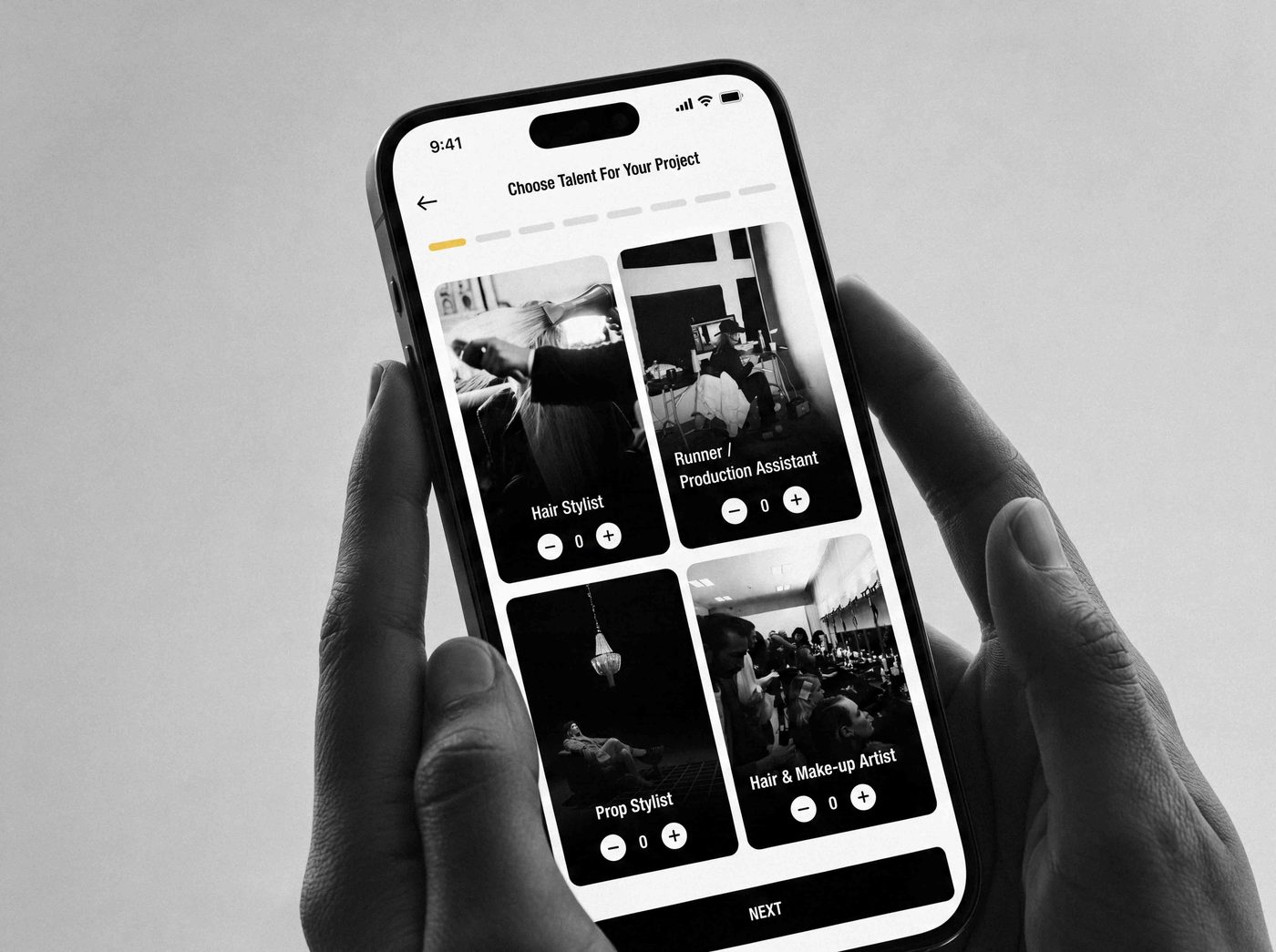
The ANT Talent App offers verified profiles, escrow-protected payment processed by Stripe, and coverage across the UAE, Kuwait, Qatar and Saudi Arabia. Current prices are shown in the app. Clients who prefer a fully managed service can book through ANT Management directly at info@antmgmt.com. Our booking terms set out overtime, late payment and cancellation fees in advance, so there are no surprises. For creators in the Gulf, see our page on hiring influencers in Qatar, or read how UGC platforms for brands compare with vetted direct booking.
FAQ
What is the difference between brand safety and brand suitability?
Brand safety is the baseline: avoiding content such as hate speech, violence or disinformation. Suitability is a brand-specific judgment about whether a creator’s tone, values and audience fit your category and campaign. A creator can pass the first test and fail the second.
How far back should I review a creator’s content?
There is no fixed number, so review enough to see a pattern across platforms and over time. Interpret older posts in context, including satire and the norms of the period, and weigh how the creator has responded since. Concentrate on what is relevant to your campaign.
Can software handle influencer vetting on its own?
No. Scores and alerts are useful for surfacing candidates and flagging issues, but vendors themselves describe them as signals for investigation. A person should read the flagged content and its context, especially when audience data is missing or unverified.
Who is responsible if an influencer fails to disclose an ad?
Responsibility can reach both the creator and the brand, and the rules depend on the market. Put disclosure duties, review steps and indemnification in the contract, and confirm local requirements with the relevant regulator before launch.
What should a crisis plan include?
Steps to assess the situation, pause scheduled content, decide who speaks, and communicate through your own channels, with PR and Legal involved from the start. Add the contract’s termination and payment terms so the decision is already made.
Book talent with confidence
Two ways to start:
- Send a booking request to ANT Management at antmgmt.com/dubai/contact.
- Post a job on the ANT Talent App and book vetted models, actors, influencers and creatives in Dubai in minutes, with escrow-protected payment.
Sources
- What Is Brand Safety in Influencer Marketing?
- Brands to invest more on influencers, World Federation of Advertisers
- More than half of multinational brands plan to boost influencer marketing spend, World Federation of Advertisers
- From Vetting to Crisis Response: A Creator Risk Management Framework
- How to Protect a Brand in Influencer Partnerships, PRSA
- How to Review a Creator’s Content History
- A Step-by-Step Guide to the Influencer Vetting Process
- Boosting brand image through influencers
- IAB Brand Safety and Suitability Guide
- Brand Safety, Later Influence Help Center
- ASA influencer ad disclosure report
- UAE Influencers Must Obtain Advertiser Permit Under New Media Law
Recommended
Planning a shoot in Dubai?
Prefer to book on your phone?
Post a job on the ANT Talent App and let approved talent come to you.
- Every profile approved by ANT
- Chat with talent in the app
- Payment held until the job is done

Free on iPhone
- 5.0on Google, 200+ reviews
- Since 2022modelling and talent agency
- Worldwideshoots, events and shows anywhere
- Licensed in Dubai. See our licence and booking terms