
Campaign Usage Timelines: Stages, Lead Times, Talent Slots

A campaign usage timeline is the schedule that shows when each asset, person and approval is needed, and for how long the work is live. A typical multi-channel campaign runs six to eight weeks from brief to optimization, and talent and crew should be locked at the creative stage, not after it. The sections below set out the stages, the week counts, the dependencies that cause delay, and how to place models, crew and event staff on the calendar so launch day holds.
TL;DR
- A single campaign usually moves through brief, creative, build and QA, launch, live period and results review. Six to eight weeks is a common span for a multi-channel run.
- Plan backward from the launch date. Delivery of final assets, review rounds and sign-off all have to fit before it.
- Book talent and crew when creative direction is approved. A shoot date is a dependency, and every later gate waits on it.
- Give every milestone a named owner, and define a go, not ready or date must move exit for launch.
- For shoots and events in Dubai, the GCC or abroad, ANT Management returns a shortlist within an hour in working hours, so casting stops being the slow step.
Table of Contents
- What a campaign timeline actually organizes
- The stages, in order
- How long each stage takes
- Work backward from the launch date
- Placing talent, crew and approvals on the calendar
- Build the launch gate so it can say no
- When the campaign moves abroad
- Booking terms that belong on the timeline
- Tracking, delays and adjusting after launch
- Our perspective: casting is the step teams underestimate
- Book talent against your timeline
- FAQ
- Sources
What a campaign timeline actually organizes
A marketing timeline shows the chronology of a plan, from objectives and strategy through to completed action items. The KPU Open Guide to Integrated Marketing Communications notes that campaigns need timelines in particular because they have defined start and end dates. The timeline keeps the team informed, shows how campaign elements fit together, and records milestones as they are completed along with issues as they emerge.
For teams that hire people to appear in the work, the timeline has a second job. It is not only a content calendar. It is a usage schedule: when a face, a performer, a stylist or a hostess is needed, in which format, for which channels and for how long. The word usage here covers the shoot or event day and also the period in which the resulting material runs. Both belong on the same page.
The stages, in order
Sources differ on labels, but the sequence is stable. Preceden’s marketing timeline guide describes a single-campaign timeline as covering planning and briefing, creation of ads, emails or landing pages, approvals, launch, the live campaign period and a results review, with launch shown as a milestone rather than a span of work.
For a campaign that depends on talent, we find it useful to split this into seven stages.
- Brief and sign-off. Objectives, audience, channels, deliverables, budget and dates, agreed by everyone who can later say no.
- Creative direction. Concept, moodboard, casting criteria, styling and location needs.
- Casting and booking. Shortlist, selection, availability check, confirmation and contracts.
- Production. Shoot, event or filming days, with a buffer for weather, permits and overtime.
- Post and build. Retouching, edit, copy, channel setup and quality assurance.
- Launch and live period. The go or no-go decision, then the run itself.
- Reporting and closeout. Results review, usage wrap-up and handover of assets.
The order matters because each stage hands evidence to the next. Gradial’s campaign operations guide makes the point that every stage should produce proof for the next owner, and each handoff needs a clear readiness condition. A casting shortlist that has no approved brief behind it is a handoff without a condition, and it is where weeks quietly disappear.
How long each stage takes
There is no official standard for campaign duration, so treat published figures as working benchmarks, not rules. The Pedowitz Group suggests that a multi-channel campaign typically needs six to eight weeks: the first week for brief and measurement, weeks two and three for creative and content, weeks three to five for build and QA, week six for launch, and weeks seven and eight for optimization.
Reasonate Studio offers a longer example with a twelve-week frame: brief sign-off in week one, creative kickoff in week two, asset delivery in weeks four and five, channel build completion in weeks five and six, soft launch and QA in week six, and the final report in week twelve.
Placed against a talent-led production, the two models translate like this.
| Stage | Compact run (6 to 8 weeks) | Extended run (12 weeks) |
|---|---|---|
| Brief and sign-off | Week 1 | Week 1 |
| Creative direction and casting | Weeks 2 to 3 | Week 2 onward |
| Production and asset delivery | Weeks 3 to 5 | Weeks 4 to 5 |
| Build and QA | Weeks 3 to 5 | Weeks 5 to 6 |
| Launch | Week 6 | Week 6 (soft launch) |
| Optimization and live period | Weeks 7 to 8 | Weeks 7 to 11 |
| Report and closeout | End of week 8 | Week 12 |
What stretches a schedule is rarely the work itself. It is the number of review rounds, the number of people who must approve, and the number of dependencies waiting on a single late input. Budget and the number of channels move the total as well. Smaller campaigns can run well inside these ranges, and larger ones push beyond them.
Work backward from the launch date
The most reliable way to build the calendar is to start at the end. Smartsheet’s creative brief guide describes planning a campaign timeline by working backward from the launch date to establish when assets must be delivered, so that review periods and final approvals fit in front of it.
In practice, with a talent-led shoot, the backward sequence reads as follows:
- Launch date, with a go or no-go meeting a few working days earlier.
- Final approved assets, with the review and revision rounds ahead of that.
- Edit, retouch and channel build, which cannot begin until raw material exists.
- Shoot or event day, which cannot happen until talent, crew, location and styling are confirmed.
- Casting and booking, which cannot start until the brief and creative direction are signed off.
Write the date beside each line and the weak point shows itself. If the shoot day lands the week before launch, the plan has no slack for a reshoot, and the timeline should say so plainly.
Placing talent, crew and approvals on the calendar
The fastest delays come from people-dependent steps scheduled as if they were instant. Four habits keep them in check.
Lock the brief before casting begins
A brief that states the look, age range, usage channels, shoot dates and deliverables lets a casting team shortlist once, not three times. Our guides on writing a one-page model brief and on the model casting process show how a complete brief turns days of back and forth into hours. Smartsheet advises treating the creative brief as a contract-like document that sets budget, deadlines and responsibilities, which also guards against scope creep. The same logic applies to creator work, covered in our note on how to write a creator brief.
Put the creative gate before the casting gate
Creative direction approved is a milestone worth naming. MangoApps’ campaign template treats milestones as explicit gates from brief to retrospective, with items such as creative direction approved and a launch go or no-go. Casting after that gate, not before it, avoids re-booking talent when the concept shifts. A moodboard agreed up front helps; see these campaign moodboard examples for how teams align on look and feel early.
Map the dependencies
Copy before design, styling before the shoot, tracking before launch. HubSpot’s marketing timeline guide describes the timeline as a visual display, such as a Gantt chart, that lets managers direct teams, report status to stakeholders and manage dependencies like finished copy before social posts are scheduled. Add the talent equivalents: wardrobe approved before fittings, fittings before call time, call sheet before travel. A clear styling input saves a week of later correction, and a styling brief with six fields is the quickest way to set it. Where the look is central, exclusive stylists in Dubai can be pencilled in at the same moment as the talent.
Name an owner for each gate
Reasonate Studio puts it bluntly: a milestone with no named owner is a wish, not a plan. Each row on the timeline needs a person, not a department, and a date by which that person must decide.
Build the launch gate so it can say no
A launch that cannot be delayed is a launch that will go out broken. QueryChart’s campaign process guide recommends a go or no-go milestone with three defined exits: go, not ready (loop back to QA), and date must move, which requires notifying stakeholders. It also suggests that parallel builds, such as creative and channel setup, converge on one QA step, so the launch date is set by the slowest component and hidden delays surface early.
For talent-led work, the not ready exit often concerns rights and clearance: has every performer signed off on the usage the campaign actually needs? Check that before the go decision, not after. The signed usage terms are part of the timeline, so list their start date, channels and end date in the same row as the creative.
When the campaign moves abroad
A timeline that includes travel adds fixed points that cannot flex: flights, visas, location access and accommodation. We book talent for shoots, events and shows anywhere in the world, and the pattern is consistent. Put the casting decision earlier than feels necessary, and treat the confirmed trip as immovable. Our guide to booking international talent for a campaign walks through the sequence, and the booking terms on our booking page show why: cancellation of confirmed trips is charged at 100%.
Events work on their own rhythm. Staffing is scheduled against the guest journey, from arrival to departure, and the roles are best mapped before the run of show is final. See event staffing roles mapped to the guest journey for a way to do that.
Plan for the moments that become content
Launch day is also a content day. Decide in the timeline which moments will be photographed, who will be in frame and where, and give them a slot in the run of show. Ideas for staging those moments are collected in this piece on product launch photo opportunities, useful when the activation needs designed backdrops and set pieces that photograph well.
Booking terms that belong on the timeline
Schedules carry cost. Our published terms are short, and each one affects how you plan.
| Situation | Term |
|---|---|
| Work beyond the booked hours | Overtime at 15% per hour |
| Cancellation within 48 hours | 50% |
| Cancellation within 24 hours | 100% |
| Cancellation of confirmed trips | 100% |
| Late payment | 9% per month |
The full wording is on our booking terms page. Treat these as inputs: a shoot day with a realistic buffer is cheaper than one that runs into overtime, and a go or no-go decision made three days before a shoot, not one day before, keeps a cancellation out of the budget.
Tracking, delays and adjusting after launch
A timeline that is printed once and filed does not hold. Airtable’s marketing calendar guide argues for a living source of truth: review status, date changes, performance and roadblocks on a regular schedule, then adjust as business needs shift. A weekly fifteen-minute review is enough for most campaigns, provided each owner reports against their own gate.
After launch, optimization should be a controlled loop. Gradial describes it as observing performance, diagnosing, recommending changes with evidence, and getting approval before implementing. That discipline prevents a live campaign from drifting off-brief because somebody swapped a visual on a hunch.
For tooling, Atlassian’s marketing timeline template is a practical starting point: it sets out goals, activities, deadlines, milestones, responsibilities and progress monitoring in one roadmap. Whatever tool you choose, keep talent and crew on the same board as content, so one change shows its knock-on effect everywhere.

Our perspective: casting is the step teams underestimate
Most timelines we see give casting a single line and a few days. Yet the talent decision shapes the wardrobe, the location, the retouching scope and often the usage terms. When it arrives late, everything downstream compresses into the same week.

Three things have worked for our clients. First, send the brief with usage and dates stated, so the shortlist can be right the first time. We return a shortlist of available talent within an hour in working hours, which lets a team make the casting decision inside one working day rather than one working week. Second, hold a buffer between the shoot and the first review, because that is where approvals gather. Third, book the whole front-of-camera and behind-the-camera team through one agency, so models, kids, stunt performers, stylists and crew share one schedule and one point of contact.
A timeline is not a promise that nothing will change. It is the agreed way of changing things without losing the launch date.
— ANT
Book talent against your timeline
If your calendar is ready and the cast is not, we can close that gap quickly. Send a brief for model booking and managed casting and you receive a shortlist of available talent within an hour in working hours. For events, we also staff hostesses and promoters, and for productions we supply full production crews and creatives.
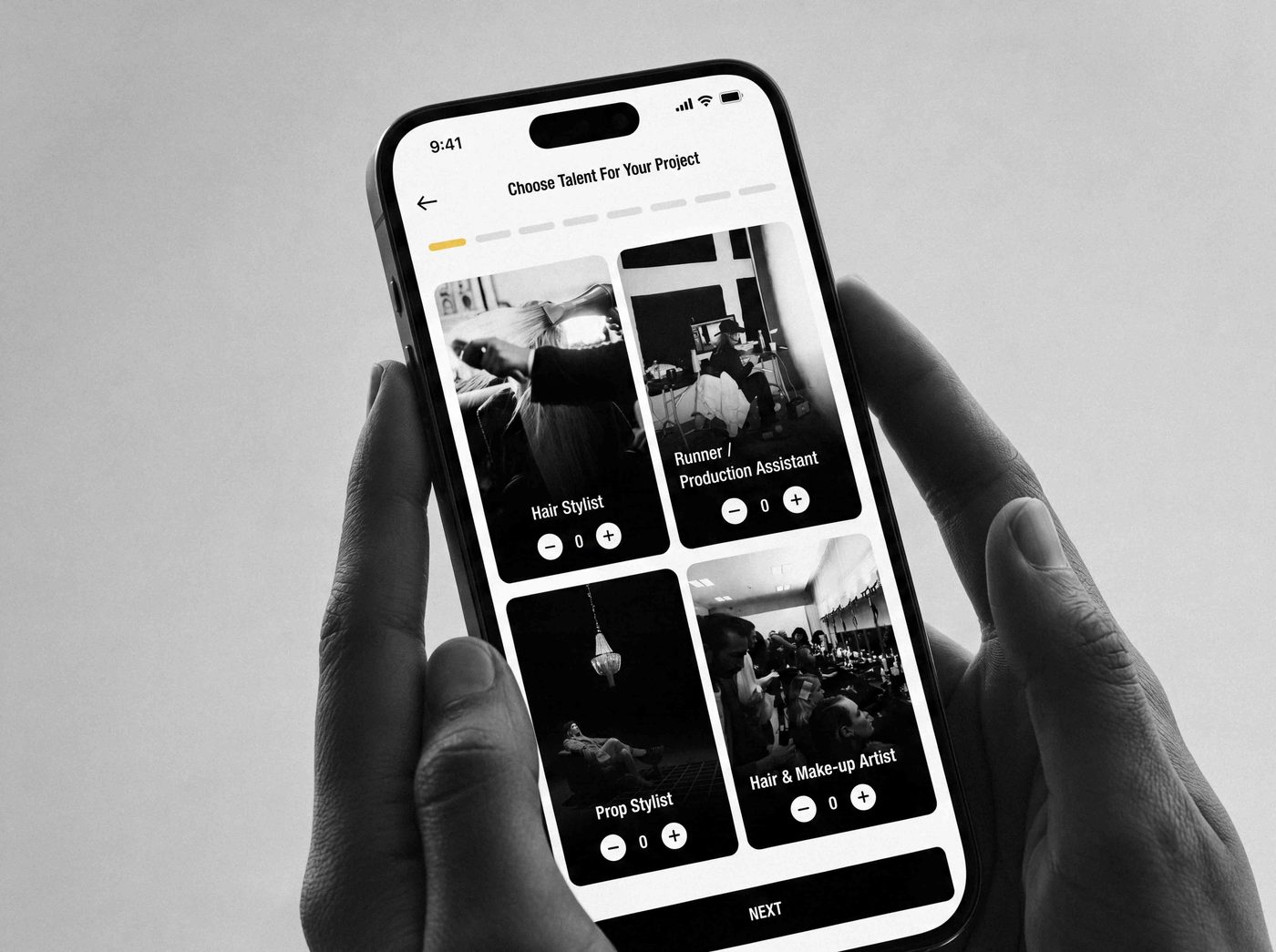
Prefer to book directly? The ANT Talent App lets you post a job and book vetted models, actors, influencers and creatives in Dubai in minutes, with escrow-protected payment processed by Stripe. Profiles are verified, and the app covers the UAE, Kuwait, Qatar and Saudi Arabia. Current prices are shown in the app. Clients who prefer a managed service can book through ANT Management directly at info@antmgmt.com.
FAQ
How long should a campaign timeline be?
For a multi-channel campaign, six to eight weeks is a common benchmark, and twelve weeks is common when approvals and reporting are heavier. Smaller campaigns can run in days to a few weeks. Add time for each extra channel, review round or approver.
When should talent be booked on the timeline?
Book once the brief is signed off and creative direction is approved. That gives casting time to shortlist, check availability and confirm before the shoot. Booking earlier risks changing the cast when the concept shifts.
What is the difference between a campaign timeline and a content calendar?
A timeline covers the whole campaign: brief, production, approvals, launch and reporting. A content calendar covers what is published, where and when. Teams that hire talent need both, plus a usage schedule for how long the material runs.
What should a go or no-go milestone include?
It should list the conditions for launch: approved assets, finished QA, tracking in place and usage rights cleared. It should also have three exits: go, not ready, and date must move. The last exit means notifying stakeholders.
Can ANT book talent for campaigns outside Dubai?
Yes. We book talent for shoots, events and shows anywhere in the world, and the ANT Talent App covers the UAE, Kuwait, Qatar and Saudi Arabia. Confirm travel dates early, because confirmed trips are charged in full if cancelled.
Sources
- Timeline, An Open Guide to Integrated Marketing Communications (KPU)
- Make a Marketing Timeline (Preceden)
- Advertising Campaign Operations Guide (Gradial)
- Ideal timeline for a multi-channel campaign (Pedowitz Group)
- Campaign Plan Template (Reasonate Studio)
- How to Write a Creative Brief (Smartsheet)
- Marketing Campaign Template (MangoApps)
- Marketing Timeline guide (HubSpot)
- How to map a marketing campaign process (QueryChart)
- Marketing calendars (Airtable)
- Free Marketing Timeline Template (Atlassian)
- Product launch photo opportunities
Two ways to book: send a booking request to ANT Management, or post a job on the ANT Talent App.
Recommended
Planning a shoot in Kuwait?
Prefer to book on your phone?
Post a job on the ANT Talent App and let approved talent come to you.
- Every profile approved by ANT
- Chat with talent in the app
- Payment held until the job is done

Free on iPhone
- 5.0on Google, 200+ reviews
- Since 2022modelling and talent agency
- Worldwideshoots, events and shows anywhere
- Licensed in Dubai. See our licence and booking terms