
Models: Runway Casting Checklist, Agency Prep, 5 Shots & 10–15s Walk
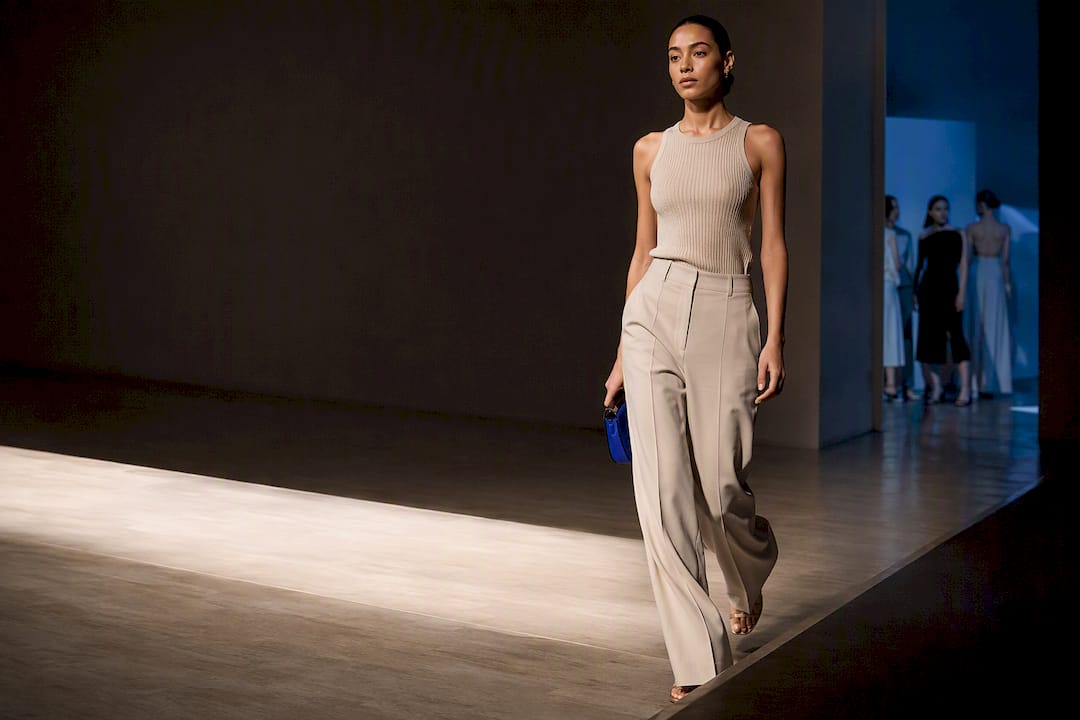
A runway casting is a short, selective audition where designers or casting directors assess your type, walk, and digitals in a matter of minutes. Update your digitals, record a fresh walk clip, and target verified open calls, or ask an agent to submit you directly. Eligibility and pay swing widely by market and show tier, so treat any figure as a range, not a guarantee.
TL;DR:
- Open calls are accessible to unrepresented models but typically offer little face time and require quick, minimal preparation.
- Requested castings and callbacks tend to favor agency-represented talent and involve more personalized review with higher expectations.
- Legitimacy checks should confirm no fees are charged, production details are specific, and the contact is a verified person or agency.
- Digitals must include five specific shots and a walk clip performed in neutral lighting, with accurate measurements kept consistent across platforms.
- Paying models can expect a range from $200 to over $2,500 depending on the market and show tier, with clear agreements on pay and usage rights.
Table of Contents
- What Are the Different Types of Runway Casting Calls?
- Where Can You Find Legitimate Runway Casting Calls?
- What Should Your Digitals and Comp Card Include?
- How Do You Practice a Runway Walk That Books Shows?
- What Happens During a Runway Casting?
- What Do Runway Models Typically Get Paid?
- How ANT Management Prepares Models for Runway Success
- The Habit That Actually Predicts Bookings
- Ready to Submit Your Digitals to ANT Management?
- Sources
What Are the Different Types of Runway Casting Calls?
Every casting has its own rhythm, and the format dictates what you bring and how much face time you get. Open calls invite any model to line up, often for a brand campaign or a smaller show, with only seconds of attention per person. Requested castings, sometimes called go-sees, come through an agent who has already pitched you, so the room is smaller and expectations are higher. Virtual or self-tape castings ask for a recorded walk and slate following an exact brief, a format that now functions as a legitimate first round rather than a fallback. Callbacks bring back a shortlist for a second look, usually with the designer present.
- Open calls: high volume, minimal prep time, best entry point for unrepresented models
- Requested castings: agency driven, favors represented talent, more one-on-one time
- Virtual/self-tape: follow the brief precisely, stable phone footage is fine
- Callbacks: fewer models, more scrutiny, often decides the final booking
Fashion week shows lean on requested castings and callbacks. Local or commercial runway work relies more on open calls, which is where new faces typically break in.
Where Can You Find Legitimate Runway Casting Calls?
Trustworthy castings come from a short list of sources: established casting platforms, agency open-call pages, verified brand or creative director announcements, and social accounts with a real history of production work. Casting Networks and similar platforms list runway opportunities that unrepresented models can apply to directly, though represented models still receive the bulk of requested castings.
Before you submit anything, run it through this checklist:
- No casting ever requires an audition fee
- Production details (date, location, client, usage) are specific, not vague
- The contact is a real person or agency with a verifiable presence
- Pay claims sound realistic for the market and show size
Representation still opens doors that open calls don’t. Agencies get invited to castings the public never sees, and a submission through an agent carries weight a cold application doesn’t.
Pro Tip: If a casting notice can’t tell you who is directing the show or what the usage rights cover, treat it as a red flag, no matter how big the promised exposure sounds.
What Should Your Digitals and Comp Card Include?
Casting directors filter fast, often in seconds, so your digitals need to survive that first glance. Skip heavy retouching. Clean, neutral lighting that shows exactly how you look in person reads as more credible than a styled shoot.
Build your set around these five shots and one clip:
- Straight-on headshot, no filters, natural expression
- Full-length shot in fitted clothing showing true body line
- Profile shot to confirm posture and silhouette
- A relaxed, candid shot that shows personality
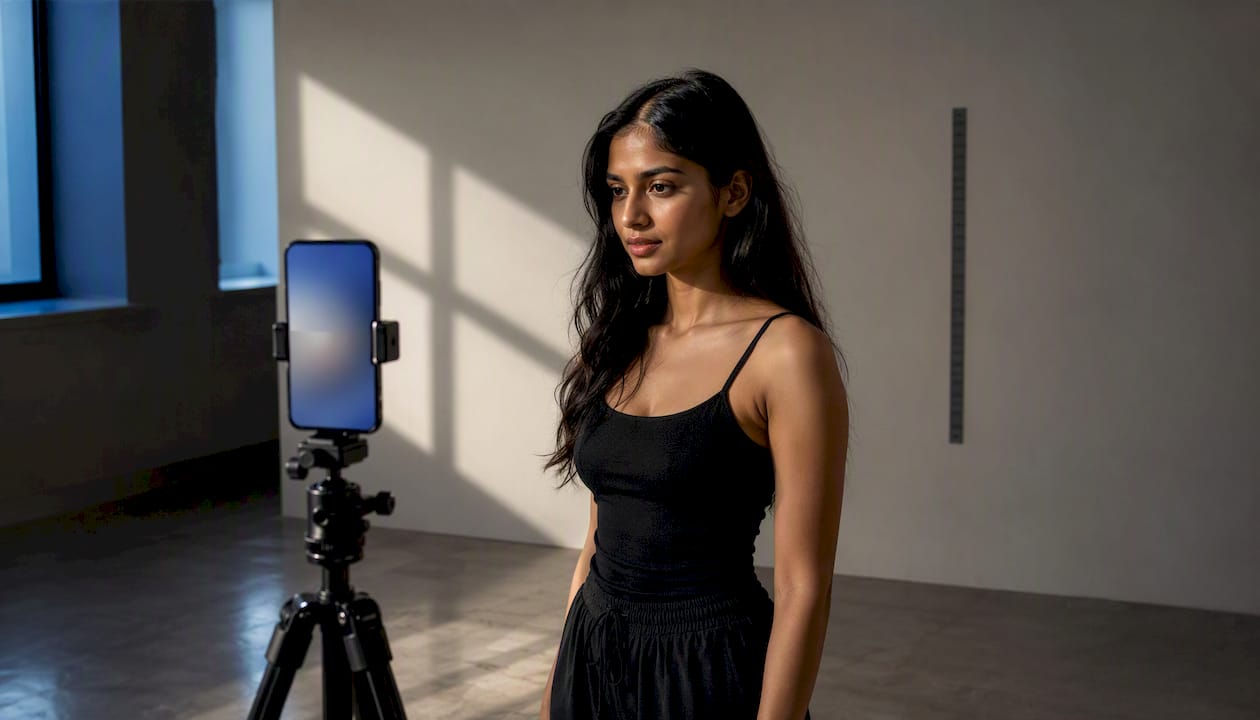
- A 10 to 15 second walk clip, shot straight on, full body in frame
Your comp card should list height, bust, waist, hip, shoe size, and hair and eye color, kept consistent across every platform you use. Sloppy or outdated measurements are one of the fastest ways to get passed over before anyone reads your name.
For self-tape submissions, follow the brief’s slate order exactly and hold the phone steady. Runway height standards for women commonly sit in the 5’8" to 5’11" range for high fashion work, though markets and specific shows vary, and exceptions exist for commercial and editorial bookings. A focused digitals guide or a photo submission resource can help you tighten the technical specs before you send anything out.
How Do You Practice a Runway Walk That Books Shows?
A booked walk is built, not born. Casting teams are watching for six specific checkpoints: posture, foot placement, cadence, arm carriage, turn control, and the final pose. Each one is trainable on your own or with a coach.
- Mirror work: 15 minutes daily, focused on one checkpoint at a time
- Video review: record every session and watch it back the same day
- Heel adaptation: practice in the heel height you’ll actually be cast in
- Tempo control: walk to a metronome or playlist to lock in consistent cadence
Adapt your walk to the brief. A minimalist tailoring show wants a controlled, quiet stride. A directional streetwear brand may want more attitude in the shoulders. Bring both registers into your practice rotation so you’re not caught flat-footed by a brief that asks for something outside your default.
Pro Tip: Film your walk in the exact shoes and floor surface you’ll face at the casting whenever possible. A walk that looks flawless in sneakers on carpet can fall apart in a stiletto on marble.
What Happens During a Runway Casting?
Most castings run five to ten minutes from arrival to exit, and the sequence rarely changes:
- Check-in and size card, where staff record your measurements on the spot
- A quick scan of your book or digitals, often taking less than a minute
- Your walk or demo, sometimes with a turn or a pose on request
- Instant digitals shot by the casting team, capturing you as you look that day
- A quick availability check for fitting and show dates
- Exit, often without feedback
The first ten seconds decide more than most models realize. Staff are judging whether you match your submitted photos, whether your type fits the brief, and whether you seem easy to work with on set. That impression starts at reception, not on the walk. Callbacks and booking confirmations can take days or weeks, and silence after a casting is normal, not a rejection in itself.
What Do Runway Models Typically Get Paid?
Compensation ranges enormously by market and designer tier. Smaller or emerging designers often pay in the $200 to $1,000 range, mid-market shows can reach up to $2,500, and top-tier fashion week bookings pay considerably more. Treat any figure you hear as a market snapshot, not a fixed rate.
- Confirm whether payment is cash, wardrobe, keepers, or a mix of all three
- Ask who owns usage rights to images and video from the show
- Require a written agreement, even a simple one, before the fitting
- Confirm payment timing, since some shows pay 30 to 60 days after the event
An agency contract typically protects you on all four points, which is one reason represented models negotiate better terms than freelancers walking in cold.
How ANT Management Prepares Models for Runway Success
The agency curates talent through a review process and offers training programs designed to close the gap between raw potential and casting-ready presentation. Agency submission differs from an open call in one key way: presenters expect agency-submitted talent to arrive already polished, measured accurately, and familiar with brief-specific walk adjustments.
Before requesting representation, models should have:
- Current digitals shot in neutral lighting, no heavy retouching
- A walk clip filmed straight on, full body, at least 10 seconds
- Accurate, consistent measurements across every platform used
- A short, curated portfolio that shows line and posture rather than volume
A quarterly review of these materials keeps a model genuinely submission-ready rather than perpetually catching up.
The Habit That Actually Predicts Bookings
Talent and look get a model into the room. Professionalism keeps them in rotation. Casting teams remember who was easy to work with as much as who walked well, and that reputation follows a model from show to show far longer than any single booking does.
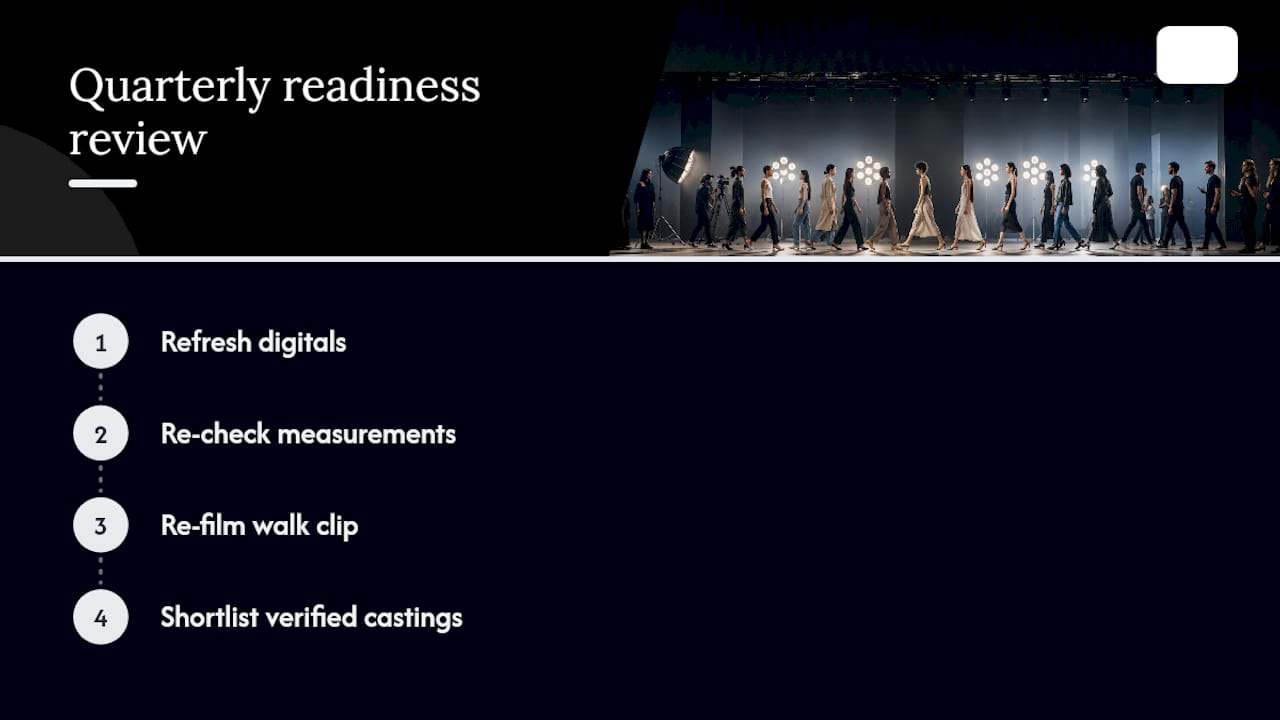
The single habit worth adopting is a quarterly readiness review: refresh your digitals, re-check your measurements, re-film your walk clip, and shortlist verified castings before the next season starts. Models who treat preparation as a recurring discipline, not a one-time scramble, book more consistently than models who only prep when a casting notice lands in their inbox.
— ANT
Ready to Submit Your Digitals to ANT Management?
Open calls and casting platforms get you in the door, but agency representation gets you into rooms that never post a public notice. The agency curates fashion, commercial, and kid models, influencers, and creative talent across various markets, then backs that placement with development support through training programs.
If your digitals, measurements, and walk clip are ready, the next step is straightforward: apply through the Become a Model page, or explore regional representation through the Dubai agency page if you’re based in the Gulf region. Models in nearby markets can also check regional options through the Qatar or Kuwait pages. Submit your materials now, and an agent reviews your fit for upcoming castings directly.
Sources
- Model Casting Calls: An Insider’s Guide
- How to Become a Runway Model | Backstage
- Model castings 101: What to expect and how to shine | Modnet
- Model Measurements Guide: Size Requirements by Market (2026) | Get Scouted Models