
Talent Coordination Checklist: From Brief to Final Payment

A well-coordinated booking is choreography: every person arrives at the right place, at the right hour, with the right paperwork, and knows what the frame will ask of them. The checklist below follows a job in the order it unfolds (brief, shortlist, contract, logistics, set or event day, wrap), for the brand, agency, producer or event team doing the booking. It applies to a two-model e-commerce shoot in Dubai and to a multi-city activation alike.
TL;DR
- Coordination starts with a dated, written brief that separates hard requirements from preferences; most later problems trace back to a vague one.
- Shortlist in one consolidated round, confirm availability for shoot and backup days, and keep a reserve candidate until contracts are signed.
- Put usage (term, territory, media, exclusivity), overtime, cancellation and payment timing in writing before anyone travels.
- On the day, brief talent on access, schedule, safety and contacts, and send the call sheet in advance.
- Close the job with approvals, releases, payment and a short debrief, so the next booking begins from what you learned.
Table of Contents
- Stage one: the brief that everything else rests on
- Stage two: sourcing, shortlisting and confirming
- Stage three: contracts, usage and payment terms
- Stage four: logistics before the job
- Stage five: safety, insurance and site responsibility
- Stage six: the day itself
- Stage seven: wrap, approvals and payment
- Our perspective
- How ANT handles the coordination for you
- FAQ
- Sources
Stage one: the brief that everything else rests on
A brief is the score the rest of the production is played from. Casting guidance from Tillyboard advises separating hard requirements from preferences, describing the role through the action and the scene, and stating fitting, shoot and possible weather dates, the fee frame, usage by media and duration, and the submission deadline. Treat that as the minimum.
Use this list before you send anything out:
- Purpose and deliverables: what the work is for (campaign, lookbook, show, activation) and what files, cuts or hours you expect.
- Role profile: what the person does on camera or on the floor, the energy, age range, languages and any brand constraints.
- Hard requirements versus preferences: sizes, skills, licenses or experience that are non-negotiable, kept apart from nice-to-haves.
- Dates: preparation, fitting, shoot, backup and wrap days, each with a time window.
- Location: address, access, studio loading details and a fallback if weather or permits change the plan.
- Budget frame and usage: the fee range and where the images or footage will run, and for how long.
- Deadline and contact: who answers questions and by when you need replies.
Our own guides go deeper on the format: how to write a casting brief, a one-page model brief template and a casting call template. If this is your first job, the model booking process walks through the sequence.
Stage two: sourcing, shortlisting and confirming
The route to talent varies: an agency, a booking platform or real-people casting. Whichever you choose, the discipline is the same. Tillyboard’s casting guidance recommends realistic recorded auditions, one consolidated review round, and availability checked against both shoot and weather-backup dates, with a backup candidate kept warm until contracts are signed.
Build the shortlist so it can be decided in one sitting
Each option should arrive with the same material: a comp card, current digitals and a rate. SetFlow suggests that every booking be accepted or declined in writing, which keeps the record clean when schedules shift. A simple casting sheet helps. Tillyboard’s template proposes tracking each candidate’s source, agency, contact, tape link, availability against actual dates with the check date, fee expectation, sizes, status and the reason for the decision.
A practical version of that sheet:
| Field | Why it matters |
|---|---|
| Source and contact | Who to call when a change comes in |
| Availability (with date checked) | Availability is perishable; the date tells you how fresh it is |
| Sizes and skills | Fittings and wardrobe can be prepared before arrival |
| Fee expectation | Keeps you inside the budget frame |
| Status and decision reason | Makes the choice defensible to clients and stakeholders |
Confirm, then confirm again
Send a written confirmation with call time, address, wardrobe notes and a named contact. If talent will travel, collect passport validity, travel preferences and dietary needs at the same moment, not a week out. Our guide to talent travel logistics covers how to move models and crews across borders.
Stage three: contracts, usage and payment terms
This is the stage where a pleasant job becomes a disputed one if the paper is thin. The Artist Management Association’s photo-production guidelines say usage terms should identify duration, territory, media types, exclusivity and deliverables, and that usage rights transfer only after payment in full. Those guidelines were written for the United States; apply the principle, and check local rules wherever you shoot.
Agree and record:
- Role, dates, hours and deliverables.
- Fee, overtime and expenses, with who pays for what (transport, meals, accommodation).
- Cancellation and postponement rules, including what happens to a confirmed trip.
- Payment method and timing, and what counts as late.
- Usage: term, territory, media, exclusivity. Extensions, renewals and anything outside scope should require written agreement.
For reference, ANT’s published booking terms set overtime at 15% per hour, cancellation within 48 hours at 50%, cancellation within 24 hours at 100%, cancellation of confirmed trips at 100%, and late payment fees at 9% per month. Whatever agency you use, ask for equivalent terms in writing before you confirm, so that a late sunset or a client delay has a known cost rather than a negotiated one.
For stunt work, add credentials to the checklist. We list five stunt coordinator requirements worth demanding before anyone signs.

Stage four: logistics before the job
Logistics is where coordination is most visible and most often underestimated. A Belgian production checklist reads like a good memory aid: it asks for a dated brief, preparation, shoot and wrap dates, locations and fallback, permits, studio access, crew roles and working language, entry formalities, equipment delivery and return, insurance, transport, accommodation, meals, emergency contacts and a call sheet. FilmFreebies Academy’s planning guidance likewise lists budget, permissions, people and roles, equipment, travel, schedule, shot list and risk as core sections of a production plan, and recommends confirming availability in writing and sharing call sheets ahead of time.
Turn that into a one-week-out review:
- Permits and permissions: confirmed in writing for every location, with the permit holder named.
- Wardrobe and styling: sizes received, fittings scheduled, backups for key looks.
- Transport and accommodation: pick-ups timed against call times, with a buffer; hotel and flight details shared with talent.
- Equipment: delivered, tested and a return plan agreed.
- Roles: every crew member and talent listed with a task and a name. Our overview of production crew roles helps you spot a gap, such as a missing stylist, producer or assistant.
- Call sheet: drafted, checked and sent; see our call sheet basics.
Children and minors
If your cast includes minors, check the rules of the place where you shoot, early. As one example, a CalArts production guide notes that California minors need work permits and employers need permits to employ, that a certified studio teacher is required in specified circumstances, and that a parent or guardian must remain within sight and sound. Other jurisdictions have their own regimes. Ask your agency or local authority for the current requirements, and plan extra rest areas and a guardian’s schedule into the day.
Stage five: safety, insurance and site responsibility
Outsourcing a task does not outsource responsibility. Australian entertainment-industry safety guidelines state that producers and venues retain health and safety responsibility and must assess every phase from design through bump-out, communicate hazards and controls, and provide a site induction covering access, amenities, PPE, first aid, evacuation and manual handling.

For events, Singapore’s Workplace Safety and Health Council guidance expects organisers to conduct a risk assessment before work, use a multidisciplinary team, and set up an emergency team with defined roles and drills. On location, Screen Manchester’s code says permission must be obtained before filming, affected parties consulted, risk assessments provided and public-liability insurance carried, with limits specific to that city. These are regional examples, not universal law. The habit they share is what to copy: assess, document, brief, insure.
Small details protect a smooth start. Dress and access rules decide how quickly a crowd passes the door, and a clear corporate event dress code is one way to cut check-in delays and keep footwear and clothing safe on an active site. For a shoot or activation, state wardrobe, footwear and access requirements in the confirmation, not at the gate.
Stage six: the day itself
On the day, coordination becomes a matter of tempo. The aim is for talent to spend their energy on performance, not on finding the entrance.
- Arrival: a named contact meets talent at an agreed point, with the day’s schedule in hand.
- Induction: walk through access and exits, facilities, first aid, emergency procedures and who to call.
- Briefing: show the shot list or run of show, wardrobe order, breaks and the approval process for looks.
- Rhythm: keep a running log of start times, breaks and overtime, so billing matches reality.
- Care: water, shade or heating, meals, a private changing space and a clear line for concerns.
- Etiquette: set expectations for phones, guests on set and conduct. Our on-set etiquette checklist is built for that first morning.
For a larger set, the photoshoot production checklist breaks the day down by group setup.
Stage seven: wrap, approvals and payment
Wrap is not an afterthought; it is the part that earns the next booking. No single standard source governs this stage, so build it from the terms you agreed earlier.
- Time confirmation: reconcile logged hours and any overtime against the contract the same day, while everyone remembers.
- Approvals: collect sign-off on selects, edits or footage according to the agreed review process.
- Releases: confirm signed releases and usage terms are filed together for every person who appears.
- Payment: pay on the agreed schedule. Under the AMA principle above, usage should not be treated as transferred until the agreed payment condition is met.
- Delivery: send final files or links, and note usage start and end dates on your calendar so renewals are deliberate.
- Debrief: note what ran late, who excelled, and what the brief missed, then update your template.
Our perspective
We see the same pattern from the agency side of the desk: the shoots that feel effortless were decided weeks earlier, on paper. A precise brief, a shortlist of people who are genuinely available, and terms that nobody has to argue about on the day are what make a set feel unhurried.
That is why ANT Management runs as one agency for everything in front of and behind the camera, from models and kids to stunt performers and production crew. Clients send a brief and receive a shortlist of available talent within an hour during working hours. Talent can be sent to shoots, events and shows in Dubai, the GCC and anywhere in the world.
Coordination is not an administrative layer. It is part of the creative direction, the quiet structure that lets expression move freely. We would rather carry that structure for you than leave it to chance.
ANT
How ANT handles the coordination for you
Talent selection, coordination and briefing is a core part of what we do: we match the brief to available people, handle the briefing and manage the booking from first message to wrap. Explore model booking and event staffing, or go straight to a category such as talent booking, creatives and full production crew or stunts.
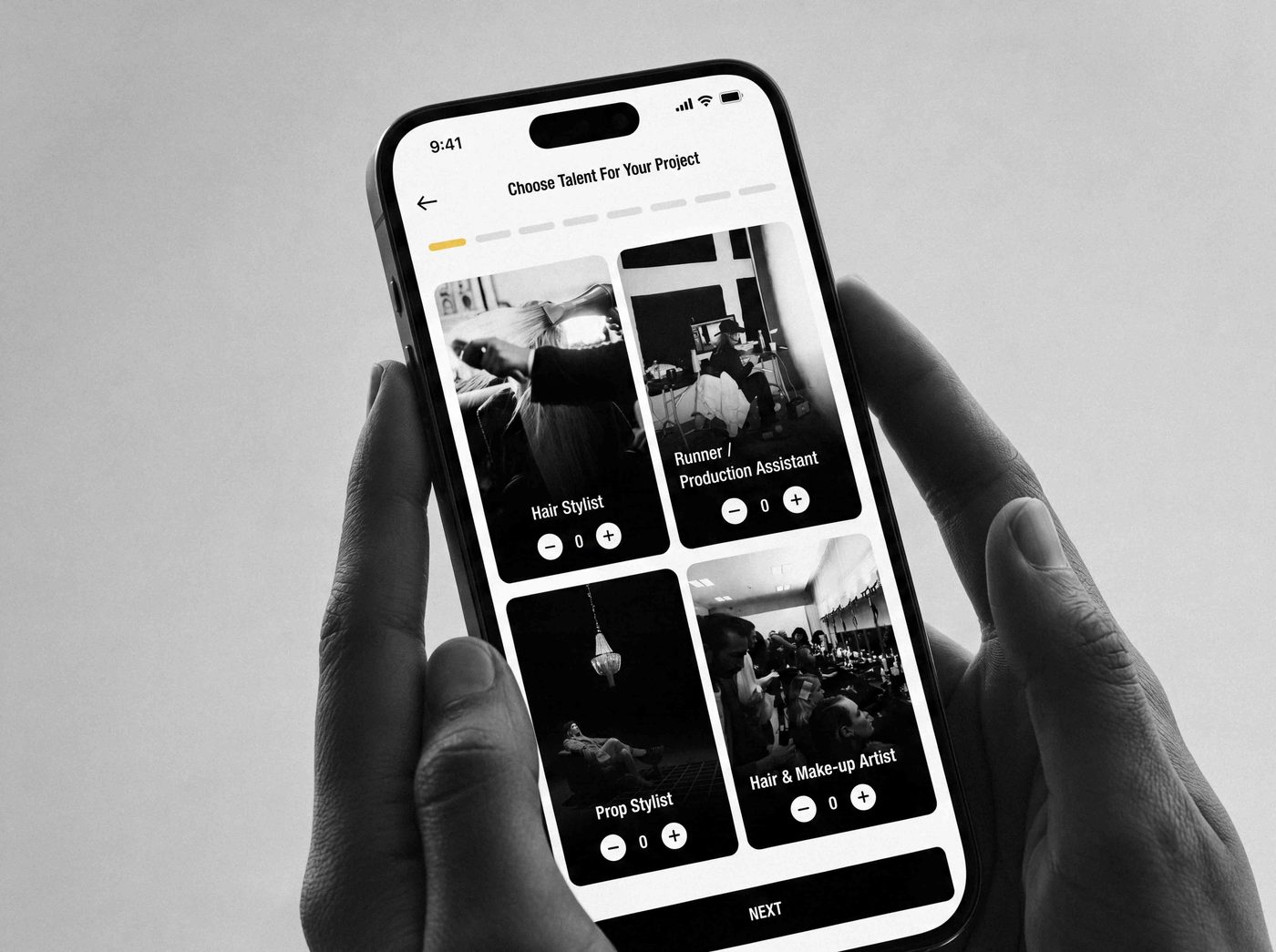
Prefer to run the process yourself? The ANT Talent App lets you post a job and book vetted models, actors, influencers and creatives in minutes, with verified profiles and escrow-protected payment processed by Stripe. It covers the UAE, Kuwait, Qatar and Saudi Arabia, and current prices are shown in the app. Clients who prefer a fully managed service can book through ANT directly at info@antmgmt.com.
FAQ
How far ahead should I start coordinating talent?
Start as soon as you have dates and a budget frame, because availability is the first thing to disappear. For simple shoots, a few days can work, and for travel or multi-day productions allow more time for permits, entry formalities and fittings. Ask your agency what lead time suits your job type.
What is the most common coordination mistake?
A vague brief. When requirements and preferences are mixed together, shortlists drift, fees are misjudged and usage is argued about after the fact. Write the brief first, with dates, deliverables and usage, and the rest becomes easier to manage.
Who is responsible for talent safety on a shoot or event?
The producer or organiser keeps responsibility even when tasks are delegated, as the Australian industry guidelines above emphasize. Assess hazards, brief talent on site procedures and keep emergency contacts visible. Local law varies, so check the requirements where you work.
Do I need a written agreement for a one-day booking?
Yes. A short agreement covering role, hours, fee, overtime, cancellation, payment timing and usage protects both sides, and costs minutes to prepare. It also gives you a clear basis for any change on the day.
Sources
- Casting brief template: role, scope and usage
- Casting on-camera talent for brand and corporate work
- Casting sheet template: candidates side by side
- Run casting from first brief to a confirmed call
- AMA National Guidelines, Photo Production
- Shoot checklist (Wallmovie)
- Photography Preproduction and Logistics Made Simple
- School of Film/Video Faculty Production Guide (CalArts)
- Safety Guidelines for the Entertainment Industry
- Workplace Safety and Health Guidelines for Event Management
- Location Filming in Manchester Code of Practice
- Corporate event dress code
Two ways to book: send a booking request to ANT Management, or post a job on the ANT Talent App and book vetted models, actors, influencers and creatives in Dubai in minutes, with escrow-protected payment.
Recommended
Planning a shoot in Kuwait?
Prefer to book on your phone?
Post a job on the ANT Talent App and let approved talent come to you.
- Every profile approved by ANT
- Chat with talent in the app
- Payment held until the job is done

Free on iPhone
- 5.0on Google, 200+ reviews
- Since 2022modelling and talent agency
- Worldwideshoots, events and shows anywhere
- Licensed in Dubai. See our licence and booking terms