
How to Hire Influencers in Dubai: A Brand Guide

Hiring influencers in Dubai comes down to five decisions: who fits the audience you want, whether they are permitted to post paid content in the UAE, what the agreement says, how the fee is built, and how you will measure the result. Get those right and the city’s creator economy is one of the most efficient places in the region to build visibility. Get them wrong and a budget disappears into borrowed followers and unusable content.
This guide is written for the person doing the booking: brand managers, agency producers, activation teams and marketers planning a campaign in Dubai or across the GCC.
TL;DR
- Start with audience fit (location, interests, engagement quality), not follower count. Dubai audiences are international, and a large following can sit mostly outside your market.
- Since 2026, UAE creators posting promotional content, paid or unpaid, need an Advertiser Permit. Ask for the permit number before you sign.
- Put deliverables, approval rounds, usage rights, exclusivity, disclosure and payment triggers in writing. Formal contracts are not a legal requirement in the UAE, but they are strongly recommended.
- Fees swing by platform, tier and season. Ramadan and the Dubai Shopping Festival push rates up, so book early.
- Campaigns rarely run on creators alone. Plan models, hostesses, crews and stylists in the same brief.
Table of Contents
- Why Dubai, and why brands brief it differently
- Step 1: Define the role the creator plays
- Step 2: Vet audience fit before you fall for the feed
- Step 3: Confirm the UAE permit and disclosure position
- Step 4: Put the brief and agreement in writing
- Step 5: Understand what drives the fee
- Step 6: Plan the campaign around more than the creator
- Step 7: Decide in advance how you will measure results
- Our perspective: curation is the real product
- Hiring routes compared
- Book influencers through ANT
- FAQ
- Sources
Why Dubai, and why brands brief it differently
Dubai concentrates what a campaign needs: a multinational audience, premium locations, a dense calendar of launches and retail moments, and a creator community that is used to working with brands. That same density is the difficulty. Hundreds of creators claim a Dubai base, and the label tells you little about who actually follows them.
The regional conversation has also matured. Campaign Middle East reported in February 2026 that MENA influencer marketing is moving beyond follower counts and one-off deals toward credibility, cultural fit, creator skill, measurement and regulation. For a brand, that translates into a simple posture: treat creators as a production partner with a point of view, not as a media slot to be filled.
Step 1: Define the role the creator plays
Before a single profile is opened, decide what the creator is for. The answer changes who you shortlist.
- Awareness at scale: reach-led creators whose audience matches your target geography.
- Credibility in a category: specialists in fashion, hospitality, automotive, beauty or wellness whose followers trust their taste.
- Content you will reuse: creators with real production skill, whose footage and photography can live on your own channels and paid media, subject to usage rights.
- Local activation: creators who attend, host or document an event, store opening or launch.
Write this in one sentence at the top of the brief. Everything after it, from tier to fee, follows from it.
Step 2: Vet audience fit before you fall for the feed
A polished grid proves the creator can shoot. It does not prove the audience is yours. Sprout Social’s vetting guidance points brands to audience interests and location, engagement quality, content quality and past brand partnerships as the core checks. Sponsorship.so recommends reviewing audience demographics, sponsor history, disclosure habits and content quality, and suggests a 100-point scorecard to keep the decision consistent across candidates.
In practice, ask for the following from every creator you consider:
- Audience location breakdown from the platform’s own analytics, screenshotted and dated. You want the share of followers in the UAE and the wider GCC, not just a headline number.
- Age and gender split, set against your buyer.
- Recent sponsored posts, so you can see how they integrate brands and whether disclosure is clear.
- Category conflicts: who else in your sector they have promoted lately.
- Comment quality: real conversation, specific questions and replies, rather than strings of emojis or generic praise.
Separate deal-breakers from trade-offs. Sponsorship.so makes the point that a creator with average engagement can still be a strong partner when the audience matches the brand’s target demographic. A fashion label targeting Gulf nationals may rightly prefer a modest, local account over a larger one with a scattered global following.
Fake engagement is a budget issue, not a footnote
One regional estimate puts the loss at around 36% of influencer budgets in the GCC going to fake engagement, with 36.8% of Instagram influencers in the region affected in 2024. Treat that as a directional warning rather than a precise measure, and build protection into the process: sudden follower jumps, engagement that does not move with follower count, comments from unrelated accounts and audiences concentrated in countries you do not sell to are all reasons to ask for more data. A structured approach to audience profiling helps you define who the real customer is before you test a creator against that profile.

Step 3: Confirm the UAE permit and disclosure position
This is the step that has changed most recently, and the one a brand cannot delegate away entirely.
The UAE Media Council runs a permit for individuals who create advertising or media content on social media. The service page lists it as free and ties it to an economic activity license for practicing electronic media. The National reported in January 2026 that creators must hold an Advertiser Permit for promotional content, whether paid or unpaid, and that the permit number must be displayed on the account. The same report says visitors need a visitor permit and must be registered through a UAE-licensed advertising or talent-management agency.
What this means when you hire:
- Ask for the permit number and check it appears on the creator’s account before the campaign goes live.
- Do not book visiting creators informally. If a creator is flying in for a shoot, the route runs through a licensed agency.
- Write compliance into the contract: the creator warrants they hold the required permit and will label content as advertising.
- Check the current rules on the official Media Council site before each campaign, because requirements and fees for permits can be revised.
None of this is legal advice. For a large campaign or one with regulated products, your legal counsel should confirm the position for your category.
Step 4: Put the brief and agreement in writing
A formal contract is not a legal requirement in the UAE, but the ABG Best Practices Charter for the UAE highly recommends one to define partnership terms, usage rights and editorial controls. A good brief and agreement together should cover, in the words of UAE legal commentary, deliverables and formats, approval rounds and turnaround times, usage rights, exclusivity and category conflicts, disclosure requirements and payment triggers.
Turned into a working checklist:
| Clause | What to specify |
|---|---|
| Deliverables | Number and format of posts, Reels, Stories or videos; platforms; posting dates and times |
| Approvals | Who approves, how many revision rounds, turnaround in hours or days |
| Usage rights | Where you may reuse the content (organic, paid, in-store, out-of-home), for how long, in which territories |
| Exclusivity | Competing brands the creator may not promote, and for how long before and after |
| Disclosure | Required labels, permit number display, platform tools for paid partnership |
| Payment | Amount and currency, instalments, what triggers each release |
| Cancellation | Notice periods and what each side owes if a shoot is moved or dropped |
When an agency or intermediary manages the campaign, make sure the obligations you negotiated are mirrored in the creator’s own engagement terms. Neo Legal describes this as a synchronized contract stack: a restriction that sits only in your agreement with the agency, and never reaches the creator, is a liability gap.
Step 5: Understand what drives the fee
Influencer pricing in the UAE is not standardized, and no official body publishes a rate card. What a brand pays depends on:
- Platform and format. A single Story, a Reel, a YouTube integration and a multi-day event attendance are priced differently.
- Tier. One 2025 UAE guide lists Instagram rates from AED 500 to 2,000 for nano-influencers and AED 50,000 to 200,000 for mega influencers. Treat these as indicative, since individual creators price on their own terms.
- Usage rights and exclusivity. Paid-media usage and category exclusivity add to a base fee.
- Season. The same guide notes that costs spike around Ramadan and the Dubai Shopping Festival, when demand from retail and hospitality peaks.
- Production load. A creator who must travel, style, shoot with a crew or attend late hours costs more than one filming at home.
If you book through ANT Management, project terms are set per booking, and our published booking terms are specific about the operational items that surprise clients: overtime is charged at 15% per hour, cancellation within 48 hours carries a 50% fee, and cancellation within 24 hours carries 100%. The full terms are on the booking terms page. Plan call times and approvals so that a late change does not turn into a cost.
Step 6: Plan the campaign around more than the creator
The most memorable Dubai campaigns are rarely a single face holding a product. A launch might pair an influencer’s point-of-view content with professional models for the hero imagery, hostesses at the venue, a photographer and videographer for the brand’s own library, and a stylist who keeps every look coherent. Treat the creator as one voice in an ensemble.
A workable coordination model:
- Lock the creative direction first. Mood, palette, wardrobe, locations and the story each asset tells.
- Cast by role. Creators for reach and voice; models for controlled, editorial imagery; hosts and staff for guest experience.
- Build one call sheet. Every person sees the same schedule, locations, dress code and approvals chain.
- Separate content ownership. Creator content follows the creator’s usage terms; commissioned model and crew imagery follows the production’s licence. Do not assume one covers the other.
- Name one point of contact on your side and one on the talent side, so that changes travel through a single channel.
This is where a managed approach earns its place. Influencer marketing, model and talent booking and creative and full production crew booking can sit under one brief rather than three separate negotiations.
Step 7: Decide in advance how you will measure results
Measurement is chosen before the campaign, not after. Pick the metric that reflects the role you defined in Step 1: reach and video views for awareness, saves, shares and qualified comments for credibility, tracked links or codes for sales, and asset performance in your own paid channels for reusable content. A practical overview of measurement in campaigns can help you set baselines and reporting rhythm.
Two habits keep reporting honest. First, ask creators for native analytics screenshots at 48 hours and again at the end of the campaign window, rather than accepting a summary. Second, compare against a baseline of your own recent organic performance, so that results are judged against something real. Zainah Yassin of Vamp Middle East frames the regional direction as one where credibility, audience respect, cultural understanding, measurement and regulation all matter together. Reporting that ignores the cultural fit of the work misses half the picture.
Our perspective: curation is the real product
The Dubai market does not suffer from a shortage of creators. It suffers from a shortage of certainty. A brand booking directly has to verify permits, audiences, past work, availability and conduct on set, all while a launch date approaches.
We approach influencer work the way a fashion house approaches casting: every talent is selected through a curation process, and the brief comes first. A creator who suits a lifestyle brand’s rhythm may be wrong for a luxury launch that needs stillness and restraint, and the reverse is equally true. Our job is to make that distinction before the booking, then keep the production moving: talent selection, coordination and briefing, professional advice for productions, and support on the day.
Our network across the GCC, Europe, the US and Asia also matters when a campaign needs a creator and a cast who can work together across borders. The stronger the brief, the better the match, and the fewer surprises on set.
— ANT
Hiring routes compared
| Route | Best for | Trade-off |
|---|---|---|
| Direct outreach to creators | One-off, small activations | You handle vetting, permits, contracts and payment yourself |
| Self-serve influencer platforms | Fast shortlists across many creators | Quality of vetting varies; coordination with models and crews sits elsewhere |
| Full-service marketing agencies | Large integrated campaigns | Higher overhead; creators may be one small part of the scope |
| Talent agency with managed booking | Campaigns that combine creators, models, hosts and crews | Best when you want one accountable partner and a curated pool |
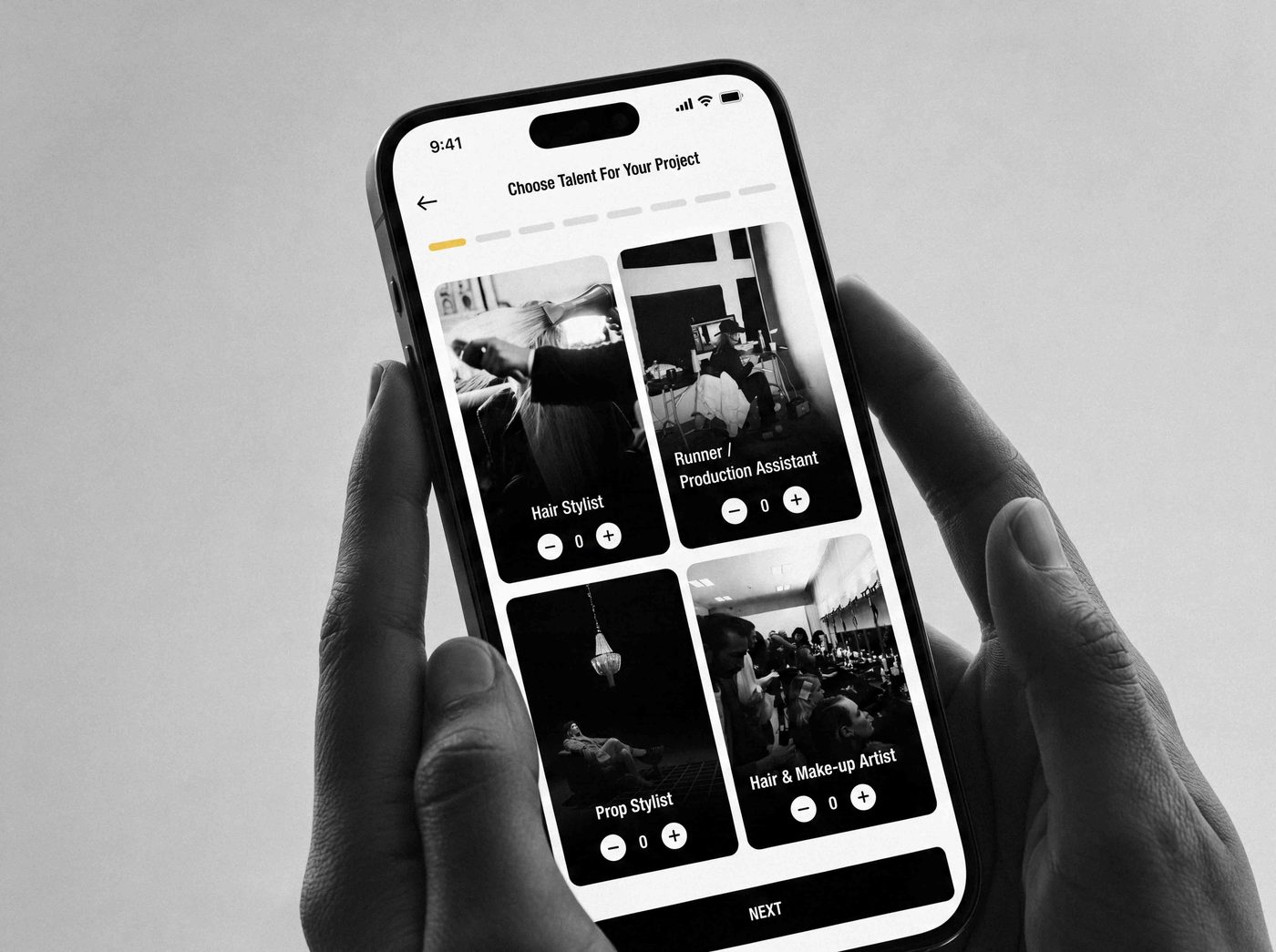
The right choice depends on the scale of the campaign and how much of the process you want to own. If you want to move quickly and keep control, the ANT Talent App gives you a direct route; if you want a person managing details, our managed service does that.
Book influencers through ANT
We maintain a curated roster of influencers and creators in Dubai, with coverage across the GCC. You can browse influencers in Dubai, see regional rosters for Qatar, Kuwait and Saudi Arabia, or combine creators with models, hosts, photographers, videographers, stylists and stunt coordinators from the same agency. For event-led campaigns, event staffing is part of the same offer.
The ANT Talent App is built for brands that want to book without the back-and-forth: post a job and book vetted models, actors, influencers and creatives in Dubai in minutes, with verified profiles and escrow-protected payment processed by Stripe. Coverage extends across the UAE, Kuwait, Qatar and Saudi Arabia. Current prices are shown in the app.
Clients who prefer a managed service can book through ANT Management directly at info@antmgmt.com.
FAQ
How do you hire influencers in Dubai?
Define the campaign role, shortlist creators whose audience matches your market, and confirm each holds the required UAE Advertiser Permit. Then agree a written brief covering deliverables, approvals, usage rights, exclusivity, disclosure and payment. You can do this directly, through a platform, or through a talent agency that manages the booking.
Do influencers in the UAE need a permit to post paid content?
Yes. According to The National’s January 2026 report, creators posting promotional content, paid or unpaid, must hold an Advertiser Permit and display the number on their account. Visiting creators must also be registered through a UAE-licensed agency. Check the UAE Media Council’s site for the current requirements before you book.
How much does it cost to hire an influencer in Dubai?
It depends on platform, follower tier, usage rights, exclusivity, production demands and season. One 2025 UAE guide lists Instagram rates from AED 500 to 2,000 for nano-influencers up to AED 50,000 to 200,000 for mega influencers. Rates tend to rise around Ramadan and the Dubai Shopping Festival, so request quotes early.
How do I know an influencer’s followers are real?
Ask for native analytics showing audience location, age and gender, then compare engagement with follower count and read the comments for genuine conversation. Reviewing sponsor history helps too. Using a curated roster reduces this risk because vetting happens before the creator reaches your shortlist.
Can I book influencers together with models and event staff?
Yes, and for launches and activations it usually works better. A single brief and call sheet keeps creative direction consistent, and one booking partner can cover creators, models, hosts and crews together.
Sources
- A Step-by-Step Guide to the Influencer Vetting Process
- How to Vet Influencers Before Sponsoring Them
- Fake Followers and Influencer Fraud in the GCC
- Audience Profiling: The Marketer’s Complete Practical Guide
- UAE Media Council: permit for individuals to create advertising content
- The National: UAE influencers and mandatory licensing
- ABG Best Practices Charter UAE
- Neo Legal: influencer marketing in the UAE
- How to Track Influencer ROI in UAE
- Campaign Middle East: the year ahead for influencer marketing
- The role of measurement in campaigns
Ready to book? Post a job on the ANT Talent App and book vetted models, actors, influencers and creatives in Dubai in minutes, with escrow-protected payment.
Recommended
Planning a shoot in Qatar?
Prefer to book on your phone?
Post a job on the ANT Talent App and let approved talent come to you.
- Every profile approved by ANT
- Chat with talent in the app
- Payment held until the job is done

Free on iPhone
- 5.0on Google, 200+ reviews
- Since 2022modelling and talent agency
- Worldwideshoots, events and shows anywhere
- Licensed in Dubai. See our licence and booking terms