
Brands: Book Curated Global Talent in 48 Hours via Talent Marketplaces

A talent marketplace platform links brands to models, influencers, and event talent through searchable listings, filters, and order management. Choose a self-serve marketplace when speed and volume matter most, but move to a managed agency marketplace, such as ANT Management, when curation, usage rights, or cross-border logistics carry real risk.
TL;DR:
- Marketplace speed makes it ideal for large-volume user-generated content with applicants often surfaced within 48 hours, though filtering remains essential.
- High-production or international campaigns benefit from curated agency services, which provide vetted talent and handle logistics across multiple regions.
- Evaluating platforms requires examining talent curation, audience authenticity, contract support, payment protections, logistics reach, and responsive support, with red flags including no dispute process or transparency.
- Booking workflows must include detailed briefs, careful vetting, clear usage terms, and backup plans to prevent delays or mismatches, especially on production day.
- Negotiating shorter, specific usage periods and detailed contract clauses reduces costs and preserves flexibility compared to indefinite buyouts.
Table of Contents
- What Is a Talent Marketplace Platform, Exactly?
- Marketplace or Agency: Which Fits Your Campaign?
- How Do You Evaluate a Talent Platform Before Committing?
- How Do You Actually Book Talent Through a Marketplace?
- What Should You Expect to Pay, and What Should You Negotiate?
- ANT Management: The Managed Route for Curated and Cross-Border Hires
- Where Talent Marketplaces Are Headed
- Sources
- FAQ
What Is a Talent Marketplace Platform, Exactly?
A talent marketplace platform is the digital layer connecting brands to available creators, models, or event staff without the friction of cold outreach. Four models dominate the space, and each solves a different procurement problem.
- Self-service marketplace: Brands browse, filter, and book directly with minimal intermediary support. Fast, but quality control sits entirely on your team.
- Creator marketplace: Built for influencer and UGC work, with campaign postings that draw inbound applicants rather than requiring cold searches, a workflow Influencer Marketing Hub points to as the fastest way brands source creators.
- Agency marketplace: A curated roster sits behind the listings, so someone has already vetted the talent before you see them.
- Managed booking service: A full agency team handles casting, negotiation, and logistics on your behalf, trading some self-service speed for consistency.
Filters by niche, audience size, engagement rate, location, and pricing are now standard across most of these systems, alongside order management that handles messaging, payments, and brief delivery, according to Collabios.
Marketplace or Agency: Which Fits Your Campaign?
The right route depends less on brand size than on what the campaign actually demands. High-volume UGC work rewards marketplace speed; a flagship shoot with global usage rights rewards agency curation.
- UGC or volume content: Marketplaces like creator platforms can surface applicants within 48 hours, though pool quality still needs manual filtering.
- High-production shoots or campaigns: Agency-curated talent and dedicated production support reduce the risk of mismatched looks or missed technical specs.
- Celebrity or ambassador programs: These deals run on specialist negotiation and bespoke contract structures that sit outside standard marketplace flows, a distinction Celebrity Group treats as its own discipline.
- Event staffing across cities: Managed logistics beat self-service listings once you’re coordinating hostesses, photographers, or crew across multiple markets at once.
Timeline pressure, rights complexity, and production scale are the three signals that should drive this decision every time.
How Do You Evaluate a Talent Platform Before Committing?
A platform trial or vendor demo should be scored against six criteria, not judged on interface polish alone.
- Curation depth — Is talent vetted before listing, or does the marketplace simply aggregate open applications?
- Audience authenticity — Can the platform verify follower geography, engagement quality, and disclosure history?
- Contract and usage support — Does it draft usage terms, or leave territory and duration to you?
- Payment protections — Are funds escrowed, and what happens if a creator underdelivers?
- Logistics reach — Can it coordinate talent across time zones and travel requirements?
- Support responsiveness — Is there a human to call when a booking goes sideways 48 hours before shoot day?
Weight these differently by campaign type.
Three red flags should eliminate a platform outright: no visible dispute process, no documented rate transparency, and no way to verify a creator’s past disclosure compliance. Collabios notes that filtering for clean disclosure records and niche fit is one of the strongest predictors of a good match.
Pro Tip: Run your evaluation checklist against a live campaign brief, not a hypothetical one. Scoring against real deliverables exposes gaps a generic demo never will.
How Do You Actually Book Talent Through a Marketplace?
The workflow from brief to booked talent follows a repeatable sequence, and skipping steps is where most delays start.
- Write a narrow brief. Specify audience, deliverables, usage window, mood board, technical specs, timeline, and budget. Vague briefs invite mismatched applicants; see our creator brief template for a working structure.
- Source through the right channel. Use filters for self-serve searches, post an open campaign for inbound applicants, or request a managed shortlist from an agency contact.
- Vet before booking. Run an audience audit, review sample creatives, and check disclosure history. Marketplaces can deliver five applicants in 48 hours, but that speed means little without this filtering step.
- Confirm booking mechanics. Lock usage terms, payment schedule, and delivery deadlines in writing before production starts.
- Handoff on production day. Share call sheets, contact chains, and backup contacts in advance to avoid delays if a creator no shows. Our casting no-show playbook covers replacement protocols in more detail.
What Should You Expect to Pay, and What Should You Negotiate?
Pricing on talent platforms typically follows three shapes: per-post rates for single deliverables, per-day rates for shoots and events, and buyout fees for full usage rights.
- Per-post pricing suits UGC and single-platform influencer content.
- Per-day rates fit shoots, events, and multi-deliverable productions.
- Buyouts cover indefinite or broad usage but often cost far more than a scoped license.
Negotiate a shorter, specific usage window, often one to three months, rather than an indefinite buyout, a practice Modash recommends to preserve both budget and flexibility for future campaigns. Insist on contract clauses covering territory, media channels, duration, exclusivity, and approval rights before a shoot ever gets scheduled. Our breakdown of content creator contract terms walks through typical upfront and usage-fee splits in more depth.
ANT Management: The Managed Route for Curated and Cross-Border Hires
Once a booking involves international logistics, celebrity-tier negotiation, or a production crew spread across departments, a self-serve marketplace starts to show its limits. ANT Management operates as a curated modeling and talent agency built for exactly that gap, connecting brands to a global network across Europe, the US, and Asia rather than a single regional pool.
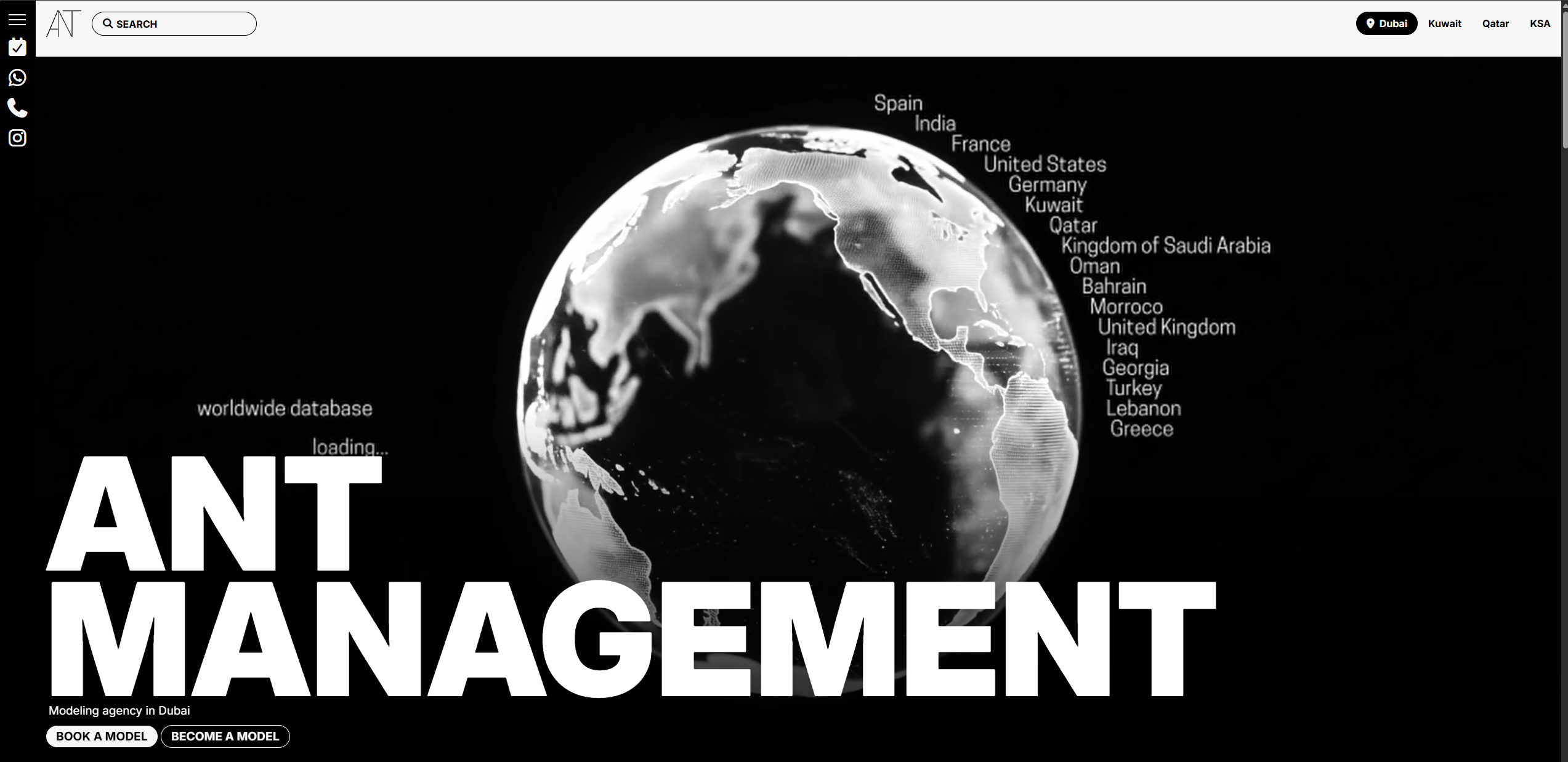
The agency’s services map directly onto the friction points marketplaces struggle with: talent booking across fashion, commercial, and kid models, influencer marketing partnerships, sports talent booking, and full production crew and creatives booking that covers photographers, stylists, and stunt coordinators under one coordinated brief. Talent development through programs like ANT Camp means the roster arrives production-ready, not just camera-ready. Booking terms, including overtime and cancellation policies, are laid out clearly on the booking page before any contract gets signed.
Choose ANT Management when the stakes are higher than a single social post: multi-market casting, bespoke usage negotiation, or a shoot where a no-show isn’t an option. Start by browsing the core services overview and reaching out with your brief; a managed agency team can shortlist talent faster than most brands expect once the scope is clear.
Where Talent Marketplaces Are Headed
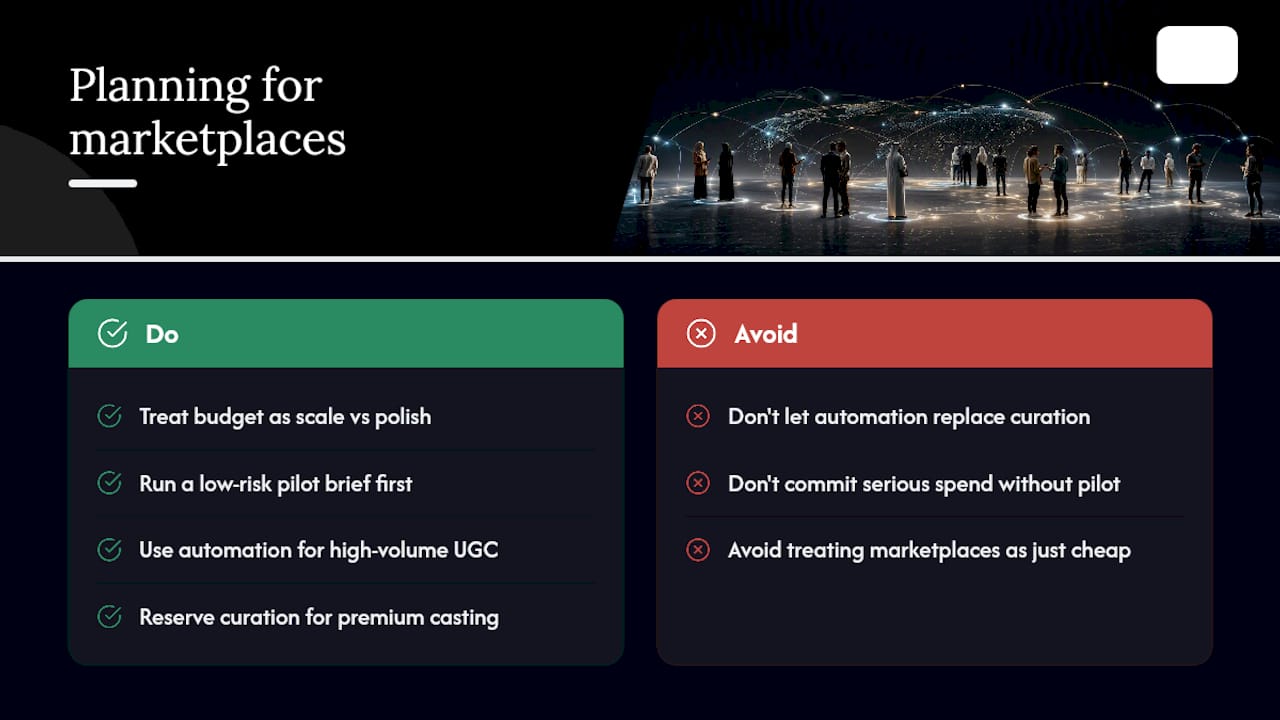
Hybrid models, part marketplace, part managed service, are becoming the norm, and that shift matters for how you plan budgets. Automation genuinely helps with low-stakes, high-volume UGC sourcing. It does not replace curation for premium casting, celebrity deals, or shoots where a single wrong booking derails a launch.
Think of your budget in terms of scale versus polish rather than cheap versus expensive. Test a marketplace workflow on one low-risk pilot brief before committing serious spend. That single pilot will tell you more about operational fit than any demo call, and it costs far less to learn the lesson early.
— ANT
Sources
- Modash — Influencer recruitment
- How to Hire Influencers (Influencer Marketing Hub)
- How to Hire Influencers in 2026: Brand Guide (Collabios)
FAQ
What Is a Talent Marketplace Platform?
It’s a digital system, ranging from open self-serve listings to curated agency rosters, that connects brands with models, influencers, or event talent for hire.
How Long Does Booking Talent Usually Take?
Marketplace sourcing can surface applicants within 48 hours, while managed agency bookings for curated or international talent typically run longer once vetting and contract negotiation are factored in.
How Much Does ANT Management Charge for Talent Booking?
Pricing depends on the talent, scope, and production requirements, so current rates are available directly through ANT Management.
What Usage Rights Should I Negotiate?
Request a short, specific usage window, often one to three months, rather than an indefinite buyout, which preserves budget flexibility for future campaigns.
How Do I Avoid No-Shows on Booking Day?
Vet talent through an audience and disclosure audit before booking, confirm terms in writing, and keep backup contacts on file in case a replacement is needed.