
Casting Call vs Street Casting: How Each Works and When

A casting call announces a role and invites people to come forward. Street casting reverses the direction: a scout or casting director finds a person in the world, on a sidewalk, in a market or on social media, and invites them in. One method relies on people raising their hands, the other on a trained eye. Both end in the same place, a confirmed booking, and both can go wrong when the steps in between are skipped.
This guide sets the two methods side by side, explains where a third route, booking through an agency, fits, and gives brands and talent a way to judge the legitimacy of any approach.
TL;DR
- A casting call is a public or semi-public notice for a defined role; street casting is direct outreach to someone who was not looking to be cast.
- Casting calls produce volume and range. Street casting produces authenticity and surprise, at the cost of more vetting.
- Neither method is a booking. A booking is the confirmed, paid agreement that follows an audition, a hold or availability check is not a commitment.
- Legitimate casting never asks talent for upfront fees, and a real street-casting approach arrives with verifiable contact details and informed consent.
- Projects involving minors need guardian presence and safeguarding steps whichever route is used.
Table of Contents
- Two Methods, Two Directions of Travel
- Casting Call vs Street Casting at a Glance
- How a Casting Call Actually Runs
- How Street Casting Actually Runs
- When to Choose a Casting Call
- When to Choose Street Casting
- When Minors Are Involved
- Spotting a Scam on Either Route
- Where Booking Through an Agency Fits
- Our Perspective: Curation Before Discovery
- Booking Talent With ANT
- A Practical Decision Path
- FAQ
- Sources
Two Methods, Two Directions of Travel
The cleanest way to hold the difference is to ask who moves first.
In a casting call, the production moves first, but only with a notice. A producer, director or casting director posts a request asking performers to come and audition for specific roles. The talent decides whether the description fits and chooses to respond. The pool is self-selected: everyone who answers has already imagined themselves in the part.
In street casting, the person moves second, and often unprepared. The practice is, in the words of one trade report, a bid to boost the realism or apparent authenticity of a project, usually by finding non-professionals who embody something a trained actor or model has to manufacture. The pool is whoever the scout happens to meet, which is both its charm and its hazard.

The terms also get blurred with a neighboring one. A casting call is the solicitation, an audition is the act of reading or performing, and a booking is the contractually confirmed job. Keeping those three apart prevents most of the confusion that surrounds the topic.
Casting Call vs Street Casting at a Glance
| Criterion | Casting call | Street casting |
|---|---|---|
| Who initiates | The production, through a public notice | The scout or casting director, in person or online |
| Who responds | Self-selected applicants | Someone who did not apply |
| Best for | Defined roles, volume, range of looks | Authenticity, real-person energy, unexpected faces |
| Experience of talent | Usually some, often trained | Often none |
| Main risk | Overwhelming volume, no-shows, inconsistent quality | Trust gap, consent, scam impersonation, reliability |
| Vetting load on the brand | Screening submissions | Screening the person, their support network and the scout’s own credibility |
| Typical next step | Audition, self-tape, callback | Informal introduction, then a formal audition or test |
Neither column is superior. The decision rests on what the work needs to feel like on screen or on the page.
How a Casting Call Actually Runs
A well-run casting call has more structure than the phrase suggests. The notice states the role, the dates, the usage, the pay and how to submit. Submissions are screened, a shortlist is invited to audition, and the strongest are asked back. A callback is a second audition that signals the team wants to see more.
The weakness is predictable. Open notices attract far more applicants than a team can see, and applicants who look right on a submission may not hold up in a room. Brands also meet the reliability problem: a person who applied on impulse may not appear on the day. A clear brief reduces this, and a structured notice filters for seriousness. Our own copy-ready casting call template and the casting call process playbook cover the mechanics for brands and marketers.
Remote steps now ease the logistics. Self-tapes and video auditions let a team review a wide pool without a room, a topic we unpack in how actors audition without the room.
How Street Casting Actually Runs
Street casting looks spontaneous and is not. A scout sees a face, a gait, a way of speaking. The professional response is not to cast the person on the spot. Experienced street casters describe a multi-stage process: a formal introduction, an exchange of professional contact details, typically on company letterhead, and an informed-consent conversation so the person understands the nature of the project, the time commitment and the possible public exposure before any contract is signed.
Trust is the currency. In unfamiliar communities, casters often work with local guides, sometimes called fixers, who help bridge the gap between a stranger with a camera and a family deciding whether to say yes.
The approach also carries a reputational cost. The rise of street casting, including outreach through social media, has made it ordinary for a stranger to message someone about a role, and impersonation scams exploit exactly that familiarity. A legitimate scout expects to be checked and makes checking easy.
What the audition should look like
Street-cast talent should still audition in a professional setting. An office, a theater or a soundstage signals seriousness; a private apartment does not. SAG-AFTRA’s published safety guidance opposes auditions in private hotel rooms or residences and notes that regardless of union status, a person can decline a casting if the location makes them uncomfortable.
Some brands solve the location question by designing a permanent space for it. A purpose-built in-house content studio gives a team a controlled, professional room for tests, quick shoots and meetings, which suits the kind of lightweight screen test a street-cast newcomer needs.
When to Choose a Casting Call
Choose the open or announced route when:
- The role is defined and the criteria can be written down: age range, look, skills, languages, usage.
- You need volume, for instance several roles, or a campaign across markets.
- Experience matters, such as speaking parts, movement, product handling or stunt-adjacent work.
- The schedule allows for screening, callbacks and the possibility of drop-outs.
A casting call also gives a paper trail. Every applicant responded to the same brief, which helps when a client wants to see how choices were made.
When to Choose Street Casting
Choose street casting when:
- The concept depends on real people: a documentary tone, a neighborhood story, a brand wanting to avoid the polish of a typical model.
- The look is specific and rare, and applicants are unlikely to find the notice.
- You have time to build trust and handle consent properly.
- You have a plan for support: coaching on set, a patient director and a producer who can explain the process to the person and to their family.
Success with non-professionals, especially younger ones, relies heavily on the professionalism of the parents or guardians, which is why serious operations vet the support network alongside the talent. A striking face with an unreliable arrangement behind it is a production risk, not an asset.
When Minors Are Involved
Children change the rules for both methods. Safeguarding guidance used in production calls for a casting protocol that informs potential contributors of the nature of their participation, and for a parent or guardian to remain within sight and sound of the minor at all times, including at casting and wardrobe or hair sessions. The same guidance expects welfare risk assessments and appropriately cleared personnel. The cited document is UK-based; in the US, requirements such as work permits and background checks vary by state, so confirm them with the relevant state labor or film office before casting.
Brands booking young talent should read our five compliance checks for kids model casting before choosing a route.
Spotting a Scam on Either Route
The most important line in this guide: professional casting directors are paid by the production, never by the talent. Requests for registration, shortlisting, insurance or portfolio fees before an audition are red flags. Official guidance from state film offices adds that legitimate productions never send a check as an advance before setting up an interview and hiring formally.
Three habits protect both sides:
- Verify the sender. Check the domain and the company against official union or industry directories before replying, since impersonators borrow real terminology.
- Refuse advances. Do not deposit a check and wire money back, and do not pay to be considered.
- Insist on a professional setting. Public offices, studios and daylight meetings, with a companion if you wish.
Our seven-step verification guide walks through each check before any payment.
Where Booking Through an Agency Fits
Readers often ask about casting call versus booking, and the answer is that they sit at different stages. A casting call or street approach is how a candidate is found. A booking is the agreement that a client and production have agreed on pay, dates and usage before work happens. A person can be cast and never booked, and a brand can book talent it never needed to cast, because the choice was made from a curated roster.
That third route, selecting from an agency’s vetted roster, removes most of the discovery risk. The vetting happened before the brief arrived, availability is checked in advance, and the commercial terms are written down. It suits brands with a fixed launch date, a defined look and little appetite for scouting.
For teams that do run their own calls, a written casting brief keeps every route honest, and our model casting process shows how briefing time can shrink from days to hours. Where online platforms are part of the mix, four steps against no-shows apply.
Our Perspective: Curation Before Discovery
From where we stand in Dubai, working across Europe, the US and Asia, the debate between calling and scouting is less about technique than about who carries the risk. In an open call, the brand carries the risk of volume. In street casting, it carries the risk of the unknown. Our approach is to move that risk upstream, into curation.
Every talent we represent, from fashion and commercial models to influencers and creatives, passes a rigorous selection before a client ever sees a profile. That is why we treat casting as one part of a larger picture: briefing, talent selection and coordination, portfolio development and preparation for production. Where a project needs an authentic, unpolished presence, we work with the brief to find the person and then prepare them, through training such as ANT Camp, so that the first day on set is not their first day in front of a lens.
We also hold to a simple rule that applies to every route: no talent pays to be considered. Our revenue comes from brands and marketers who book, and from talent who choose a development program, never from the privilege of auditioning. The most lasting campaigns we have seen come from long, verifiable relationships between brand, agency and talent, not from the fast, too-good-to-be-true offer.
— ANT
Booking Talent With ANT
If your brief is clear and the date is fixed, the quickest route is to choose from a curated roster. You can browse talent, influencers and creatives and full production crews, or start from our main page for model booking, event staffing and talent coordination. Our published booking terms set out overtime at 15% per hour, a 50% charge for cancellation within 48 hours, 100% within 24 hours and 100% for confirmed trips, so the commercial picture is clear before anything is confirmed.
A Practical Decision Path
- Write the brief first. Role, look, usage, dates, budget, location. Every route depends on it.
- Decide how much authenticity the work needs. If a polished professional serves the idea, use a call or a roster. If the concept needs a real person, plan for street casting and the vetting it demands.
- Check your timeline. Street casting and open calls both need slack for screening, consent and no-shows; a roster does not.
- Plan the safeguards. Professional setting, written terms, guardian presence for minors, clear contact details.
- Confirm in writing. An availability hold is not a booking. Do not announce or schedule until the terms are agreed.
- Pay nobody to be considered, and do not let anyone ask talent to.
FAQ
What does being street cast mean?
It means a casting director or scout approached you directly, usually in public or online, because you fit a role, rather than because you applied. It is an invitation to a conversation, not a job. A legitimate approach leads to a professional introduction and a formal audition before anything is signed.
Is it normal to pay for a casting call?
No. Professional casting directors are paid by the production company, and agents earn commission only when talent is paid. Fees for registration, shortlisting, insurance or portfolio development before an audition are warning signs of a scam you should walk away from.
What is the difference between a casting call and an audition?
The casting call is the notice that invites applicants. The audition is the later stage where selected performers read, perform or send a self-tape. A callback is a second audition, and a booking only happens after the production confirms terms.
Is street casting really a thing?
Yes. Casting directors use it to find non-professionals who bring realism a trained performer may struggle to supply, and it is widely discussed in trade press. It works best with informed consent, a professional setting and, for minors, guardians involved throughout.
Can a brand skip both and book directly?
Yes. Booking from an agency roster replaces discovery with curation, so the brief goes straight to vetted, available talent. It trades some serendipity for speed, certainty and written terms.
Sources
- Parting the Clouds of Callbacks and Casting, Casting Networks
- Casting and Production Terms Every Actor Should Know, Casting Networks
- Casting Calls: What to Expect and How to Stand Out, Backstage
- Street Casting’s Wild Risks (and Rewards), The Hollywood Reporter
- Eléonore Hendricks on How to Street Cast Your Film, MovieMaker
- The Dark Side of the Dream, Moviechill
- Working in Entertainment safety packet, SAG-AFTRA via New Mexico Film
- Guidance on Duty of Care and Child Safeguarding in Protocols
- Safety Online, Texas Film Commission
- What Is a Booking in Acting and Modeling?
Recommended
Planning a shoot in KSA?
Prefer to book on your phone?
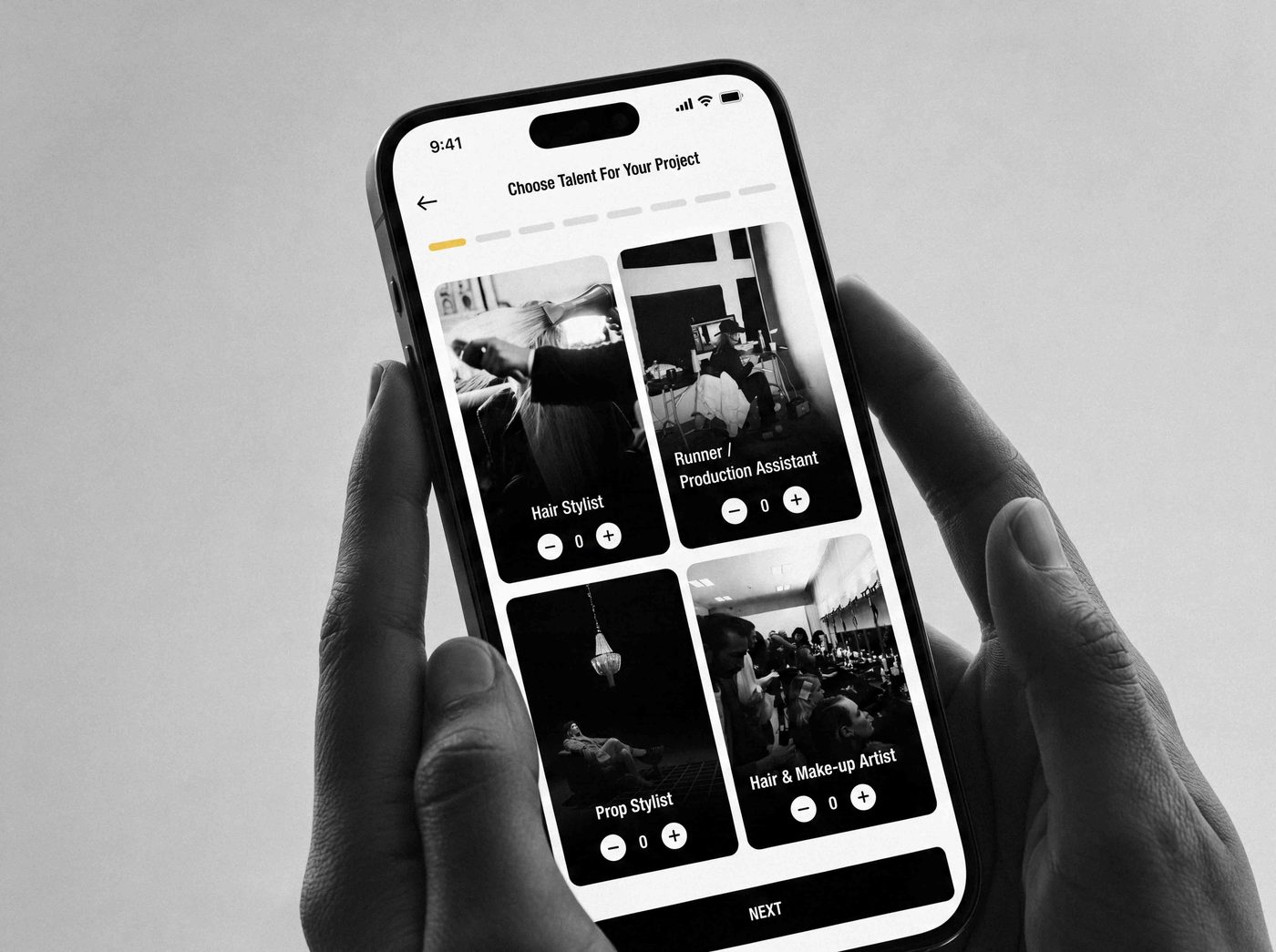
Post a job on the ANT Talent App and let approved talent come to you.
- Every profile approved by ANT
- Chat with talent in the app
- Payment held until the job is done

Free on iPhone
- 5.0on Google, 200+ reviews
- Since 2022modelling and talent agency
- Worldwideshoots, events and shows anywhere
- Licensed in Dubai. See our licence and booking terms