
Aspiring Models: Build a 10–15 Image Portfolio Agencies Want
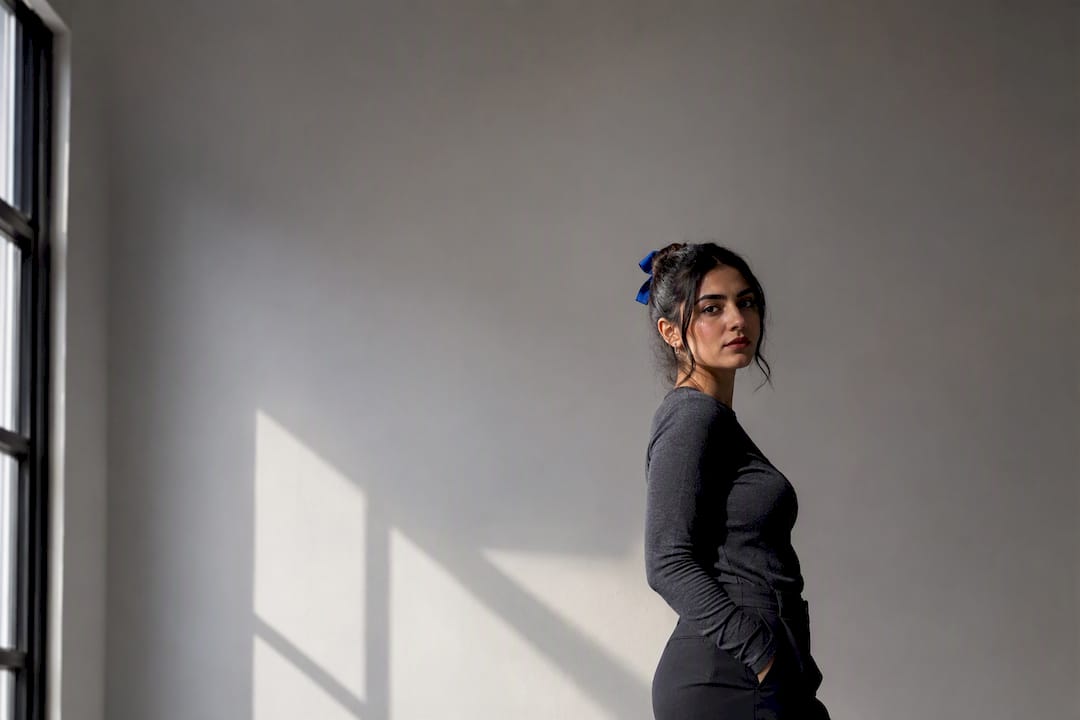
Capture your digitals first. Most agencies want three to four natural, unedited images before anything else: a frontal headshot, a profile, a three-quarter, and a full-length. Once you have those, plan a small curated shoot toward a finished book of a range of images. Skip the expensive production until an agency tells you what they need.
TL;DR:
- Most agencies require three to four unedited digitals, including a headshot, profile, three-quarter, and full-length shot, taken in natural light against a plain wall.
- Curated portfolios should consist of 10 to 15 lightly retouched images that demonstrate versatility, but only after initial interest is shown with digitals.
- Building a high-quality portfolio begins with low-cost digitals, followed by targeted shoots, avoiding expensive full productions until an agency requests specific content.
- Submit digitals first via clear, labeled JPEG files with a brief personal note, then follow up after seven to ten days if needed, focusing on professionalism.
- Agencies prioritize current, authentic digitals and a well-organized, adaptable portfolio tailored to their specific market or client type for better chances of success.
Table of Contents
- What Shots Do You Actually Need for a Model Portfolio?
- How Do You Plan a Cost-Effective Model Shoot?
- Digitals or a Curated Portfolio: Which One Do You Send?
- How Do You Choose and Sequence Your Best Images?
- How Do You Submit Your Portfolio to Agencies and Clients?
- What Does a Model Portfolio Actually Cost?
- How Often Should You Update Your Portfolio?
- What Do Agencies Look for Before Signing a Model?
- Do You Need a Model Release Form?
- Which Tools Help You Build and Manage Your Portfolio Online?
- How Should You Tailor Your Portfolio for Different Agencies and Clients?
- How Do You Show Range Without Losing a Clear Identity?
- What New Models Get Wrong Before Their First Submission
- How ANT Management Helps You Build a Submission That Works
- Sources
- FAQ
What Shots Do You Actually Need for a Model Portfolio?
Every submission starts with digitals, not polished photography. Agencies use them to read your face and body without a filter. They want to see the raw material before anyone decides what to build on top of it.
Here’s what each required digital reveals to the person reviewing it:
- Frontal headshot: clear, symmetrical view of your face in natural light, no filters, minimal or no makeup, plain background.
- Profile shot: shows bone structure and jawline from the side, essential for agents assessing photogenic range.
- Three-quarter shot: a middle angle between frontal and profile that shows how your features shift, often the most telling image in a set.
- Full-length: captures proportion, posture, and body line, shot straight on with arms relaxed and feet together.
Once digitals are locked, a working portfolio needs a wider variety of shot types to show range: a clean commercial headshot, a beauty close-up, an editorial-style image with mood and styling, a lifestyle shot that feels candid, and at least one full-length that shows movement or a strong stance.
Pro Tip: Shoot digitals against a plain wall in daylight around 10 a.m. or 4 p.m. Midday sun creates harsh shadows under the eyes that make agents misjudge your skin and structure.
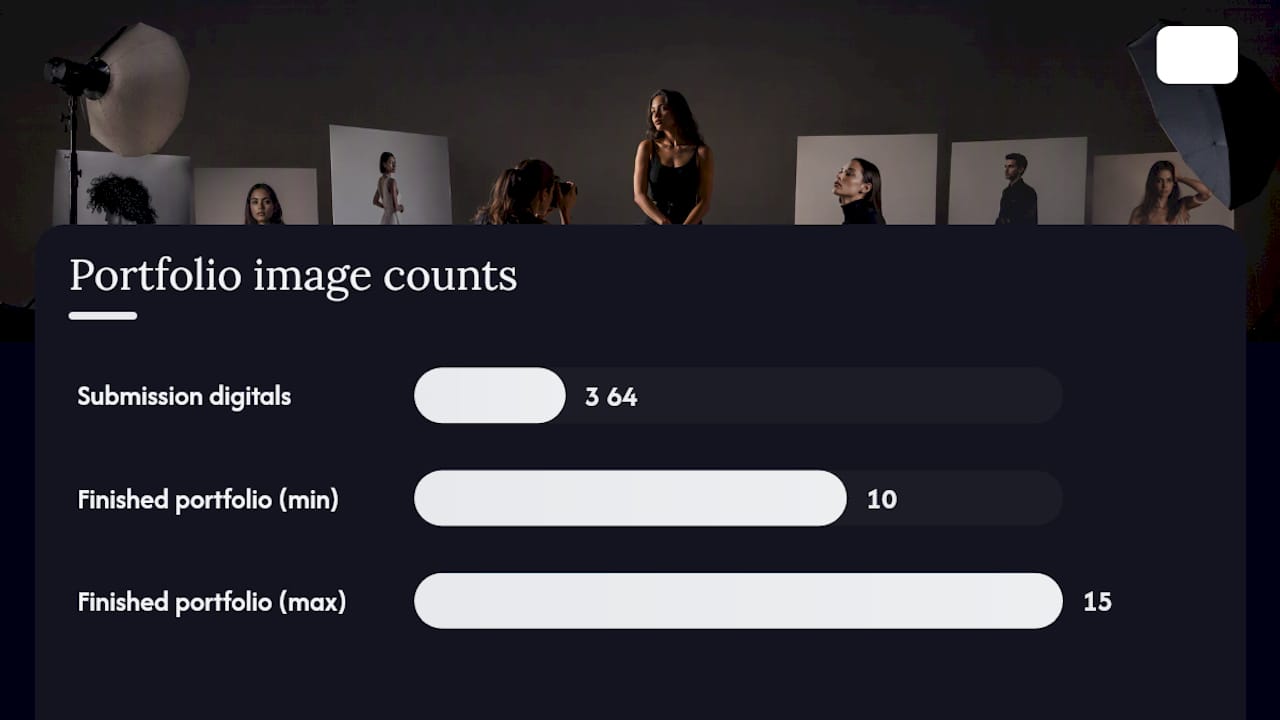
Backstage’s editorial guidance on portfolio construction confirms the pattern most agencies follow: three to four digitals for the initial ask, a range of images for the finished portfolio. That range isn’t arbitrary. Fewer than ten images looks thin and unfinished; more than fifteen dilutes the strongest shots and signals you don’t know how to edit yourself.
How Do You Plan a Cost-Effective Model Shoot?
The decision between DIY digitals and hiring a professional comes down to one question: what stage are you at? Digitals are a phone job. A curated portfolio, on the other hand, benefits from a photographer who understands lighting, direction, and how to pull a genuine expression out of someone standing in front of a lens for the first time.
Before booking anything, map out the shoot on paper:
- Build a simple moodboard with three or four reference images per look so the photographer and stylist know the target before you arrive.
- Plan two or three outfit changes maximum for a first shoot. Overloading the day dilutes quality and exhausts everyone involved.
- Decide your shot order in advance. Start with the look that needs the least energy and save your most demanding pose or expression for when you’re warmed up, not cold.
- Confirm who’s on set: photographer, hair and makeup, and a stylist if the budget allows. A trade-for-print (TFP) arrangement, where you exchange your time for usable images instead of a fee, is a legitimate way to build a portfolio at little to no upfront cost.
- Set call time, shoot duration, and a buffer window. Three to four hours is typical for two to three looks.
On the day itself, bring your own basics: nude undergarments, simple jewelry, a hairbrush, and any accessories from your moodboard. Label your files immediately after the shoot with your name, date, and look number. It sounds minor, but a disorganized folder of five hundred unsorted images is how strong shots get lost for months.
Many agencies prefer to direct or recommend photographers for a model’s first professional shoot, which is worth knowing before you spend money on a shoot they’ll ask you to redo anyway.
Digitals or a Curated Portfolio: Which One Do You Send?
These two things get confused constantly, and mixing them up is one of the fastest ways to look inexperienced.
Digitals are your unedited baseline. No retouching, no styling beyond basic grooming, no creative concept. Their entire purpose is honesty: this is what you look like, unfiltered, in daylight. A curated portfolio is the opposite. It’s a retouched, sequenced, ten to fifteen image book meant to prove you can execute a concept, hold a mood, and sell a product or story.
- Digitals: several images, natural light, plain background, sent for initial agency evaluation.
- Curated portfolio: 10 to 15 images, professionally shot and lightly retouched, sent once an agency has expressed interest or requested a fuller submission.
The order matters. Send digitals first, always. A heavily retouched initial submission is treated as a warning sign, not a strength, because it prevents an agent from judging your actual, bookable look. Agencies have seen thousands of over-edited digitals and they know exactly what real skin and real bone structure look like under processing.
Once an agency responds, they’ll often shape what comes next. Many agencies use that first conversation to steer you toward a specific photographer or test shoot concept rather than accepting whatever portfolio you already built. That’s not a rejection of your work. It’s the industry’s way of matching your raw potential to a market before either of you spends real money on the wrong direction.
How Do You Choose and Sequence Your Best Images?
A strong portfolio is a decision, not a collection. Ten to fifteen images work only when each one earns its place, and the order you present them in shapes how quickly an agent understands who you are.
Filter every image against these questions before it makes the cut:
- Is it recent? Nothing older than twelve months unless your look hasn’t changed at all.
- Does it look like you, right now? Skip anything so retouched or angled that a casting director wouldn’t recognize you walking into the room.
- Is the technical quality clean? Sharp focus, correct exposure, no distracting background clutter.
- Does it add something new? If two images show the same expression, same angle, same energy, keep only the stronger one.
Sequencing follows a logic of its own. Lead with your clearest commercial headshot; it’s the image agencies and clients judge fastest, so it needs to do the heaviest lifting. Group the rest by look or mood rather than alternating styles every page, which reads as scattered instead of versatile. Close on your most distinctive or memorable shot, the one that makes someone remember your name after they’ve closed the file.
Pro Tip: Print your shortlist as small thumbnails and lay them out on a table before finalizing order. Seeing the whole sequence at once reveals repetition your eye misses on a screen.
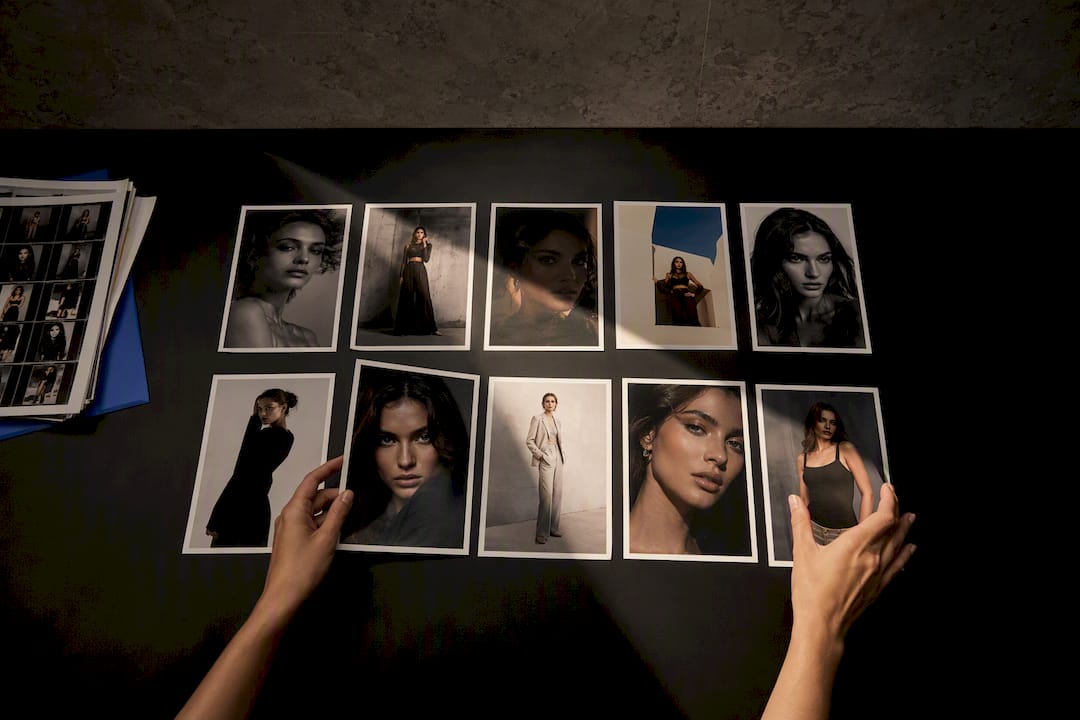
Watch for a few recurring red flags: over-retouching that smooths away texture, outfits or hairstyles that contradict each other across the book, and any image reflecting a hair color, weight, or style you no longer have. A portfolio that photographers and stylists curate with intention, rather than just accumulate, is what separates a working book from a photo dump.
How Do You Submit Your Portfolio to Agencies and Clients?
Technical mistakes kill strong images before anyone even judges the shot. Get the file specs right and you remove one more reason for a casting director to move on to the next submission.
- Export at web resolution for email and online galleries. JPEG files around 1MB to 3MB each load fast and still look sharp on a screen; anything larger risks bouncing from inbox size limits.
- Label every file clearly, using your name and a shot number (for example, “JaneDoe_01.jpg”). Agencies review dozens of submissions a day and unlabeled files slow that process down.
- Write a short, specific submission message. Include your height, bust/waist/hip measurements, shoe size, hair and eye color, city, and a one-line note on what you’re seeking, whether that’s fashion, commercial, or influencer work.
- Attach digitals for a first submission, not your full curated book. Save the larger portfolio for when an agent asks for it directly.
- Follow up once, after seven to ten business days, if you haven’t heard back. A second follow-up rarely helps and can read as impatience.
For your online presence, a clean, organized digital gallery with fast-loading files and no broken links is part of how agencies judge professionalism before they ever meet you. A cluttered, slow-loading site does quiet damage to a submission that otherwise looks strong.
Which format you lead with depends on the market. A physical comp card still matters for in-person castings and print work in some regions; a digital portfolio or agency platform profile covers most everything else, including editorial and commercial submissions sent electronically. Building a proper comp card alongside your digital files gives you flexibility across both formats instead of scrambling to produce one at the last minute.
What Does a Model Portfolio Actually Cost?
Digitals cost nothing beyond a phone and a patient friend to hold the camera. A curated portfolio is where the budget question gets real, and the range is wide because photographer rates, location, and retouching all vary by market and experience level.
- Zero-cost start: shoot digitals on a smartphone against a plain wall in natural daylight.
- TFP shoots: trade your time for usable images with a photographer building their own book, a common way to keep early portfolio costs near zero.
- Paid professional shoot: costs scale with photographer experience, hair and makeup, styling, and location, so get quotes before committing to any one production.
Spend deliberately rather than broadly. Clear digitals come first, always. After that, one or two strong professional looks that show your range beat five mediocre shoots that all say the same thing about you. Buying volume before you know what a market wants is the single most common way new models overspend on images they’ll never use again.
A smart low-cost path to a full ten to fifteen image book usually looks like this: digitals in week one, a TFP or budget shoot in week two or three for two looks, then a final polished session once an agency has given direction. That sequencing avoids wasting money on a concept nobody asked for.
How Often Should You Update Your Portfolio?
Plan periodic refreshes throughout the year and more comprehensive updates whenever your look, hair, weight, or market focus shifts meaningfully. An outdated portfolio is treated as a red flag, since it signals the client can’t trust what shows up on set matches what they booked.
Retire images the moment they stop looking like you, rather than holding onto a strong shot from two years ago out of attachment. Test new looks with a low-cost or TFP shoot before committing to a full paid session, so you’re not gambling a big budget on an untested haircut or style direction.
Keep your files organized as you go: consistent naming by date and shoot, a simple version log so you know which set is current, and a note on which images actually led to bookings. That last habit matters more than most models realize. It tells you, in hard evidence, which shots are actually working for you commercially.
What Do Agencies Look for Before Signing a Model?
Agencies evaluate strategic potential long before they evaluate finished photography. Curation in modeling agencies often runs on this principle: an honest, unedited digital provides agencies with a better sense of marketability than an expensive, over-produced shoot.
That’s part of why agencies often prefer to guide a model’s first professional test shoot rather than accepting whatever a model produced independently. Direction from an agent, or from some training programs, tends to save money and produce more bookable results than guesswork.
Before you submit anywhere, run through this checklist:
- Accurate, current measurements (height, bust/waist/hip, shoe size)
- Three to four natural digitals, unedited and clearly labeled
- Direct contact details and your city or availability
- A one-line note on the type of work you’re pursuing
Get those four things right and you’ve already cleared the bar most submissions fail on.
Do You Need a Model Release Form?
Any image shot for your portfolio, whether by a friend, a TFP photographer, or a paid professional, involves a release form that spells out who owns the copyright and how each party may use the images. Skipping this step is one of the more common early mistakes, and it can quietly block you from using your own best shots later.
A basic model release should cover a few specific points: who retains copyright of the raw and edited files, whether the photographer can use the images for their own promotion or portfolio, whether you can use the images commercially in your own submissions, and any time limit or geographic restriction on usage. TFP arrangements especially need this in writing, since both sides are trading value and disputes over usage rights are far more common in unpaid collaborations than in paid ones.
Keep signed copies, digital or physical, organized alongside your image files. If an agency or client later asks whether you have clear rights to submit a specific photo, you need to answer instantly, not dig through old email threads. This matters even more once you start working with multiple photographers across different shoots, since each one may have set slightly different terms.
None of this requires a lawyer for most early-career shoots. A short, plain-language release that both parties sign before the shoot begins covers the vast majority of situations a new model will face. Save anything unusual, like usage in a paid ad campaign or exclusive licensing, for a conversation with your agency once you’re signed.
Which Tools Help You Build and Manage Your Portfolio Online?
You don’t need custom software to run a professional-looking portfolio. A handful of straightforward platforms cover almost everything a new model needs: a simple personal website builder for your own gallery, a cloud storage folder organized by shoot date for backup and sharing, and a photo editing tool limited to light color correction rather than heavy retouching for your digitals.
For your public-facing gallery, prioritize speed over flash. A page loaded with unoptimized, full-resolution files takes too long to open on a phone, and a slow gallery does real damage before a casting director even sees your face. Compress images to web resolution, keep the layout simple, and make sure every link actually works before you send it anywhere.
Cloud storage matters more than most new models expect. Keep raw files backed up separately from your edited selects, and organize folders by shoot date and photographer name so you can find a specific image months later without scrolling through hundreds of near-duplicates. This habit also protects you if a laptop dies or a phone gets lost right before a submission deadline.
Whatever platform you use, treat it as infrastructure, not decoration. Agents and clients judge how you present your work almost as quickly as they judge the work itself, and a clean, fast, well-organized gallery reads as professionalism before a single word is exchanged.
How Should You Tailor Your Portfolio for Different Agencies and Clients?
A single generic portfolio rarely fits every submission equally well. Commercial clients want to see approachable, relatable expressions and lifestyle-friendly shots. Editorial-focused agencies want mood, concept, and a willingness to look unconventional. Sending the same fifteen images to both wastes the strength of images that would land perfectly with the right audience.
Before submitting, research the agency or client’s existing roster and recent campaigns. If their site is full of high-fashion, dramatic editorial work, leading with your softest commercial headshot undersells you. If they’re a commercial or catalog-focused agency, your most avant-garde editorial shot might confuse more than it impresses.
Where possible, build a flexible portfolio structure rather than one fixed sequence: a core set of five or six versatile images that work everywhere, plus a rotating second half you can swap depending on who’s receiving the submission. This is far more manageable than shooting an entirely new book for every client type.
Read submission guidelines carefully, since some agencies specify exact file formats, image counts, or even preferred aspect ratios for their casting platforms. Ignoring stated requirements, even minor ones, signals carelessness before an agent has even opened your files. A model who tailors their submission shows the kind of attentiveness that also matters once they’re on set following a client’s direction.
How Do You Show Range Without Losing a Clear Identity?
Versatility sells, but only when it still reads as recognizably you. The goal isn’t to look like five different people across fifteen images. It’s to show that one consistent person can adapt to five different contexts.
Build range through variation in energy and setting rather than through drastic physical changes. A softer, quieter expression next to a bold, high-energy pose shows range. Wildly different hair colors or styles across the same book, on the other hand, tend to confuse casting directors about what you’ll actually look like on set.
Mix in at least one commercial-friendly shot, one editorial or conceptual image, and one lifestyle or candid-feeling shot alongside your core headshots. That trio alone demonstrates you can work across the three categories most clients book for, without requiring an oversized portfolio to prove it.
Movement matters more than most new models think. A single static pose repeated in slightly different outfits shows less range than one dynamic, in-motion shot that captures energy a casting director can imagine translating to video or runway work.
What New Models Get Wrong Before Their First Submission
The most expensive mistake early on is spending on a fully styled, heavily produced shoot before an agency has ever seen your raw digitals. Retouched digitals sent as a first impression cause the same problem in a different form: they hide exactly what an agent needs to see.
Beyond the images themselves, small professional habits carry real weight. Accurate measurements, on-time replies, and clean, labeled files tell an agent you’re easy to work with before you’ve ever met in person.
Treat your portfolio as something you refine, not something you finish once and forget.
— ANT
How ANT Management Helps You Build a Submission That Works
Some modeling agencies work with aspiring models across international markets, offering curated talent development rather than a simple photo review. Beyond booking, the agency runs training programs like ANT Camp, built to help new talent understand exactly what agents and clients are evaluating before a single professional image gets taken.
Start with your digitals and a short application through Become a Model, where the agency reviews your natural images and stats before recommending any next step. Initial contact often includes evaluation of current digitals, feedback on marketability, and, if suitable, direction toward a test shoot tailored to client needs in the region. If you’re based in or targeting the Gulf market specifically, regional pages for Saudi Arabia, Qatar, and Kuwait outline the same onboarding path.
Fees and arrangements vary by program and market; agencies typically distinguish between services they provide, such as curation and training access, and what models arrange themselves, like initial smartphone digitals. Submit your digitals through Become a Model today and find out where you actually stand.
FAQ
How Much Does It Cost to Build a Modeling Portfolio?
Digitals can cost $0 when shot on a smartphone in natural light, while a curated professional portfolio’s cost varies widely depending on photographer rate, location, and retouching, with TFP arrangements offering a low-cost alternative for early-career models.
Can I Be 4’11" and Still Become a Model?
Height requirements depend entirely on the modeling category you’re pursuing. Commercial, plus-size, fit, and influencer work generally have far more flexible height standards than traditional high-fashion runway, so focus your submissions on the segments that match your measurements rather than assuming one standard applies everywhere.
What Is a Good Free Platform to Build a Modeling Portfolio?
A simple personal website builder combined with a compressed, well-organized cloud gallery covers most early needs, and the priority is fast loading and clean labeling rather than any particular platform brand.
What Is a Model Portfolio?
A model portfolio is a curated collection of 10 to 15 high-quality images that demonstrate a model’s range and marketability to agencies, brands, and casting directors, distinct from the three to four unedited digitals used for initial submissions.
Should I Send Digitals or My Full Portfolio First?
Send digitals first in almost every case, since agencies use those unedited images to judge your raw, bookable look before deciding whether to request your full curated portfolio.