
Agencies Use 4 Pricing Factors to Secure Model Usage Rights for Brands

Model usage rights are the licensed permission to use a person’s image for specified purposes, defined by scope, not ownership. Before any image publishes, secure a signed model release and confirm exactly what the license permits. This guide breaks down pricing axes, release triggers, documentation practices, and how agencies structure these terms to protect everyone involved.
TL;DR:
Use of an identified person’s image for commercial purposes requires a signed model release, especially when recognition relies on facial features, tattoos, or distinctive traits.
Licensing scope, including territory, duration, and media channel, directly influences licensing fees and must be clearly defined in writing before negotiations.
Maintain organized documentation of releases, licenses, and invoices, and track renewal dates to prevent disputes and unauthorized use years later.
Contracts should specify detailed terms covering scope, territory, duration, exclusivity, and transfer rights, rather than relying solely on license labels like “commercial use allowed.”
Agencies centralize and negotiate usage rights upfront, particularly for multi-territory campaigns, reducing legal risks and simplifying renewal management.
Table of Contents
What Model Usage Rights Cover: License Versus Copyright
A usage right is a license, not a transfer of ownership. The photographer or agency typically retains copyright over the image itself, while the client receives permission to use it in defined ways. That distinction trips up more brands than any other part of licensing, and it separates a photo’s copyright from its usage rights in ways that matter the moment a campaign expands beyond its original plan.
Two labels dominate the industry, and neither is as absolute as it sounds:
-
Rights-managed licenses restrict use by campaign, region, print run, or time window, with pricing tied to that scope.
-
Royalty-free licenses allow broader reuse for a flat fee but still carry limits on context, exclusivity, and modification.
-
Exclusive licenses block the model or other buyers from granting the same use to competitors.
-
Non-exclusive licenses let the same image circulate to multiple buyers simultaneously.
These category names are starting points, not guarantees. Real permissions live in the specific license text, including territory, duration, and media channel. A model release is a separate document entirely. It grants permission to use someone’s likeness, while the license grants permission to use the photograph. You need both, and confusing one for the other is how usage disputes start. Editorial and news contexts often skip releases under fair use protections; advertising and endorsement almost never do.
When You Need a Signed Release and Who Carries the Risk
Commercial use triggers a release requirement almost automatically. Editorial coverage, documentary work, and news reporting operate under different rules, since they lean on public interest rather than commercial promotion. The dividing line isn’t the camera or the setting. It’s whether the image sells something or implies endorsement.
Recognizability is the legal trigger, and it’s broader than most people assume:
-
A visible face is the obvious case, but courts have found liability from voice alone.
-
Tattoos, distinctive scars, or a recognizable setting tied to a person can count as identifying traits.
-
Adobe requires a signed model release for any identifiable person before content clears for commercial licensing on its stock platform, a standard now common across major marketplaces.
Liability for unauthorized use usually lands on the publisher rather than the photographer, since the publisher is the one profiting from the final placement. A properly executed model release remains the strongest legal protection against a likeness claim, and using someone’s image in advertising without one can expose the publisher to civil liability in jurisdictions including the United States. Photographers often build indemnity language into their contracts specifically to push that risk back onto the client who requested the shoot. Minors need guardian signatures on every release. Group shots need either individual releases from each identifiable person or a documented group release, and sensitive uses (health, political, adult-adjacent content) typically demand additional written consent beyond the standard form.
How Usage Fees Scale With Territory, Duration, and Reach
Four variables drive nearly every usage fee negotiation, and understanding how they interact tells you more about pricing than any flat-rate chart ever will.
-
Territory. A single-city print ad costs a fraction of what a national or global rollout commands, because broader exposure means more potential audience and more competitive advantage for the buyer.
-
Duration. A three-month digital campaign prices lower than a two-year buyout, and perpetual usage sits at the top of the scale since it removes the model’s ability to license the same image elsewhere later.
-
Media and channel. Social media usage, print, broadcast, and out-of-home advertising each carry different weight. Television and billboard placements typically command more than a static social post because of scale and production value.
-
Exclusivity. Locking out competitors in the same category costs more than a non-exclusive grant, since the model or agency forfeits other income during that window.
Fee structures generally fall into three patterns. A one-off buyout pays a flat sum for permanent, unlimited use within an agreed category. Renewal fees extend a time-limited license when a campaign outperforms its original window. Tiered pricing scales with measurable reach, such as impressions, territories, or ad spend, and works well for digital campaigns where performance data exists.
Consider two scenarios side by side. A local social campaign running for three months in one country might land at a modest flat fee with no exclusivity requirement. A global out-of-home and television push spanning multiple continents for two years, with category exclusivity, multiplies that baseline many times over, and rightly so.
Pro Tip: Define the scope in writing before you discuss price. Vague terms like “digital use” invite disputes later. Specify platforms, regions, and end dates explicitly, and the fee conversation gets far simpler.
When a buy climbs into six or seven figures of media spend, involve an agency early. Agencies negotiate renewal options into the original contract, which saves both sides from a scramble when a campaign extends past its planned run. For a deeper look at how these pricing factors interact, see this breakdown of what determines photo licensing fees.
Documenting and Renewing Rights Without Losing Track
A usage right you can’t prove is a usage right you don’t really have. Build a simple workflow and follow it every time:
-
Confirm the intended use before the shoot, not after.
-
Secure a signed model release with the model’s legal name and the shoot date.
-
Save the full license text, not just a summary or an email confirmation.
-
Attach the invoice to the release and license as one file set.
-
Track the expiry date and flag it 60 days before renewal is needed.
Contract language matters as much as the checklist itself. Strong agreements spell out scope (what the image can be used for), territory, duration, exclusivity, transferability (can the client sublicense to a third party), renewal terms, and indemnity clauses that define who covers legal costs if a claim arises. Audit rights, letting either party verify how an image is actually being used, are increasingly common in high-value agreements.
Renewals typically follow a simple pattern: the buyer requests an extension before the original term lapses, pays an agreed renewal fee, and receives updated paperwork reflecting the new end date. Recordkeeping, keeping the release, invoice, and license text together in one place, is the single most effective control against disputes that surface months or years later.
| Red flag | What it usually means |
|---|---|
| No release on file for an identifiable person | Commercial use is legally exposed |
| Ambiguous license label with no scope details | Terms are unverified and disputable |
| Image resold or reused by a third party | Possible transferability breach |
| Expired license still in active use | Renewal was missed or ignored |
When sourcing images through a database or stock library, check the platform’s own terms before publishing. Some databases allow viewing or study but prohibit republication without separate permission, and search tools like Google’s usage rights filter are a starting point, not a substitute for confirming the license directly with the host.
How ANT Management Handles Usage Rights for Clients
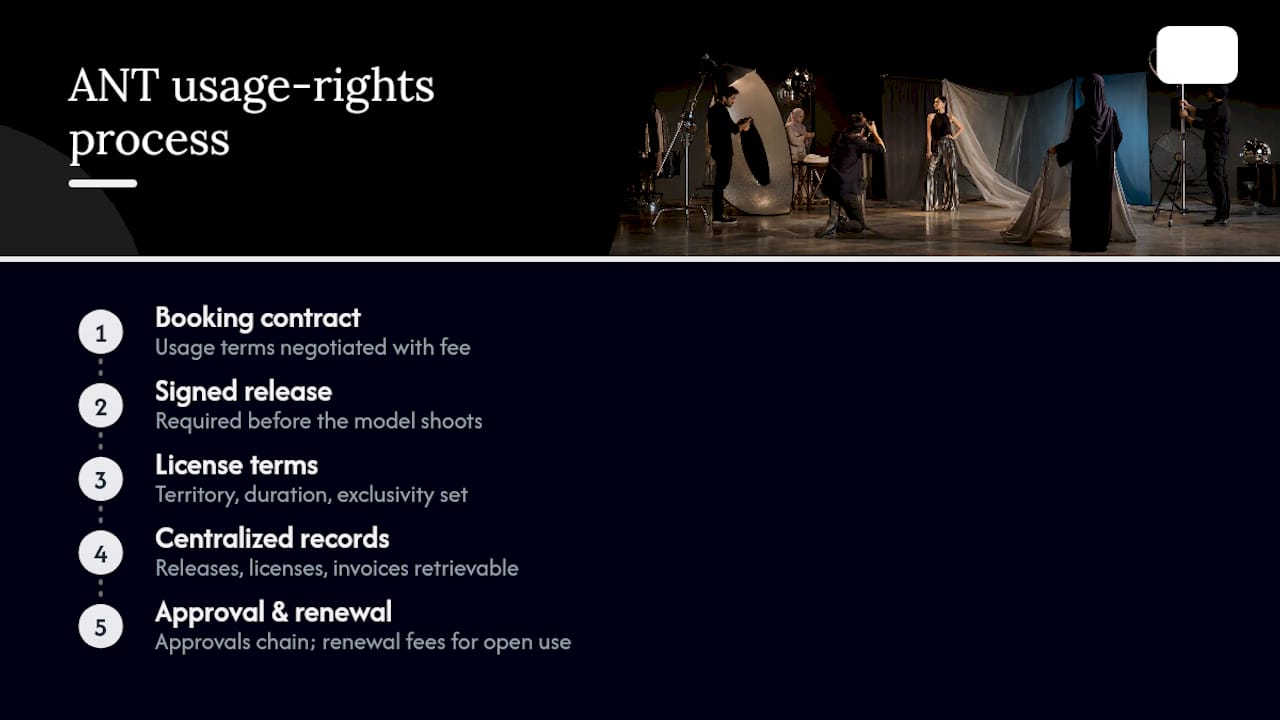
Agencies build usage terms into the booking agreement itself, rather than treating the release as an afterthought. A signed release becomes standard practice before a model steps in front of a camera, and the license fields, territory, duration, exclusivity are negotiated alongside the booking fee, not after delivery; for guidance on selecting the right professional, see how to choose a newborn photographer that is right for your family. This protects the model’s future earning potential and gives the client clarity from day one.
Renewal fees exist because open-ended usage devalues a model’s work over time. Agencies typically centralize file storage so releases, licenses, and invoices live in one retrievable record, with an approvals chain confirming exactly who signed off on what scope. For brands running multi-territory campaigns, that structure removes the guesswork that sinks smaller, informal bookings.
The Gap Between License Labels and Legal Protection
Most usage disputes trace back to one habit: treating a license label like “commercial use allowed” as the whole story. It never is. The label tells you the general shape of permission; the actual contract text tells you the scope, and those two things diverge more often than either party expects at signing.
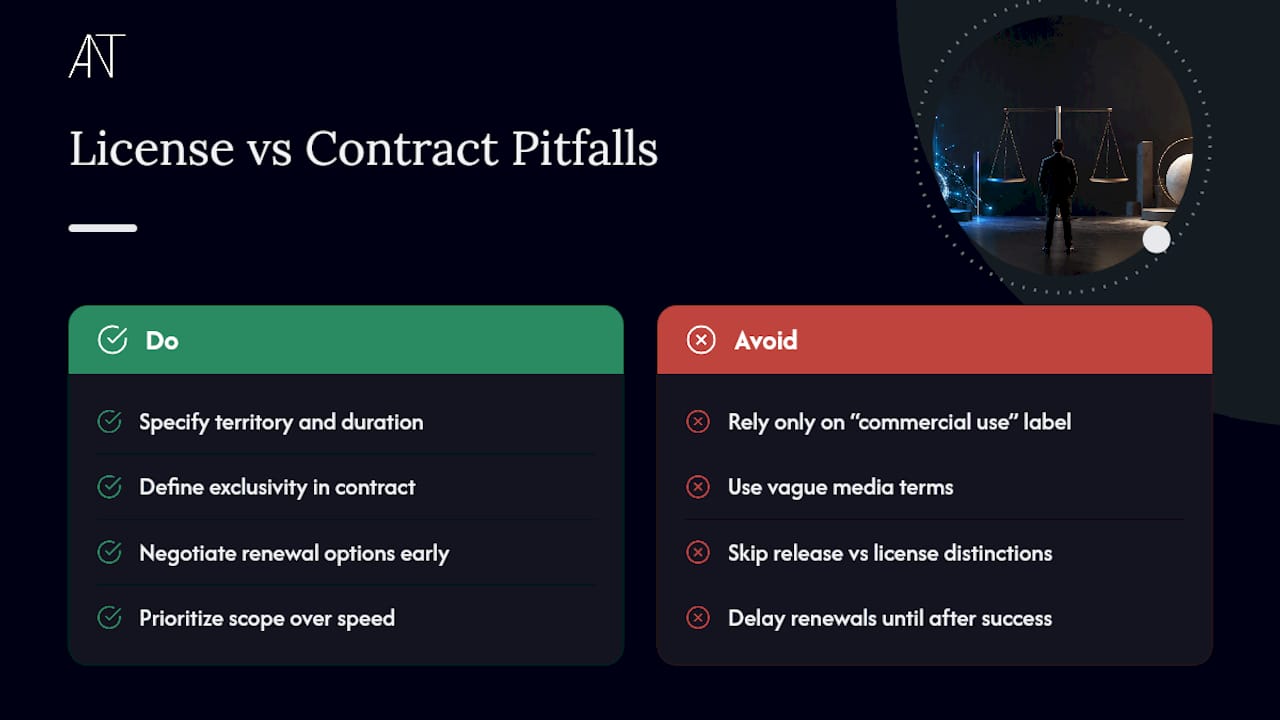
The conventional advice, “just get a release,” undersells the problem. A release protects against a likeness claim, but it says nothing about territory, duration, or exclusivity. Those terms live in the license, and they’re the terms that actually determine whether reusing an image next year is safe or actionable. Readers should prioritize scope specificity over speed. A rushed agreement with vague media terms costs far more to untangle later than the extra hour it takes to write territory and duration into the contract up front.
Where agencies add real value isn’t paperwork for its own sake. It’s the discipline of negotiating renewal options before a campaign outperforms expectations, rather than after a client’s legal team calls asking why an expired license is still running on a billboard.
— ANT
Work With an Agency That Manages Usage Rights for You
A professional agency structures usage terms into every booking from the start, so brands running campaigns across multiple countries aren’t left reconstructing scope and renewal terms after the fact. Instead of negotiating release language and license text separately from the talent booking, clients benefit from a coordinated process with centralized recordkeeping that agencies use to avoid disputes.
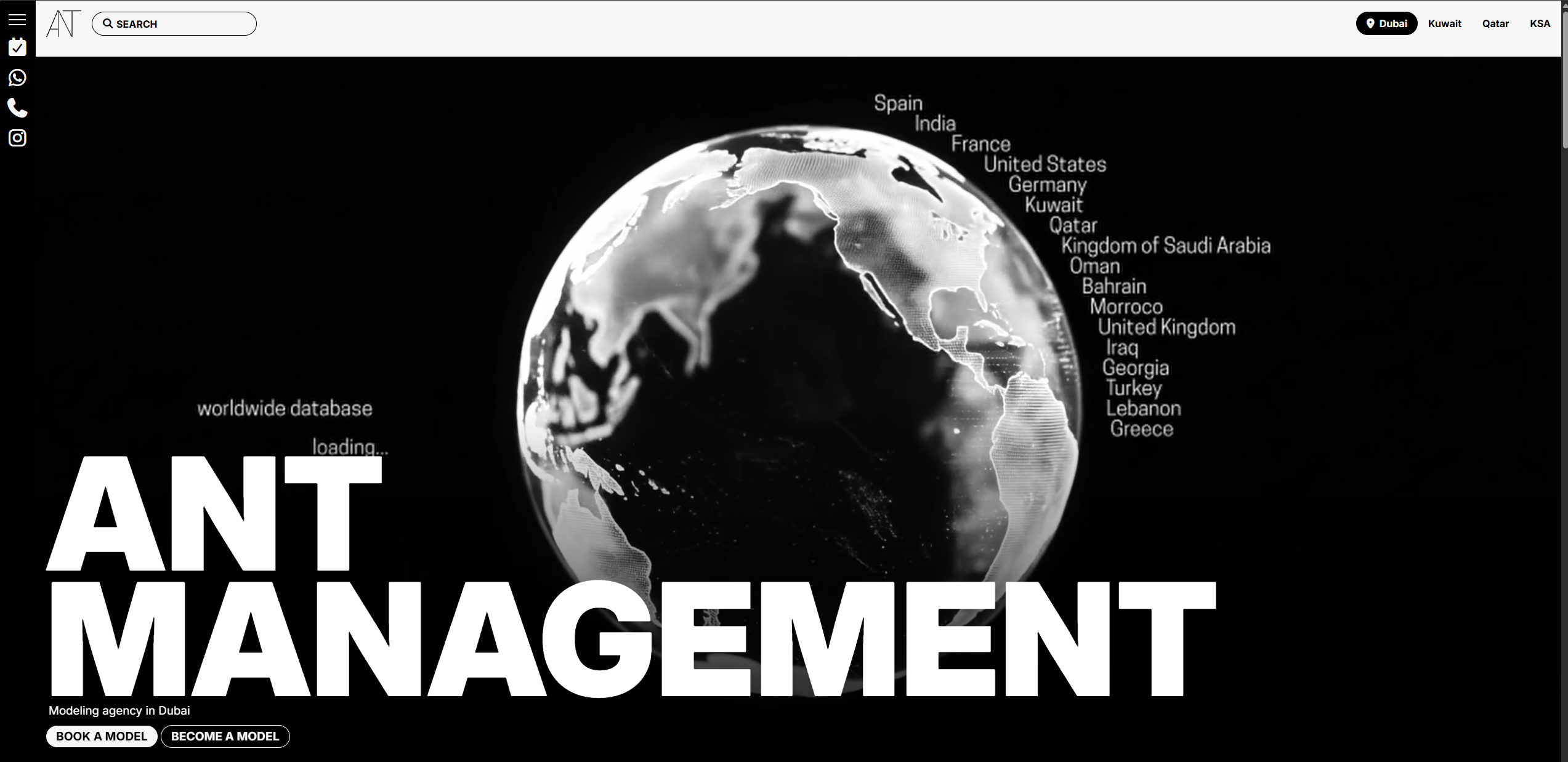
That matters most for brands scaling beyond a single market. A campaign that starts as a local social push often grows into something regional, and renegotiating usage terms mid-flight is far messier than building renewal options into the original agreement. ANT Management’s regional pages for Kuwait, Saudi Arabia, and Qatar reflect that multi-territory approach directly, with talent and usage terms managed together rather than as separate line items.
If you’re planning a campaign that will cross borders, extend past a single quarter, or require exclusivity in your category, get in touch through ANT Management’s Dubai team to scope the booking and the license terms together before production starts.