
Talent Overtime Policy: How to Write Rules That Hold

A talent overtime policy is a short written agreement, made before the call sheet is issued, that fixes four things: the contracted day, who may extend it, what an extra hour costs and how the extra hours are recorded. Write those four down in the booking confirmation and most disputes never begin. Leave them to the day itself and the final invoice becomes a negotiation conducted in the dark.
What follows is built for the people who commission: brands, agencies, producers and event companies. It draws on published industry agreements, US federal guidance and the terms ANT Management applies to its own bookings, and it ends with a template you can adapt.
TL;DR
- State the contracted hours, including prep, wrap and meal breaks, in writing before the engagement is confirmed.
- Name the person who can approve extra time and require approval before the hours are worked, not after.
- Fix the overtime rate and the billing increment in advance. Published benchmarks range from time and a half to double time, billed in 15 or 30 minute steps.
- Record start, finish and breaks on the day, and reconcile them against the approved schedule before the invoice is paid.
- ANT publishes overtime at 15% per hour on its booking terms, alongside cancellation and late payment terms.
Table of Contents
- What a talent overtime policy actually covers
- Set the contracted day before anything else
- How the rules differ by country and by status
- What published benchmarks say about rates and increments
- Approval: no overtime without a name attached
- Fatigue is part of the policy, not an afterthought
- Recording hours so the invoice matches the day
- Punctuality, conduct and the overtime that is not overtime
- ANT’s published terms for overtime and changes
- A template you can adapt
- Booking talent with the terms already in place
- FAQ
- Sources
What a talent overtime policy actually covers
The word “policy” suggests a corporate handbook. In practice, for a booked model, actor, host or crew member, it is a handful of clauses living inside the booking confirmation or deal memo. Guidance for UK productions from a major production-services provider says the contract should set out the length of the working day, meal-break arrangements, whether the day or week can be extended and what is paid for additional hours or days. That list is a sound skeleton for any talent booking.
Translated into the language of a booking, the clauses are these:
- Contracted day. The number of paid hours, with call time and expected wrap. Our guide to call time and how to set it explains why the call time, not the first frame, is the moment the clock starts.
- Inclusions. Whether hair, makeup, wardrobe fittings, rehearsal and wrap-down sit inside the contracted hours.
- Breaks. Length, whether paid, and what happens if the schedule forces a break to be skipped.
- Extension rule. Who may ask for more time, who may approve it, and how approval is recorded.
- Rate and increment. What an extra hour costs and the smallest block that is billed.
- Travel. Whether travel between locations counts as working time.
- Cancellation and no-show. Technically a separate topic, but it belongs in the same paragraph of the confirmation, because both govern what happens when the day does not run as planned.
Set the contracted day before anything else
Overtime is defined against something. Without a clearly contracted day, there is no line to cross, and every long day becomes arguable. The UK producers’ association template handles this with a deal memo: producers give the crew member a document before engagement that specifies contracted shooting, prep and wrap hours and the overtime rate. Overtime is then paid for work beyond those contracted hours.
For a fashion or commercial shoot the same logic holds. A model booked for an eight-hour day should know whether those eight hours include a ninety-minute hair and makeup start, or whether the camera clock begins afterward. A host booked for an activation should know whether the briefing and the pack-down are inside the shift. Ambiguity here is the single most common origin of overtime disputes, and it costs nothing to remove.
A useful habit is to build the schedule first, then derive the contracted hours from it, rather than the reverse. The photoshoot production checklist groups shots by setup so that the day’s length can be estimated honestly. A schedule padded for the best case guarantees overtime on the realistic one.
How the rules differ by country and by status
Overtime is not a universal concept with one universal rate. It depends on where the work happens and whether the person is an employee or an independent contractor, and you should confirm the position with a qualified employment adviser for the country concerned.
United States. Under federal law, covered employees who are not exempt must receive at least time and one half their regular rate for hours worked over 40 in a workweek. The same Labor Department fact sheet explains that a workweek is a fixed, recurring period of 168 hours, and that averaging hours across two or more weeks is not permitted. Individual states can set stricter rules; one research source notes that California counts daily hours as well. Many talent bookings involve independent contractors, where the agreed contract rate governs, but status depends on the facts of the relationship and is worth confirming before you rely on the label.
Canada. A Canadian industry association’s terms say that hours beyond those negotiated in the agreement are either paid as overtime at a rate agreed before work starts, or compensated with paid time off in lieu. The same page notes Ontario overtime is generally 1.5 times the regular hourly rate for hours over a regular workweek.
United Kingdom and New Zealand. Both have published film-sector conventions that treat overtime as a contracted rate negotiated up front, with escalating multipliers for very long days. We look at them in the next section.
For shoots in Dubai and the wider GCC, the booking contract is the document that carries the agreed terms, which is exactly why it must state them. When talent travels, the overtime rules of the place of work and the terms of the booking both matter, and our note on moving models and crews across borders covers the logistics that stretch a day before it begins.

What published benchmarks say about rates and increments
No single rate is correct. What matters is that the rate is fixed in advance and that it escalates sensibly. These published examples show the range.
| Source | Rate for extra hours | Billing increment |
|---|---|---|
| UK producers’ agreement, 2017 | The greater of £35 per hour or 1.5 times the contracted hourly rate, capped at £45 per hour | 30-minute blocks for the first hour each day, then hourly |
| New Zealand film-sector working conditions, 2017 | 11th and 12th hours at 1.5 times, 13th hour onward at double | 15-minute increments |
| Canadian industry terms | Rate negotiated before the engagement, or paid time off in lieu | Set in the agreement |
| US federal rule | At least 1.5 times the regular rate over 40 hours in a workweek, for covered non-exempt employees | Workweek basis |
Three lessons emerge. First, escalation is normal: the longer the day, the more expensive each additional hour, which gives both sides a reason to finish. Second, increments matter as much as rates, because a 15-minute increment and a 60-minute increment produce very different invoices on the same evening. Third, time off in lieu is a legitimate alternative to cash, but only when the agreement says so before the day.
Approval: no overtime without a name attached
The cleanest rule in the research is also the shortest. The UK template says overtime may be scheduled in advance but, outside exceptional circumstances, should be paid only where it was contracted, requested or approved in advance by the producer or a nominated representative. That protects the talent, who knows the hours will be honored, and protects the client, who is never surprised.
In practice, name two roles on the call sheet:
- The approver. The person who can authorize more hours and more spend, usually the producer, brand lead or event director.
- The confirmer. The person on set who can state what actually happened: when talent arrived, when breaks fell, when the last frame or last guest departure occurred. On small shoots these are the same person. On larger productions they are often not.
A good extension instruction is brief and specific. It states the event or shoot, who is affected, the reason, the revised finish time and the charging basis, and it names the person who authorized it. A message in the booking thread that says “Approved to 9:30 p.m. for the final look, rate as confirmed” is enough, provided it is sent before the hours are worked and acknowledged by the other side.
Fatigue is part of the policy, not an afterthought
Budget approval does not make a longer day safe. The New Zealand document recommends a maximum scheduled duration of 12 hours including a 45-minute paid lunch, and says productions should not ask for, and crew should not agree to, overtime beyond the 12th hour without weighing fatigue and legal obligations.
Translate that into your own ceiling. Decide the longest day you will schedule, decide what rest must follow it, and write both into the policy. Pay particular attention to the journey home. A model released at midnight after a desert location shoot, or a host finishing a late activation with a long drive ahead, is a duty-of-care question as much as a cost question. Guidance on event crew makes the same point: whoever supervises should consider the hours already worked, the breaks taken and the arrangements for leaving the site before agreeing to extend.
If your productions run long as a matter of course, the answer is rarely a bigger overtime budget. It is a better schedule, more hands, or a second shift. Our overview of production crew roles is a practical way to see where a missing role is forcing everyone else to stay late.

Recording hours so the invoice matches the day
A policy is only as good as the record behind it. Whatever method you use, a sign-in sheet, a producer’s log or an app, capture the same data points: arrival, start of work, each break, finish and any travel counted as work. Event-staffing guidance recommends written rules for clock-in, breaks, overtime and travel, a ban on off-the-clock work and paid treatment of setup and breakdown when they are actually worked. The same source advises fixing the start day of the workweek in writing, which matters for the US weekly threshold.
Two refinements are worth borrowing. One event-industry model suggests ignoring very short stretches under 30 minutes and rounding the rest down to 15 minutes. Whether you adopt that or bill every quarter hour, decide in advance and say so, because the rounding rule alone can swing an invoice. And when a record is corrected after the fact, note the reason and the approver, so that every line on the final bill can be traced.
Then reconcile before you pay: compare the log against the approved schedule, flag any hours with no approval attached, and resolve them with the agency or the talent while the day is fresh. Our talent coordination checklist follows the whole path from brief to final payment, and reconciliation is the step that closes it.
Punctuality, conduct and the overtime that is not overtime
Not every long day is a client-caused overrun. Talent who arrive late, or crews who lose time to disorganized sets, change how an overtime conversation should go. The fairest policies separate time the client has requested from time lost to avoidable delay on either side. Professional habits at the venue shape this: arrival, readiness and conduct are what keep a day inside its contracted hours, and the backstage etiquette rules that directors notice are a useful reference for what “ready on time” looks like in a live setting. For film and photo sets, our on-set etiquette checklist covers the first day in the same spirit.
When the delay is genuinely outside anyone’s control, such as a permit issue or weather, the policy should say who decides whether the extension is paid and at what rate. Good preparation reduces the chance of that conversation. The shooting permits guide addresses one common cause of Dubai delays, and the guide to crisis management on set addresses what to do when the schedule breaks anyway.
ANT’s published terms for overtime and changes
ANT Management publishes its commercial terms on the Dubai booking page. They include:
| Term | Published figure |
|---|---|
| Overtime | 15% per hour |
| Cancellation within 48 hours | 50% |
| Cancellation within 24 hours | 100% |
| Cancellation of confirmed trips | 100% |
| Late payment fee | 9% per month |
These sit together deliberately. Overtime, short-notice cancellation and late payment are the three moments when the agreed day and the real day diverge, and each is easier to handle when the figure was visible from the start. For the exact wording and how it applies to your booking, refer to the booking page or your confirmation.
Our point of view
A shoot is choreography, and overtime is what happens when the choreography loses its rhythm. We have found that the cleanest days are the ones where the schedule, the contracted hours and the approval path were agreed before anyone stepped on set, not renegotiated in the last light of the evening.
That is why we publish our overtime, cancellation and late payment terms rather than leaving them to be discovered. A client who sees the figures in advance can plan the day around them, and the talent who arrives knows precisely what the booking promises.
Because we book models, kids, actors, influencers, hostesses, stunt performers and full production crew through one agency, we can look at the day as a whole: who is needed when, where a second shift is wiser than a longer one, and how to brief everyone with the same set of expectations. We send talent to shoots, events and shows anywhere in the world, and the discipline is the same in Dubai, Doha or further afield.
ANT
A template you can adapt
Copy this into your booking confirmation or deal memo and replace the brackets. It is a starting structure, not legal advice; have counsel review it for the jurisdiction in which the work takes place.
- Contracted hours. Talent is booked for [number] paid hours on [date], from call time [time] to scheduled wrap [time], including [prep, fittings, rehearsal].
- Breaks. A [length] meal break is provided after [number] hours and is [paid or unpaid].
- Extension. Hours beyond the contracted day are worked only when approved in advance by [name and role]. Approval may be given in writing, including by message, and names the new finish time.
- Overtime rate. Approved extra time is charged at [rate], in [15 or 30] minute increments, from the end of the contracted hours.
- Maximum day. No day is scheduled beyond [number] hours, and [number] hours of rest follow any day that exceeds [number].
- Travel. Travel between locations during the working day counts as working time. Travel to the first location and from the last is [paid or unpaid].
- Records. Start, finish and break times are logged on the day by [name]. The log is reviewed with the agency within [number] days of the job.
- Cancellation and late payment. As stated in the booking terms.
Communicate it the way the research recommends: openly and ahead of time. Event-labor guidance advises asking suppliers about their overtime assumptions, such as the rate after 8 or 10 hours, so that productions can schedule around premium time where possible.
Booking talent with the terms already in place
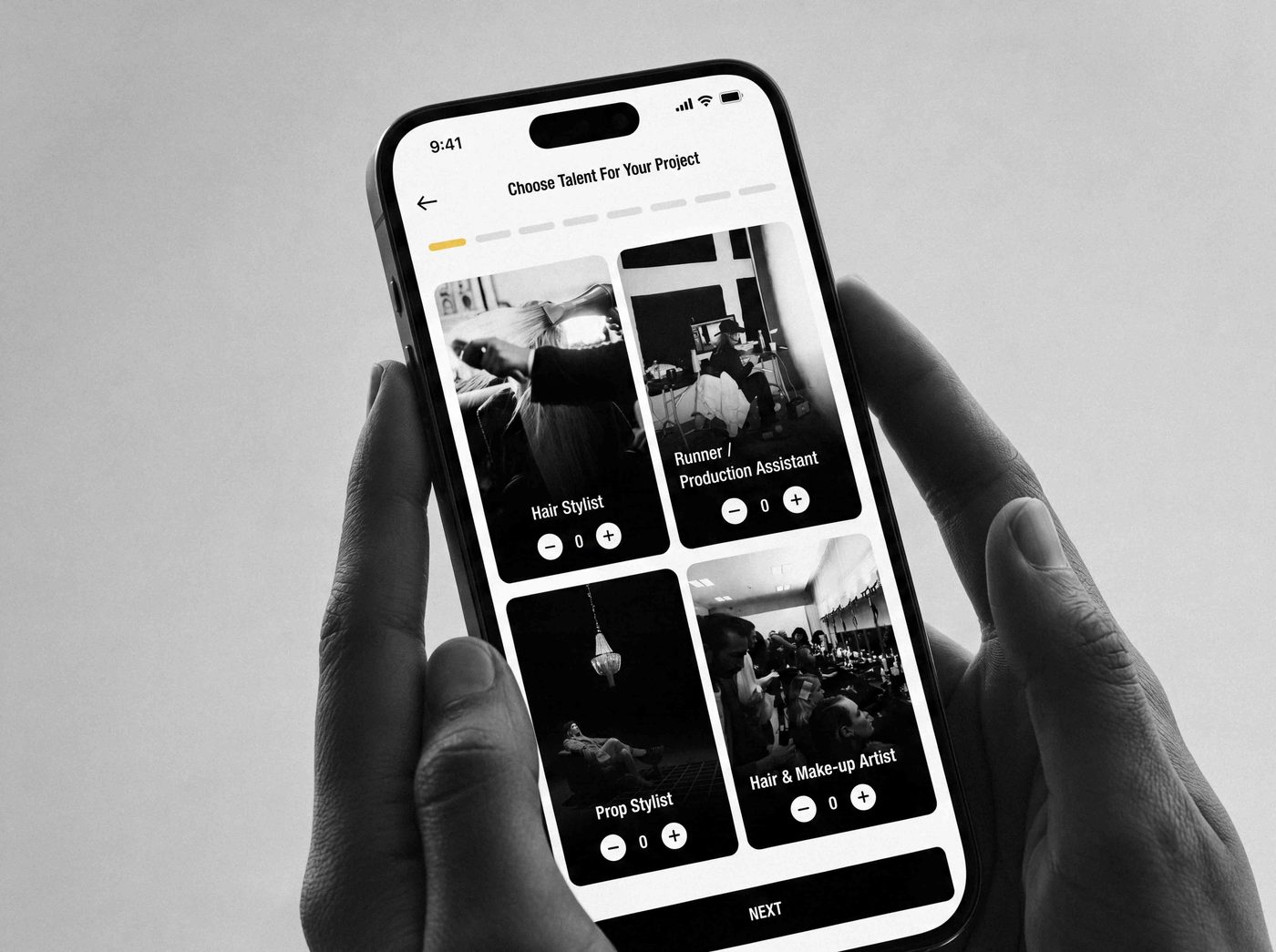
Our ANT Talent App lets you post a job and book vetted models, actors, influencers and creatives in Dubai in minutes, with escrow-protected payment processed by Stripe. Profiles are verified, coverage spans the UAE, Kuwait, Qatar and Saudi Arabia, and current prices are shown in the app. If you would rather have a managed service, a briefing, a shortlist and coordination through the day, book through ANT Management directly at info@antmgmt.com.
For event staffing, our hostess and promoter agency page shows how those bookings work, and for crews and creatives the creatives booking page lists what is available. If you are planning staffing for a larger event, start with our guide to an event staffing plan. Insurance is the companion question to overtime on long days, and the guide to production insurance for shoots covers what to protect.
FAQ
Does talent have to be paid overtime by law?
It depends on the country and on whether the person is an employee or an independent contractor. In the US, covered non-exempt employees must receive time and a half after 40 hours in a workweek. For contractors, the agreed contract terms generally govern, so state the overtime rate in the booking and confirm the legal position with an employment adviser.
What is a fair overtime rate for a model or host?
Published film-sector examples run from time and a half to double time for the longest days, with caps in some agreements. The right rate is the one agreed in writing before the booking. ANT’s published overtime term is 15% per hour, shown on the booking page.
Who should approve overtime on set?
One named person with authority over both the schedule and the budget, ideally approving in writing before the extra hours begin. On larger productions a second person confirms what was actually worked.
Can overtime be settled with time off instead of cash?
Yes, where the agreement provides for it in advance. One Canadian industry set of terms allows paid time off in lieu of overtime pay when agreed. Check that the rule is legal where the work is done.
Sources
- Getting your crew contracts in place (UK productions guide)
- PACT agreement, 2017
- US Department of Labor, Fact Sheet #23: Overtime Pay Requirements of the FLSA
- CADA/East, Fees and Payments
- New Zealand film-sector working conditions
- Event staff time tracking guide
- Festival labor law compliance and crew fatigue
- Backstage etiquette rules
Ready to book? Two ways: send a booking request to ANT Management, or post a job on the ANT Talent App.
Recommended
Planning a shoot in Dubai?
Prefer to book on your phone?
Post a job on the ANT Talent App and let approved talent come to you.
- Every profile approved by ANT
- Chat with talent in the app
- Payment held until the job is done

Free on iPhone
- 5.0on Google, 200+ reviews
- Since 2022modelling and talent agency
- Worldwideshoots, events and shows anywhere
- Licensed in Dubai. See our licence and booking terms