
Cross-Border Talent Contracts: A Booker's Guide

A cross-border talent contract is the written agreement that governs a booking when the talent, the client, the shoot and the payment sit in more than one country. It fixes the work, the fee and currency, how the images may be used, which country’s law applies, who handles visas and tax, and what happens if the job is cancelled. Get those points right before the first flight is booked, and a multi-market campaign moves with rhythm instead of friction.
This guide is written for the person hiring: brands, creative and marketing agencies, film and photo producers, and activation companies commissioning models, actors, influencers and creatives across the UAE, the GCC, Europe and the US.
TL;DR
-
A cross-border contract must name the parties and who has authority to sign, then define the work, dates, places, fee, currency, payment method and timing.
-
Image rights are not harmonized internationally, so usage, territory, media and duration must be written out in full rather than assumed.
-
Choose governing law and a dispute forum explicitly, and check whether mandatory local protections for workers still apply.
-
Settle visas, work permits, tax and withholding in the contract, because they vary by country and by the facts of each job.
-
Adapt a template to every booking; never reuse it unchanged.
Table of Contents
What a cross-border talent contract actually does
A talent agreement is a contract between a performer or creator and the party engaging them. It sets out services, compensation, credit, exclusivity and termination rights, and in cross-border versions it often adds clauses on work visas, tax withholding and governing law.
The World Intellectual Property Organization frames the purpose well. In its publication on audiovisual performers, contracts between producers and performers establish how IP rights are handled and what each party owes the other and the production. Contracts, in that view, translate a performer’s legal and intellectual-property rights into economic reality, particularly in collaborative productions with many contributors.
When the engagement crosses a border, three things change. The legal framework is no longer singular: one country’s labor, tax and image rules may apply to the shoot, another’s to the payment, a third’s to the talent’s residence. Enforcement becomes harder, so the contract must say where a dispute is heard. And logistics acquire legal weight: visas, permits, insurance and currency stop being operational footnotes and become obligations someone must own.
When a country-specific contract is required
Some jurisdictions go further than good practice. Peru’s performer law is a clear example: foreign performers must have an artistic-work contract notified to the labor ministry before entry, alongside visa requirements. That rule applies to performances in Peru, not worldwide, but it shows why the first question on any international booking is not “what does our template say?” but “what does the country of performance require?”
The UK tax authority offers a similar illustration: regulatory requirements can make a local employment contract necessary to perform duties legally abroad, including where a country requires an employment contract before issuing a work permit. Again, a UK example, not a universal rule.
The clauses that carry the weight
The following clauses decide whether a booking runs smoothly or becomes a negotiation after the fact. A German checklist for international cultural contracts, published for touring artists, is a useful skeleton: it asks that the contract identify the parties and the agency’s authority, describe the service, dates and places precisely, and state the fee, currency, exchange rate and payment method.

Parties and authority
Name every legal entity: the commissioning brand, the production company, the agency and the talent or their loan-out company. State whether the agency signs on the talent’s behalf and under what authority. Ambiguity here is where payment disputes begin, because nobody is sure who owes what to whom.
Scope of work, dates and places
Describe the deliverables the way a call sheet would: number of shoot days, hours per day, locations, wardrobe and styling requirements, retouching approvals, and any travel days. Specific scope is also what makes overtime and additional-day terms enforceable.
Fee, currency and payment timing
Specify the currency, the exchange rate or the date it is fixed, the payment method and the timing. Cross-border payments pick up bank fees and conversion differences; decide in the contract who absorbs them. Then address tax and VAT, because these matters vary with the countries and the transaction.
Payment handling by agencies is itself regulated in places. In the UK, regulation 25 of the Conduct Regulations is reported to require that money an agency receives for a model goes into a client account within two business days and is held on trust. In California, Labor Code section 1700.25 is described as requiring licensed talent agencies to deposit funds in a trust account and pay them out, less commission, within 30 days. If your payment flows through an agency, ask how funds are held.
Image rights, usage and territory
This is the clause that most often costs brands money. WIPO notes that image-rights rules differ internationally and that contracts licensing a person’s image should be exhaustive, since images circulate across borders and legal treatment varies by jurisdiction. Its perspective is blunt: without global harmonization, agreements need to anticipate every contingency in how an image is used.
A sound usage clause states:
-
the media (digital, social, print, out-of-home, broadcast);
-
the territories, listed by country or region rather than “worldwide” by default;
-
the duration, with a defined start date and a renewal mechanism;
-
exclusivity, including category and competitor restrictions;
-
the post-termination treatment of intellectual property.
Counsel also recommend that contracts identify IP ownership, regulate image and likeness use and set termination rights, including morality clauses, and consider a moral-rights waiver where applicable. A foreign copyright registration does not automatically protect content elsewhere, so contracts with foreign partners should define how content may be used and in which territories.
Pricing these rights is a craft of its own. Our guides on the four factors behind model usage rights, pricing performer usage buyouts and photo licensing fees show how duration, territory and exclusivity move the number. For on-set paperwork, a model release form built to agency standard belongs in the file next to the contract.
Termination and cancellation
Define the specific circumstances in which either party can end the agreement, and what happens to the work and the rights afterwards. Cancellation terms matter more across borders, because travel is booked and non-refundable. Document deadlines and reasons, and allocate responsibility for visa and work-permit formalities and costs.
As a working reference, our own published booking terms at antmgmt.com/dubai/booking set cancellation within 48 hours at 50%, cancellation within 24 hours at 100%, and cancellation of confirmed trips at 100%, with overtime at 15% per hour and late payment fees at 9% per month. Terms like these are the shape a clear cancellation ladder takes; whatever figures you agree, write them into the contract rather than leaving them to custom.
Governing law, disputes and the limits of choice
In cross-border talent agreements, governing law and jurisdiction clauses are essential: they name the country whose law applies and the forum, whether courts or international arbitration, that resolves disputes.
Parties generally have freedom to choose the applicable law, but that freedom has edges. Guidance from Austria’s arts mobility service notes that the choice may be limited by mandatory consumer or employee protections under EU or EEA rules, and that contracts should also address currency, tax and social-security obligations in the relevant countries. Choosing a neutral law and an arbitration seat is common practice for multi-country shoots, but it cannot override protections that apply by force of the place where the work is performed.
Finland’s Posted Workers Act shows the mechanism. It applies when an employer established abroad temporarily posts a worker to Finland, and it applies specified Finnish employment protections even where another law governs the contract. The lesson for bookers: the contract’s governing-law line is a starting point, not a shield.
Contractor or employee: worker status
Calling a model, host or crew member an independent contractor does not settle the matter. The International Labour Organization’s R198 recommendation advises that an employment relationship should be determined by the facts of work performance and remuneration, regardless of how the contract characterizes it. Its indicators include work done under another party’s instructions and control, integration into the enterprise, remuneration as the worker’s sole or principal income, and tools or materials supplied by the other party.
For a one-day editorial, this rarely bites. For a multi-week event staffing run with fixed uniforms, supervised shifts and a single paying client, it can. Local rules then decide the outcome: those weighing a longer-term hire in a given country should read local guidance such as this overview of hiring staff in Spain before assuming a freelance structure will hold.
Visas, permits and tax: the practical gate
The contract should assign responsibility for visa and work-permit formalities and expenses, and it should do so before dates are confirmed. In Dubai, for example, anyone wishing to film must appoint a UAE-licensed production company to obtain the filming permit, and the authority states that international crew must hold valid work or business visas to take part. A contract that leaves permits to “the client” without naming who applies, and when, invites a cancelled shoot day.
Tax needs the same specificity. For US-source work, the IRS states that nonresident aliens’ nonemployee compensation is reportable on Form 1042-S, with withholding at 30% or a lesser treaty rate where applicable, subject to listed exceptions. Whether that applies to a particular booking depends on where the work is performed and the talent’s status, so confirm it with a tax adviser before payment. HMRC likewise notes that UK employers may have PAYE obligations for internationally mobile employees working temporarily in the UK, depending on the employment and travel facts.
The operative principle: write the tax position into the contract (who withholds, who issues certificates, whether fees are gross or net) and have a local adviser confirm it for the country of performance.

Influencer and content-creator agreements
Influencer contracts add a layer of advertising law. In the US, the FTC’s guidance says endorsers must make clear and conspicuous disclosures of material connections, such as financial or employment relationships. Its guidance also indicates that foreign influencers must comply with US law when it is reasonably foreseeable that their posts will affect US consumers. A cross-border influencer contract should therefore require disclosure in line with the rules of every market the content targets, give the brand approval rights, and state how long posts must stay live.
Usage is where influencer budgets drift. Our breakdowns of content creator contract terms and how to avoid paying 50 to 100% extra on influencer usage rights explain how to separate the creative fee from the licence to reuse the work in paid media. If influencer activity is on your plan, our influencer marketing roster is where to start.
Contracts involving minors
Standard adult templates do not cover children. One widely used template states plainly that it is written for adults and that for anyone under 18 you should use parental consent and check local child-performer rules. Cross-border bookings add a second layer: the rules of the country of performance on working hours, chaperones and permits. Our checklist of five compliance checks before hiring kid models covers the practical side.
A pre-signature checklist
The touring-artists checklist treats international contracting as fact-specific: a sample should be adapted to the parties, countries, activity, tax position, language and payment mechanics, never reused unchanged. Before signing, confirm each of these:
-
Legal names of all parties, and who holds signing authority.
-
Work, purpose, dates and places, described precisely.
-
Fee, currency, exchange rate, payment method and timing.
-
Tax and VAT treatment, and any withholding.
-
Visa and work-permit responsibility, with costs allocated.
-
Insurance for travel, equipment and injury, including stunt work.
-
Copyright, image and usage rights: media, territory, duration, exclusivity.
-
Termination and cancellation terms with deadlines.
-
Contract language, governing law and jurisdiction.
-
For minors, parental consent and local child-performer rules.
Once contracts also guide how you negotiate, line-item offers and a clear walk-away position keep fees defensible. For US-based productions, our guide to hiring models in the U.S. walks through the booking sequence.
Perspective: contracts as creative infrastructure
We treat a contract as part of the production design, not a legal afterthought. A shoot is a choreography of people, light and time; the agreement is the score that lets everyone move without collision. When we coordinate talent across Dubai, Europe, the US and Asia, the bookings that run most gracefully are those where the brief, the usage terms and the cancellation ladder were agreed before the call sheet existed.
Three habits serve our clients best. First, brief precisely: talent selection, coordination and briefing are part of how we work, because a clear brief becomes a clear scope. Second, price rights separately from time, so the creative fee and the usage licence can be negotiated on their own logic. Third, name every cost owner for travel, permits and overtime early; ambiguity is expensive, and it surfaces at the worst moment.
We are not a substitute for your counsel, and nothing here is legal advice. For the governing law, tax and employment questions of each market, a local lawyer or tax adviser should confirm the final terms.
— ANT
Booking across markets with ANT
ANT Management books models, influencers, creatives, full production crews, stunt talent and event staff from Dubai, with a network across Europe, the US and Asia. Start with talent booking, or creatives and full production crews when the job needs directors, stylists and hair and makeup under one roof. Clients who prefer a managed service can book directly through ANT Management at info@antmgmt.com, and the full terms for overtime, late payment and cancellation are on our booking page.
FAQ
What is a cross-border contract?
It is an agreement where the parties, the work or the payment span more than one country. For talent bookings, that means it must settle which law governs, where disputes are heard, who handles visas and tax, and in which currency the fee is paid, on top of the usual scope, fee and usage terms.
Can I use a sample talent contract for an international booking?
Use it as a skeleton, not a finished document. A sample must be adapted to the countries, the activity, the tax position, the language and the payment mechanics. If anyone under 18 is involved, add parental consent and check local child-performer rules.
Which country’s law should govern the contract?
Parties generally can choose, and a neutral law with a named forum or arbitration seat is common. The choice can still be limited by mandatory worker or consumer protections where the work is performed, so have a local adviser confirm it for the market in question.
Do image rights travel with the booking?
Only as far as the contract says. Image-rights rules differ between countries, so state the media, territories, duration and exclusivity explicitly. Anything not licensed in writing should be treated as not licensed.
Sources
-
International Entertainment Law and Cross-Border Transactions
-
IRS, withholding on U.S. source income paid to nonresident aliens
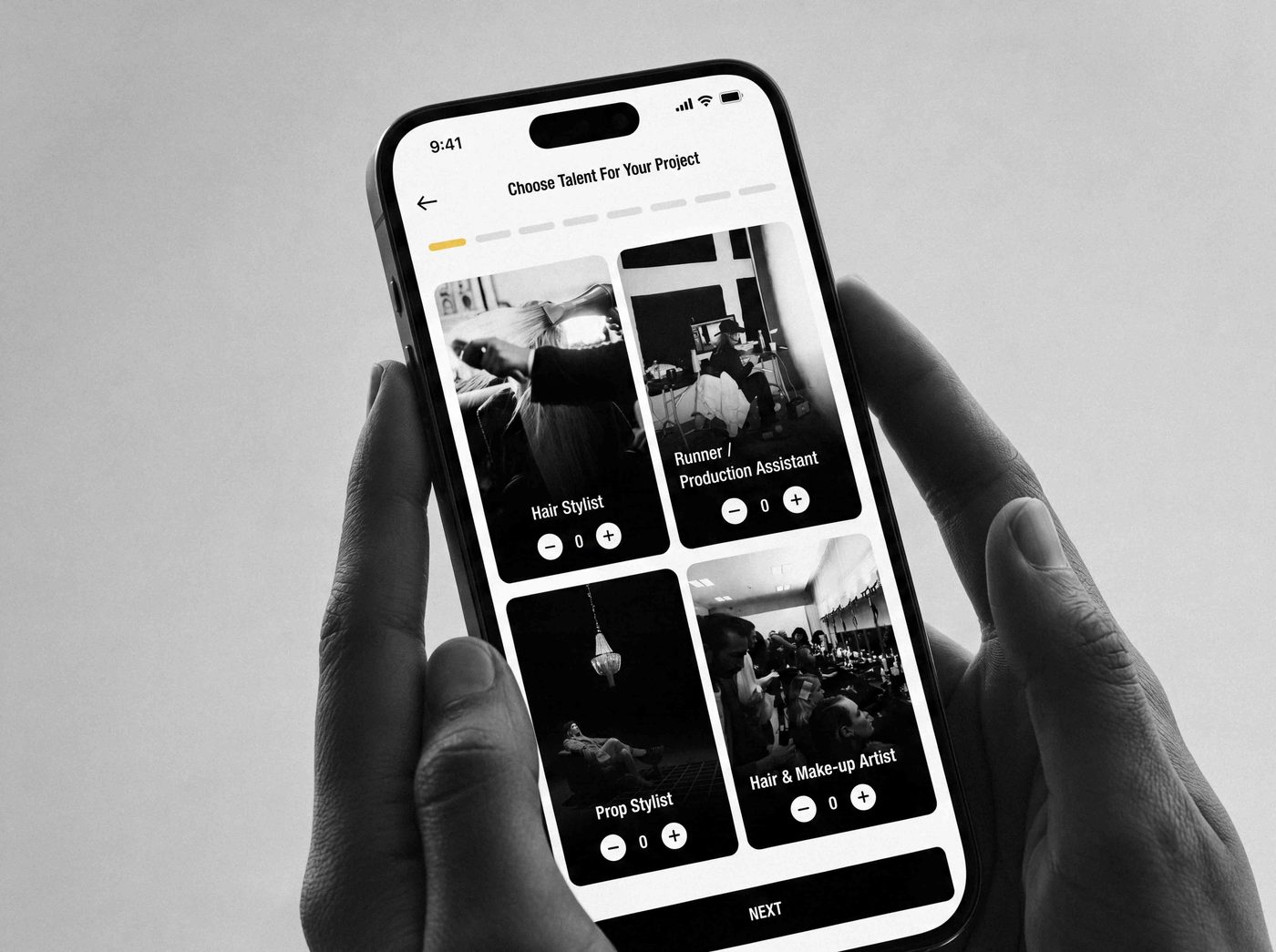
Ready to book? Post a job on the ANT Talent App and book vetted models, actors, influencers and creatives in Dubai in minutes, with verified profiles and escrow-protected payment processed by Stripe. The app covers the UAE, Kuwait, Qatar and Saudi Arabia, and current prices are shown in the app.
Recommended
Planning a shoot in Kuwait?
Prefer to book on your phone?
Post a job on the ANT Talent App and let approved talent come to you.
- Every profile approved by ANT
- Chat with talent in the app
- Payment held until the job is done

Free on iPhone
- 5.0on Google, 200+ reviews
- Since 2022modelling and talent agency
- Worldwideshoots, events and shows anywhere
- Licensed in Dubai. See our licence and booking terms