
Day One On Set Etiquette: Printable Checklist Aligned With SAG‑AFTRA

On set, your job as a newcomer is simple: be early, be quiet, and follow the chain of command. That standard runs through SAG-AFTRA’s performer protocols, every call sheet ever issued, and the briefings we give talent before a shoot. Phones off, hands off the gear, and your call sheet read twice before you arrive: these three habits separate someone who gets called back from someone who doesn’t.
TL;DR:
- Respond immediately to “settle” or “lock it up” by staying still and silent until “cut” to avoid costly delays and maintain set discipline.
- Route all questions through your immediate supervisor and keep radio communications brief with “copy” or “standing by” to prevent disruptions.
- Arrive fifteen to thirty minutes early, fully prepared with call sheet details, essential documents, and a checklist to ensure readiness at call time.
- Keep your phone silent and stowed, avoid touching props or equipment outside your department, and report any damages or issues immediately to preserve continuity.
- Respect personal space and boundaries of talent and crew, and follow set protocols for safety, consent, and cleanliness to maintain a professional environment.
Table of Contents
- Noise and rolling protocol: how to respond to ‘quiet on set’ and ‘rolling’
- Set hierarchy and communication: who to talk to and how to escalate
- Punctuality, call sheets and being ready at call time
- Interacting with talent: how to give performers space and when to engage
- Phones, personal items and staying present
- Hands-off policy for props and equipment; continuity matters
- Safety, consent and closed-set protocols
- One-page on-set cheatsheet: a compact printable checklist for first-day use
- Handling conflicts or disputes professionally
- Respecting personal space and boundaries beyond actors
- Waste disposal and set cleanliness responsibilities
- ANT perspective: why set etiquette matters for talent careers and bookings
- How we help productions book talent that shows up ready
- FAQ
- Sources
Noise and rolling protocol: how to respond to ‘quiet on set’ and ‘rolling’
Film sets move through a rhythm of sound and stillness, and learning its cues is the fastest way to look like you belong. “Settle” or “lock it up” means stop moving and stop talking because a take is about to begin. “Rolling” means camera and sound are recording. Setting aside SAG-AFTRA’s intimacy and safety guidance, this moment demands total stillness from anyone not actively performing. “Cut” releases you.
Phones are the most common way newcomers break this rhythm. A phone on silent but left on a table can still buzz against a surface and ruin audio, so the rule is off or silent and stowed in a pocket or bag, never on a cart or table within reach.
- When you hear “settle” or “lock it up,” freeze and stay silent until “cut.”
- Keep responses during rolling to a whisper or a hand signal, never a full sentence.
- Treat “rolling” as your cue to stop walking, chewing, or adjusting equipment.
Crews who run tight, professional sets, like the teams behind JettLife’s productions, treat this discipline as nonnegotiable because every broken take costs real time and money.
Set hierarchy and communication: who to talk to and how to escalate
Every production runs on a clear chain of command, and knowing it prevents you from accidentally stepping on someone’s job. The director sets the creative vision, the first assistant director (1st AD) runs the floor and keeps the schedule moving, and department heads manage their own crews beneath that. As a newcomer, your questions go to your direct supervisor, not the director, not the 1st AD, and not another department’s lead.
- Route questions through your immediate supervisor first, even small ones.
- Reserve direct contact with the 1st AD or director for genuine emergencies.
- Learn your department’s reporting line before your first call time.
Radio communication follows the same logic: say only what’s needed. “Copy” confirms you heard an instruction, and “standing by” tells the room you’re ready and waiting, without adding commentary. Understanding where you fit within the full production crew structure makes this hierarchy much easier to navigate on day one.
Pro Tip: If you’re unsure who to ask, find your department head before call time and confirm the correct chain for questions.
Punctuality, call sheets and being ready at call time
“Call time” is not when you arrive. It’s when you’re already dressed, briefed, and standing ready to work. Arriving at your call time usually means arriving fifteen to thirty minutes early, parking, checking in, and settling into position before the clock starts.
Before you leave home, confirm these from your call sheet:
- Your exact call time, location, and parking instructions.
- Contact numbers for your department head and the production office.
- Meal and catering times so you can plan around them.
- Wardrobe, hair, or makeup instructions specific to your role.
Pack the night before: your sides or script pages, a government ID, any signed release or wardrobe forms, and a change of clothes if your role requires it. Reviewing a call sheet basics guide before your first job removes most first-day guesswork.
Interacting with talent: how to give performers space and when to engage
Actors need physical and mental space to stay in character between takes, and newcomers who crowd that space create friction fast. Unless your role is makeup, wardrobe, or sound (meaning you’re mic’ing someone or adjusting a costume), keep your distance and let talent move through their own preparation.
- Approach a performer only when your department head sends you, and keep the exchange brief.
- Avoid initiating small talk with an actor who is visibly focused or in a quiet moment before a take.
- Never offer unsolicited opinions on a performance or a line reading.
Food and breaks follow similar boundaries. Craft services tables are shared, but meal breaks for principal talent are often separate and timed around their schedule, so check with your supervisor before assuming you can approach during a break.
Phones, personal items and staying present
Your phone stays off or silent and stowed away from set, not in a pocket on vibrate. A buzzing phone near a live microphone can ruin an otherwise perfect take, which is why this rule gets repeated on every call sheet and every set visited by LA Film School’s crew guidance.
- If you’re expecting an urgent call, tell your supervisor in advance and step away from set to take it.
- Store bags, jackets, and personal items in a designated area, never near equipment or walkways.
- Keep basic hygiene in mind: close quarters with cast and crew mean strong scents or unwashed hands stand out quickly.
Staying present also means staying alert. Watching the floor rather than your screen keeps you ready the moment your department needs you.
Hands-off policy for props and equipment; continuity matters
Touching equipment or props outside your own department is one of the fastest ways to lose trust on a set. Cameras, lighting rigs, costume pieces, and dressed furniture are often set with exact precision for continuity between shots, and a well-meaning adjustment can undo hours of planning.

If you bump, move, or accidentally damage something, tell the relevant department head immediately and describe exactly what happened rather than trying to fix it yourself. This preserves continuity and avoids costly reshoots. A “hot set” designation means a space is fully dressed and ready to shoot: nothing on it moves without explicit permission, even if it looks like clutter.
Pro Tip: When in doubt, ask before you touch anything that isn’t yours, even if it looks like it’s just sitting there.
Safety, consent and closed-set protocols
Performer safety on sensitive scenes follows formal industry standards, not improvisation. SAG-AFTRA’s Standards and Protocols for intimacy coordinators establish closed-set procedures and consent steps for scenes involving nudity, simulated sex, or intimate contact, and these protocols exist to protect performers while also helping productions move through sensitive scenes efficiently.
Minors on set carry additional protections, including restricted hours and required guardians or studio teachers, and any scene involving a minor follows stricter review before filming begins.
Intimacy coordinators protect performers and streamline production by setting boundaries and workflows in advance.
Basic hygiene matters too, especially around auditions. Safety guidance for casting settings recommends disinfecting shared props and allowing talent to request sanitized or single-use makeup applicators whenever possible.
One-page on-set cheatsheet: a compact printable checklist for first-day use
Save this list to your phone before your first call time.
- Arrive fifteen to thirty minutes before call time, dressed and ready.
- Set your phone to off or silent and keep it stowed.
- Freeze and stay silent on “settle,” “lock it up,” or “rolling.”
- Route all questions through your direct supervisor.
- Never touch props or equipment outside your department.
| Situation | What to do |
|---|---|
| You hear “quiet on set” | Stop talking and moving immediately |
| You have an urgent call | Tell your supervisor, then step away |
| You bump a prop | Report it to the department head right away |
| You have a question | Ask your supervisor, not the director |
A simple script helps too: “Quick question when you have a second, where should I stand for this setup?” keeps you brief and respectful of everyone’s time.
Handling conflicts or disputes professionally
Disagreements happen on every set, whether it’s a scheduling mix-up, a miscommunication between departments, or genuine tension between crew members. The professional response is almost always the same: address it quietly, through the correct channel, and without an audience.
If a conflict involves your own department, raise it with your department head privately rather than airing frustration on the floor. If it involves another department or a scheduling issue that affects the whole production, that’s a matter for your supervisor to escalate, not something to resolve yourself by approaching another department head directly. Skipping the chain of command, even with good intentions, tends to create more confusion than it solves.

Keep your tone measured even when you’re frustrated. A set runs on dozens of overlapping schedules and personalities, and a raised voice or a visible outburst becomes the story of the day instead of the work. If a dispute involves a safety concern or something that feels like harassment or mistreatment, that’s a different category entirely, and it should go to a producer, your union representative if you have one, or the production office directly rather than being settled informally.
Written pre-shoot rules help prevent many disputes before they start. A one-page dos-and-don’ts sheet distributed to background actors and newcomers, a practice recommended in Rolling Stone’s set management guidance, reduces confusion and keeps morale steady because everyone starts the day with the same expectations.
Respecting personal space and boundaries beyond actors
Set etiquette around personal space extends well past talent. Crew members work in close quarters for long hours, often in tight spaces like a lighting truck, a sound cart, or a cramped interior location, and that proximity makes basic courtesy essential rather than optional.
Ask before stepping into someone’s workspace, especially around camera and sound departments where a single misplaced step can disrupt a careful setup. Avoid leaning over someone’s monitor or shoulder to watch playback unless you’ve been invited to. Keep conversations with crew members brief during active work periods, the same way you would with talent, since a chatty newcomer can slow down a department that’s trying to hit a tight turnaround between setups.
Physical boundaries matter too. Unwanted touching, crowding, or comments about someone’s appearance have no place on a professional set, regardless of rank or familiarity. If a crew member’s behavior toward you or someone else feels inappropriate, that’s a matter for the production office or a producer, not something to handle informally or let slide because the person seems senior. A respectful set depends on everyone, not just newcomers, treating each other’s space and comfort as nonnegotiable.
Waste disposal and set cleanliness responsibilities
A clean set is a safer, faster set, and cleanliness on a film shoot is everyone’s job, not just the crew assigned to it. Trash, cables, and equipment cases left in walkways create tripping hazards in spaces that are often dim, cramped, or crowded with people moving quickly between setups.
Use designated trash and recycling bins near craft services and never leave food wrappers, cups, or plates on set pieces or near dressed areas, since even small debris can appear in a shot or create a continuity error. If you don’t see a bin nearby, hold onto your trash rather than setting it down somewhere “temporary,” since temporary piles have a way of staying put through an entire shoot day.
Clean up after yourself in shared spaces like green rooms, holding areas, and craft services tables, and never leave personal items scattered where crew need to move. On location shoots especially, productions are often responsible for leaving a space exactly as they found it, and a newcomer who treats cleanliness as someone else’s job quickly becomes a liability rather than an asset to the team.
ANT perspective: why set etiquette matters for talent careers and bookings
Casting directors remember who showed up prepared and who didn’t, and that memory shapes the next booking far more than a reel does. We’ve seen how a single professional day, arriving early, staying quiet, following direction without friction, turns a one-off job into a recurring relationship with a production. Briefing talent on these expectations before they ever step on set is part of how we try to make every booking go smoothly for everyone involved.
— ANT
How we help productions book talent that shows up ready
Productions lose time and money to no-shows, unprepared talent, and on-set confusion, and we built our process to cut that risk before day one. Through ANT MANAGEMENT, we handle talent selection, coordination, and briefing so the people who arrive on your set already understand call sheets, chain of command, and basic etiquette.
Our services cover talent booking, full production crew booking, and stunts booking, alongside training programs like ANT Camp that prepare models and talent for real set conditions. If you’re staffing a production and want fewer surprises on set, get in touch through Antmgmt to start the conversation.
FAQ
What do directors yell on set?
Directors and assistant directors use standard calls like “settle” or “lock it up” before a take, “rolling” once camera and sound are recording, and “cut” to end it. These terms come from long-standing on-set terminology used across union and non-union productions alike.
Are actors allowed to eat food on set?
Actors typically eat at craft services between setups and have scheduled meal breaks like the rest of the crew, though principal talent sometimes eats separately on a tighter schedule tied to hair, makeup, or wardrobe needs. Always check with your supervisor before assuming you can approach talent during a break.
Do actors keep the clothes they wear on set?
This depends entirely on the production and the specific agreement in place for that project, so there’s no universal rule. Wardrobe is typically owned by the production unless a contract states otherwise, and newcomers should never assume they can keep a costume piece without explicit confirmation.
What does “on set” mean?
“On set” refers to being physically present at the location or soundstage where filming is actively taking place, as opposed to being in pre-production, post-production, or off-location work. It includes everyone currently working within the production’s active filming environment, from principal cast to background crew.
Sources
- Film Set Etiquette: Essential Rules for New Crew Members | LA Film School
- On set terminology (UBCP/ACTRA)
- Standards and Protocols for the Use of Intimacy Coordinators | SAG‑AFTRA
- How to run a professional movie set: 15 rules every indie filmmaker needs to know | Rolling Stone
Recommended
Planning a shoot in Kuwait?
Prefer to book on your phone?
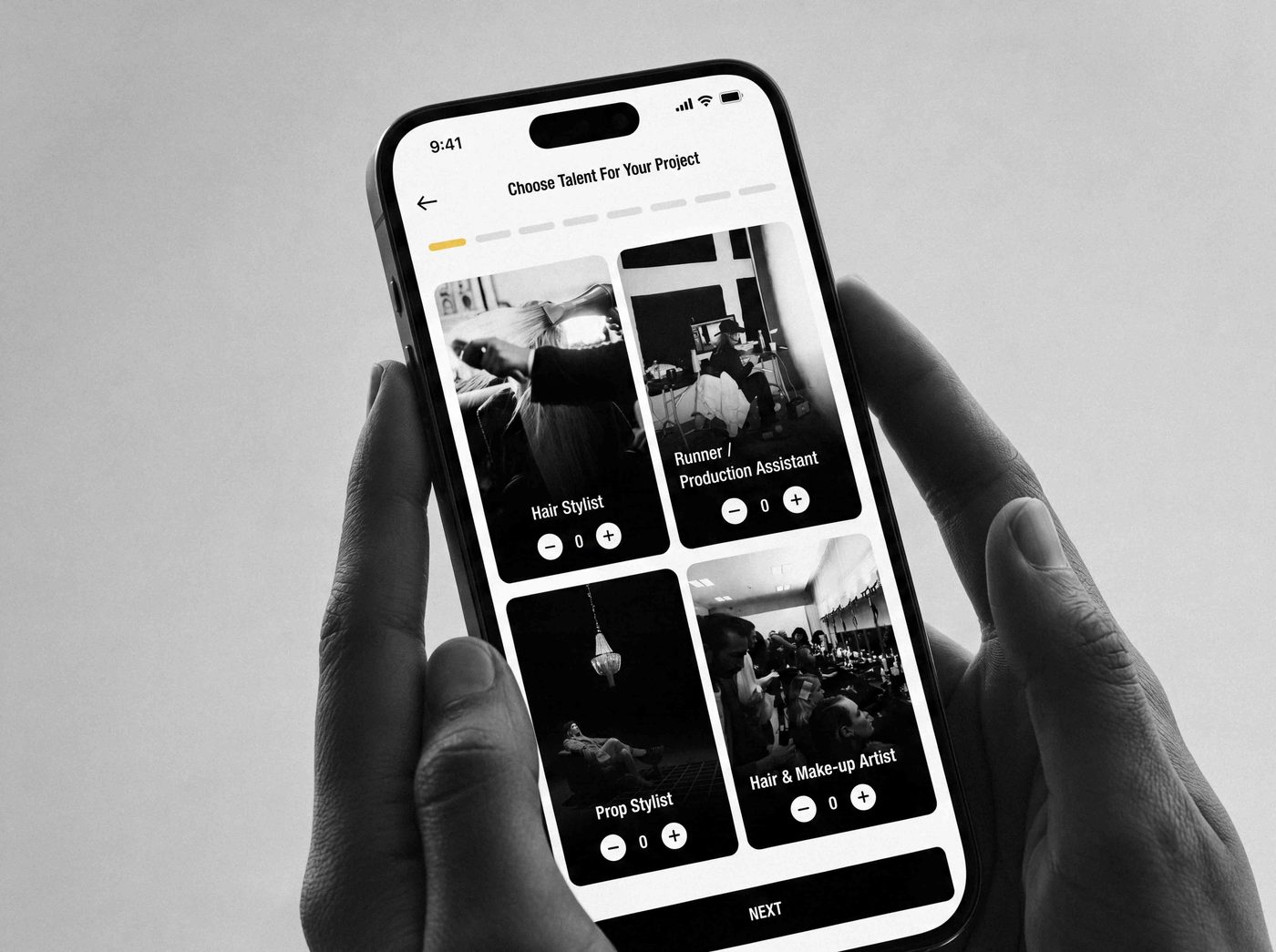
Post a job on the ANT Talent App and let approved talent come to you.
- Every profile approved by ANT
- Chat with talent in the app
- Payment held until the job is done

Free on iPhone
- 5.0on Google, 200+ reviews
- Since 2022modelling and talent agency
- Worldwideshoots, events and shows anywhere
- Licensed in Dubai. See our licence and booking terms