
Event Staffing Roles Mapped to Guest Journey for Brands and Organizers

Event staffing roles are the activation specific talent an agency supplies, mapped to the guest journey and measured by role level KPIs rather than warm bodies on a floor plan. The core cast includes the activation lead, brand ambassador, floor supervisor, photographer, station lead, lead capture specialist, and accessibility point person. Each one exists to move a guest through a defined stage of the experience, from first glance to final conversion, and each carries its own standard of competence and its own metric of success.
TL;DR:
- Accurate staffing begins with a role map based on guest journey stages, not just headcount estimates or generalist staff.
- Proper headcount calculation considers peak interactions, productive staff involvement, relief factors, fixed roles, and setup work for each activation.
- Staffing responsibilities for safety and accessibility require documented training, site-specific inductions, and dedicated point persons before event start.
- Agency staffing is recommended for complex, multi-city, or risk-heavy activations to ensure coordinated teams, consistent messaging, and reliable reporting.
- Avoid common pitfalls like over-relying on headcount targets, combining incompatible roles, or neglecting to assign a clear accountability for safety and accessibility.
Table of Contents
- The activation ready roles catalogue by guest journey stage
- Turning an activation brief into headcount you can defend
- Who answers for safety, competence, and accessibility on-site
- Training, briefings, and the reporting that makes staffing measurable
- What brands get wrong about staffing an activation
- When an agency partner makes sense for staffing your activation
- Sources
- FAQ
The activation ready roles catalogue by guest journey stage
Staffing an activation well means thinking in stages, not headcount. Guests move through a rhythm of attraction, qualification, engagement, conversion, and reset, and each stage calls for a role built for that specific moment rather than a generalist filling gaps.
At the attract stage, the brand ambassador works the perimeter, using scripted hooks to draw foot traffic toward the space, with dwell time as the primary KPI. A greeter or door host manages entry flow and first impressions, judged on wait time and queue length. During qualification, a lead capture specialist filters genuine prospects from passersby, tracked by qualified lead volume, while a station lead owns a single interactive touchpoint and answers for that station’s throughput per hour.
Engagement calls for deeper skill. A product demonstrator or presenter needs command of the brand narrative and is measured on message consistency, often checked through mystery shopper style audits. A photographer or videographer captures content for the brand’s own channels, evaluated on assets delivered per hour. Conversion brings in the sales or booking coordinator, whose KPI is completed transactions or appointments set, and a floor supervisor, whose job is coverage and escalation rather than direct guest contact, judged on response time to issues raised by station leads.
The reset stage is easy to overlook. A restock or logistics runner keeps stations supplied, tracked by stockout minutes, and an activation lead oversees the entire footprint, answering for overall show readiness between waves of guests.
Specialized roles round out the roster:
- An accessibility point person ensures attendees with disabilities receive assistance and accommodations, briefed before doors open.
- A first aid attendant should carry current certification, ideally through a recognized provider such as Prime First Aid and Training, given the liability involved.
- An AV technician requires hands-on equipment competence, not just familiarity, since a failed feed during a live moment cannot be improvised.
Minimal competence varies by role: guest facing positions need message training and a rehearsal pass, while technical and safety roles need documented credentials before the event, not a same day assurance.
Turning an activation brief into headcount you can defend
Most understaffing problems start with a guess dressed up as a plan. The fix is a repeatable calculation that ties headcount to guest volume rather than square footage or instinct, an approach the field-team planning framework sets out clearly for operators translating a brief into deployable roles.
- Estimate the required interactions per hour at peak, based on expected foot traffic and the conversion goal of the activation.
- Establish productive interactions per staffer per hour, a figure that depends on interaction length and role complexity.
- Divide required interactions by productive interactions per staffer to get baseline direct staff.
- Add a relief factor to cover breaks, fatigue, and bathroom rotations without leaving a station empty.
- Layer in fixed roles that do not scale with volume, such as one floor supervisor per four to six ambassadors and a dedicated queue manager for high traffic entries.
- Calculate setup and teardown labor separately, since those crews often need rigging or AV testing skills that guest facing staff do not carry, a distinction the workplace safety and health guidelines draw out explicitly.
For a multi-city tour, the same math repeats per market, but climate and venue layout shift the relief factor and rehearsal window each time, a point the field-team framework flags as a common source of fatigue and dropped throughput at peak hours.
Pro Tip: Build your headcount model once as a spreadsheet with the ratio and relief factor as adjustable inputs, then reuse it for every activation instead of rebuilding the math from scratch.
Who answers for safety, competence, and accessibility on-site
Responsibility for a safe activation sits with the organizer, not with whichever staffing agency happens to be on-site that day. According to official guidance on organizer duties, event organizers must confirm staff competence for the tasks assigned, deliver a site-specific induction before work begins, and coordinate supervision with every other party managing risk on-site.
Before confirming any contractor, ask for:
- Evidence of role-specific training and, where relevant, current licenses or certifications.
- Records of prior site inductions and how they were delivered.
- A documented escalation contact for incidents during the event.
Accessibility deserves the same rigor as safety. Guidance on accessible events recommends naming an accessibility point person, briefing that person and front-line staff before doors open, and assigning staff to help attendees with mobility, sensory, or other needs, whether that means guiding someone to accessible seating or operating an elevator.
Training, briefings, and the reporting that makes staffing measurable
Vetting talent before the event is only half the job. Pre-event micro-training, whether through message scripts, a skills program like ANT Camp, or a full technical run-through, closes the gap between a booked staffer and a stage-ready one. Day-of, that preparation needs structure: a site induction at call time, station checklists posted at each post, and a clear escalation path.
- Station lead escalates to floor supervisor, who escalates to the activation lead, each tier with a defined trigger.
- Relief rotations are scheduled in advance, not negotiated on the fly.
- End-of-shift reports capture lead quality, stockout minutes, and escalation response times for every station.
Industry benchmarks show event marketers are planning more activations in 2026 and shifting budget toward experiential spend, according to EventTrack 2026, which puts more weight on staffing as the driver of attendee interaction rather than a line item beneath it. A short set of role scorecards, paired with a standard end-of-shift template, turns that staffing spend into something comparable across markets rather than a one-off guess repeated every quarter. ANT Management’s own guidance on building a staffing plan and reducing no-shows through better casting platform practices covers the operational detail behind both steps.
What brands get wrong about staffing an activation

The most common mistake is staffing to a headcount target instead of a role map, which produces a floor full of generalists and no one clearly responsible for the moment a guest actually converts. A close second is combining incompatible duties, asking a photographer to also qualify leads, which degrades both jobs at once. The third is treating relief coverage as optional, which guarantees an empty station during the exact hour foot traffic peaks.
The fix rarely requires more people, just better assignment: a role scorecard for every position, a mandatory rehearsal before doors open, and a named accessibility point person who is briefed, not assumed. Before the next activation, run the roles checklist in this guide against your current plan and see how many stations still lack a defined KPI.
— ANT
When an agency partner makes sense for staffing your activation
Complex activations, multi-city tours, and anything carrying real brand risk tend to outgrow a spreadsheet of freelancers fast. Some agencies work across event staffing, talent selection and briefing, and international talent booking, often backed by talent training programs and integrated post-event reporting support.
- Event staffing typically covers roles from brand ambassadors to floor supervisors, sourced and briefed as a coordinated team.
- Talent selection, coordination, and briefing aim to streamline freelance sourcing with a single point of accountability.
- Talent training programs help prepare staff on message consistency before deployment on the floor.
Freelance hiring can work for a single small activation, but once a brief spans multiple cities or carries reputational stakes, a managed roster with built-in reporting closes gaps a patchwork crew tends to leave open. Explore the full range of services at ANT MANAGEMENT and book talent for your next activation directly.
Sources
- How to Staff a Brand Activation: A Field-Team Planning Framework
- Managing work health and safety at events guide
- EVENTTRACK 2026
- Planning an accessible event — May 2025
FAQ
What are the most common event staffing roles for activations?
The core roles include brand ambassadors, floor supervisors, station leads, lead capture specialists, photographers or videographers, and an accessibility point person. Specialized activations often add a first aid attendant and an AV technician, each requiring documented credentials before the event.
How many staff do I need for a brand activation?
Start by estimating required interactions per hour at peak, then divide by productive interactions per staffer to get a baseline, following the approach in the field-team planning framework. Add a relief factor and fixed roles like supervisors on top of that baseline rather than guessing from foot traffic alone.
What is the difference between temporary and permanent event staff?
Temporary event staff are booked for a specific activation or campaign window and trained on that brief alone, while permanent staff carry ongoing employment and broader institutional knowledge. Most activations rely on temporary, activation-ready talent because the roles and messaging change with every campaign.
Who is responsible for staff safety at an event?
The event organizer holds primary responsibility for worker safety, including confirming staff competence, providing site-specific induction, and coordinating supervision, according to official work health and safety guidance. This responsibility holds even when staff are supplied through a third-party agency.
What accessibility roles should an event staffing plan include?
An accessibility point person should be named and briefed before doors open, with front-line staff trained to assist attendees with mobility, sensory, or other needs. Guidance on accessible events recommends this role handle tasks like guiding guests to accessible seating or operating elevators.
Recommended
Planning a shoot in Qatar?
Prefer to book on your phone?
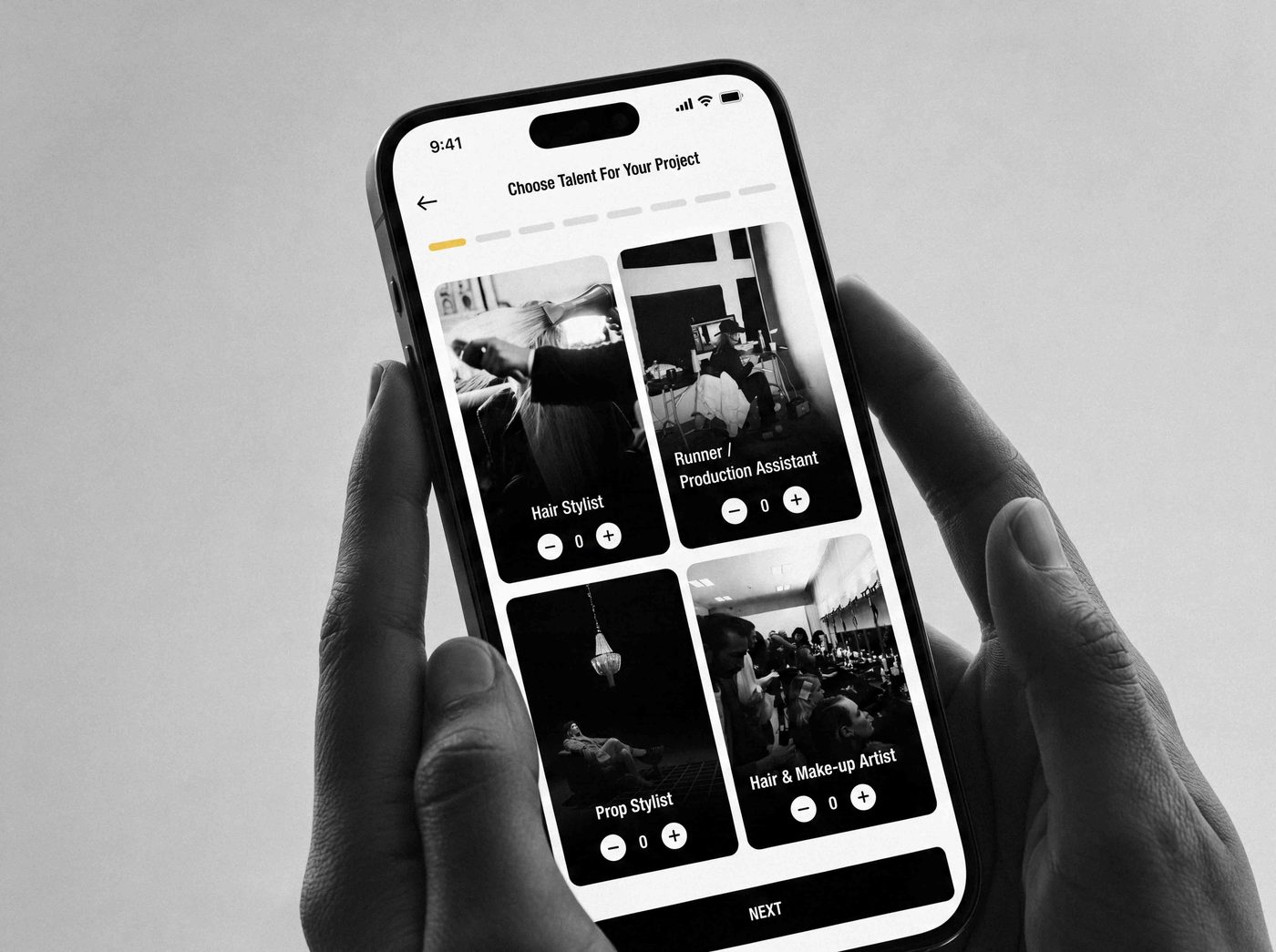
Post a job on the ANT Talent App and let approved talent come to you.
- Every profile approved by ANT
- Chat with talent in the app
- Payment held until the job is done

Free on iPhone
- 5.0on Google, 200+ reviews
- Since 2022modelling and talent agency
- Worldwideshoots, events and shows anywhere
- Licensed in Dubai. See our licence and booking terms