
Production Insurance for Shoots: What to Cover and What It Costs

Production insurance is the safety net stretched beneath a shoot: a policy, or a bundle of them, that answers for injury, damaged property, lost equipment and disrupted schedules while the cameras are rolling. It protects production companies and projects from liabilities, and it belongs in place before filming starts, not after the first call sheet is circulated. For a brand, agency or producer booking models, actors, crew and stunt performers, it is the quiet line item that decides whether a bad day is an inconvenience or a crisis.
TL;DR
- Most shoots start from four coverages: general liability, workers’ compensation, production equipment, and errors and omissions. Add DICE (damage, delay, disruption) when the schedule itself carries financial risk.
- Short-term policies exist for single projects, and prep days should sit inside the coverage period. Published starting points run from $250 for short-term equipment cover to $500 for short-term production cover, rising sharply with scope.
- Venues, permit offices and film commissions often ask for a certificate of insurance before they approve a location. Requirements differ by country, so check the shooting country first.
- Stunts, minors, vehicles, drones and water work are the points where policies get specific. Disclose them in the application.
- ANT Management books talent for shoots, events and shows anywhere in the world, and builds the talent side of the brief so that your insurer and your call sheet tell the same story.
Table of Contents
- What production insurance actually is
- The coverages a shoot can need
- Short-term policies and the one-day shoot
- What it costs, and what moves the price
- What to have ready before you apply
- Limits, exclusions and the fine print
- Shooting abroad: the rules change at the border
- Where talent bookings meet the policy
- Our perspective
- Booking talent with the paperwork in mind
- FAQ
- Sources
What production insurance actually is
A shoot is a temporary company assembled in a few days: strangers, rented gear, borrowed locations, expensive wardrobe, sometimes children, sometimes a stunt rig. Standard business policies were never designed for that rhythm. Production insurance is written around the project, covering specified amounts when something goes wrong, such as theft, accidental property damage, or injuries to cast, crew or bystanders.
The principle worth holding on to is that the policy follows the project. One industry guide frames it as reflecting the operation, the contracts, the management controls and the policy terms of the specific production. A policy bought for a lookbook day in a studio will not stretch to cover a desert chase sequence, and a homeowner’s or renter’s policy will not stretch to cover either: home policies almost universally exclude business use for professional shoots.
Who buys it? Usually the production company or the commissioning brand, depending on the contract. That is the first question to settle in writing: whose policy is primary, who is named as additional insured, and who holds the certificate.
The coverages a shoot can need
Insurers and trade bodies describe the starting set the same way: production general liability, workers’ compensation, production equipment, and errors and omissions. Each answers a different question.
| Coverage | What it answers | Typical trigger on a shoot |
|---|---|---|
| General liability | Third-party bodily injury and property damage | A passerby trips over a cable; a light stand damages a venue floor |
| Workers’ compensation | Injuries to cast and crew | A crew member is hurt loading a truck; a performer is injured in a fall |
| Production equipment | Loss of or damage to cameras, lighting, grip and sound gear | Theft from a vehicle; a lens dropped on location |
| Errors and omissions | Claims over unauthorized usage, copyright, unfair competition, privacy and defamation | A track, image or likeness is used without clearance |
| DICE (damage, delay, disruption) | The financial loss to the project itself | A lead is ill, a location is lost, the schedule collapses |
The distinction between the first two matters more than it looks. General liability covers third parties, while workers’ compensation covers injuries to cast and crew, which general liability typically excludes. A producer who assumes one policy covers both is exposed on exactly the day the shoot goes physical.
E&O is the coverage that brands overlook, because nothing visibly breaks. It protects against claims of unauthorized usage, copyright infringement, unfair competition, invasion of privacy and defamation. If the finished piece will be broadcast, distributed or run as paid media, clearance and E&O are part of the conversation from the first brief.
DICE is the one that protects the project rather than other people. The International Documentary Association describes these policies as a financial safety net for the production itself rather than only a liability shield. If a shoot has a fixed launch date, a celebrity or athlete whose availability cannot be replaced, or a location with one permitted window, DICE is the line to price.
Short-term policies and the one-day shoot
Search results for this topic are dominated by one worry: how to insure a single day without paying for a year. The answer is a short-term policy. These cover one project, from a single day up to a year, and the advice that matters is to include prep days in the coverage. Wardrobe pickups, location scouts and gear collection all happen before the shoot date, and they are all moments when equipment can disappear.

Annual or longer-run policies behave differently. Policies are typically written on 12-month terms, including preproduction, which suits a feature or a series better than a two-day campaign.
A one-day shoot is also the awkward case on price. A forum contributor describing a 37-day production reported about $60 per shooting day in spread cost, and noted that a single day cannot spread a policy that thinly. Treat that as an anecdote rather than a benchmark: it illustrates why minimum premiums, not per-day rates, set the price of very short jobs.
What it costs, and what moves the price

Published starting points give a floor, not a quote. One broker lists short-term equipment coverage from $250 and an annual production equipment package from around $450. A specialty program lists short-term production coverage from $500, and DICE or annual productions from $2,250. Those are US figures, and they will not hold for every country or every project.
What decides where a real quote lands, according to the same equipment guide: equipment value, coverage limits, deductibles, production type, filming locations, claims history and security measures. Translated to a producer’s day, that means:
- Scope of the cast and crew. A three-person product shoot and a forty-person fashion campaign with a set build are different risks.
- Hazard content. Stunts, vehicles, aerial work, animals, water and pyrotechnics move premiums and sometimes require named endorsements.
- Location. Public streets, historic venues and foreign jurisdictions each carry their own conditions.
- Deductible. A higher deductible lowers the premium and raises what the production pays out of pocket after a claim.
- Risk control. Producers who use secure storage and experienced crew can help secure more favorable rates.
A rule of thumb circulates in filmmaker communities, that production insurance runs about one to three percent of the total budget. It is a reasonable sanity check for larger productions and a poor one for micro-budget work, where minimum premiums dominate. Build the figure into the budget from the start; our production budget breakdown shows where an insurance line sits among the other costs of an agency-backed shoot.
What to have ready before you apply
A broker will ask for the shape of the production before it names a number. Assemble these before the first call:
- Production title, format and intended distribution (social, broadcast, paid media, retail).
- Shoot dates, including prep and wrap days.
- Locations, with addresses and any foreign countries.
- Cast and crew headcount, and whether minors are involved.
- An equipment list with values.
- A description of any stunts, vehicles, drones, water work or weapons.
- Contracts that require named additional insureds.
Location authorities ask for proof in return. One London borough’s film office, for instance, asks applicants to upload proof of public liability insurance with the permit application, so the certificate is part of the paperwork, not an afterthought.
Limits, exclusions and the fine print
A policy is only as useful as its limits and exclusions. Three habits keep producers out of trouble.
Match the limit to the venue. Public liability limits are set by the party granting access. For street filming and photography in London, film office guidance says cover is generally at least £2 million, and at least £5 million in some areas. Hotels, malls and private venues often set their own thresholds in the location agreement, so read it before you buy.
Read the exclusions as carefully as the coverages. Equipment cover may exclude unattended gear in vehicles. Liability cover may exclude hazardous activities unless endorsed. Workers’ compensation rules depend on where the person is employed and where the work happens.
Disclose everything. An undisclosed stunt or drone flight is the kind of omission that turns a covered loss into a denied claim. If a sequence involves a fall, a vehicle or fire, say so in the application and put the coordinator’s credentials in writing. Our guides on stunt coordinator requirements and what to verify before hiring a stunt coordinator list what a producer should see before signing.
Shooting abroad: the rules change at the border
A policy bought at home does not automatically satisfy a foreign authority. Requirements vary by country and venue, and many countries require locally admitted liability insurance and local certificates for permits. The same source advises confirming the shooting country’s requirements with its regulators and film commissions.
France shows how formal this can be. Production companies there must hold civil liability insurance, and an insurance certificate is essential for most filming authorizations. Other markets differ again, and some tie the insurance certificate to the permit itself.
The practical sequence for an international shoot:
- Ask the local film commission or permit office what certificate, limit and wording it requires.
- Ask your broker whether the policy can be written or endorsed for that country, or whether a local policy is needed.
- Confirm that travelling cast and crew are covered for the trip, not only the set.
- Keep digital and printed certificates on set.
In Dubai, permits are their own process with their own timeline, and insurance paperwork travels alongside the script and location details. Our guide to Dubai shooting permits for filmmakers walks through the approval path, and the UAE stunt permit guide covers the extra review for action work. Moving people across borders adds its own layer, covered in talent travel logistics.
Where talent bookings meet the policy
Insurance is a producer’s responsibility, but the talent roster is one of the inputs that shapes it. The headcount, the presence of children, the stunt content and the travel plan all appear on the application. A booking that changes late (an added performer, an extra shooting day, a new location) should trigger a call to the broker, not a hope.
Two practical points belong in the production plan:
- Change control. When the call sheet changes, check whether the policy dates, named locations and declared activities still match.
- Commercial terms. Booking terms carry their own financial exposure. ANT’s booking terms list a 15% per hour overtime fee, a 50% charge for cancellation within 48 hours, 100% within 24 hours and 100% for confirmed trips. Whether a cancellation or delay is recoverable under a DICE policy depends on the policy wording, so raise it with your broker before you buy, not after the weather turns.
A well-run set also reduces claims. Clear roles, a safety briefing and a plan for when things go wrong are the cheapest coverage there is, and our guide to crisis management on set and the photoshoot production checklist put that discipline on paper. For a view of who sits where on a larger crew, see every production crew role.
Our perspective
We book talent for shoots, events and shows in Dubai, across the GCC and anywhere in the world, and we see the same pattern repeatedly: insurance is rarely refused, it is simply remembered late. A brief arrives, the talent is confirmed, and only on the eve of the shoot does someone at a venue ask for a certificate.
Our view is that the talent plan and the insurance plan should be written together. Who is on set, how many, which ones are minors, what physical action is required, where the shoot travels: these are the same facts a broker needs, and they are the facts we gather when we shortlist and brief talent. A producer who hands the insurer the same clean brief the talent received spends less time correcting paperwork and more time directing.
We also hold that disclosure is a form of craft. The stunt that is described precisely, the child performer with a named guardian, the schedule with honest buffers: these make a set safer and a claim easier to stand behind.
— ANT
Booking talent with the paperwork in mind
When the brief is clear, the booking is simple. Clients send ANT Management a brief and receive a shortlist of available talent within an hour during working hours, across models, kids, actors, influencers, athletes, stunt performers, hostesses, promoters and creative crew. For action work, the stunts booking page is the place to begin, and full crews can be assembled through creatives and production crew booking.
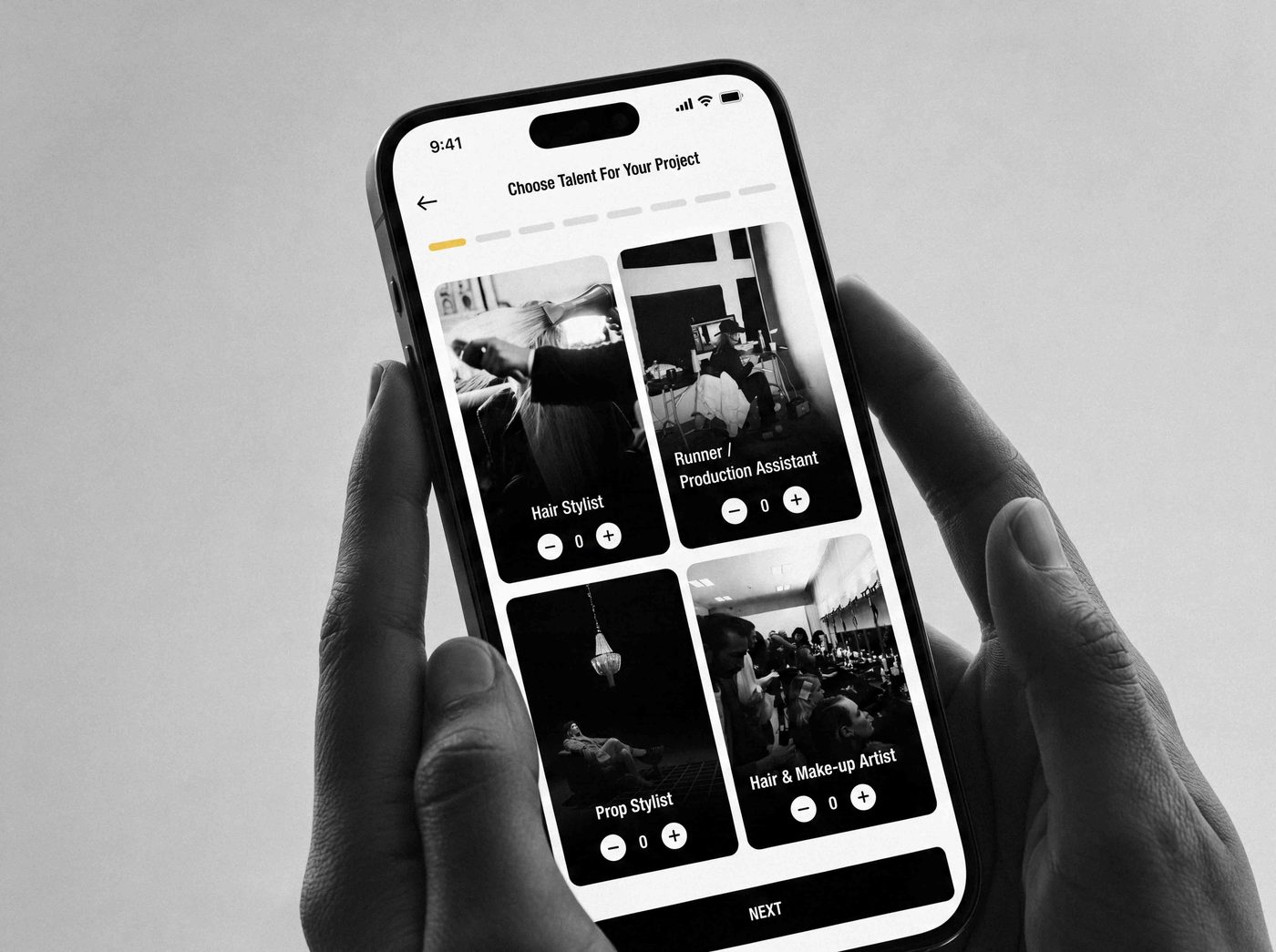
Clients who prefer to book directly can post a job on the ANT Talent App: book vetted talent in minutes, with verified profiles and escrow-protected payment processed by Stripe, across the UAE, Kuwait, Qatar and Saudi Arabia. Current prices are shown in the app. Clients who prefer a managed service can book through ANT Management directly at info@antmgmt.com.
Post a job and book vetted models, actors, influencers and creatives in Dubai in minutes, with escrow-protected payment, through the ANT Talent App.
FAQ
Do I need insurance for a one-day shoot?
In practice, yes. Venues, permit offices and brands commonly ask for a certificate regardless of shoot length, and short-term policies exist for single projects. Published starting points begin at $500 for short-term production cover in the US, though your quote will depend on scope and location.
Does general liability cover injuries to my crew and cast?
Typically no. General liability responds to third-party injury and property damage, while workers’ compensation covers cast and crew injuries, which general liability typically excludes. Ask your broker how performers and freelancers are treated where you are shooting.
Will my home or personal policy cover professional gear?
Usually not. Home policies almost universally exclude business use for professional shoots, so rented or owned equipment used on a paid job needs its own production equipment cover.
Is a policy bought in one country valid for a shoot in another?
Not automatically. Many countries expect locally admitted liability insurance and local certificates for permits. Confirm with the film commission or permit authority of the shooting country, then ask your broker to match it.
What does DICE insurance add?
DICE covers damage, delay and disruption to the project itself, acting as a financial safety net for the production rather than a liability shield. It matters most when the schedule is fixed, talent availability is hard to replace or the location window is narrow.
Sources
- Everything You Need to Know About Production Insurance
- Film, TV & Video Production Insurance Basics
- Legal FAQ: Don’t Roll the Dice, Insure Your Production
- Film Equipment Insurance: Top 5 Essential Risks Avoided
- Film Production Coverage, ISC
- Insurance and Indemnities, Film Lambeth
- Media Insurance, Film London
- Foreign Production Insurance for International Shoots
- Insurance, Film France CNC
Two ways to book: send a booking request to ANT Management, or post a job on the ANT Talent App.
Recommended
Planning a shoot in Qatar?
Prefer to book on your phone?
Post a job on the ANT Talent App and let approved talent come to you.
- Every profile approved by ANT
- Chat with talent in the app
- Payment held until the job is done

Free on iPhone
- 5.0on Google, 200+ reviews
- Since 2022modelling and talent agency
- Worldwideshoots, events and shows anywhere
- Licensed in Dubai. See our licence and booking terms