
Four Week Model Runway Training to Get Cast with ANT Management
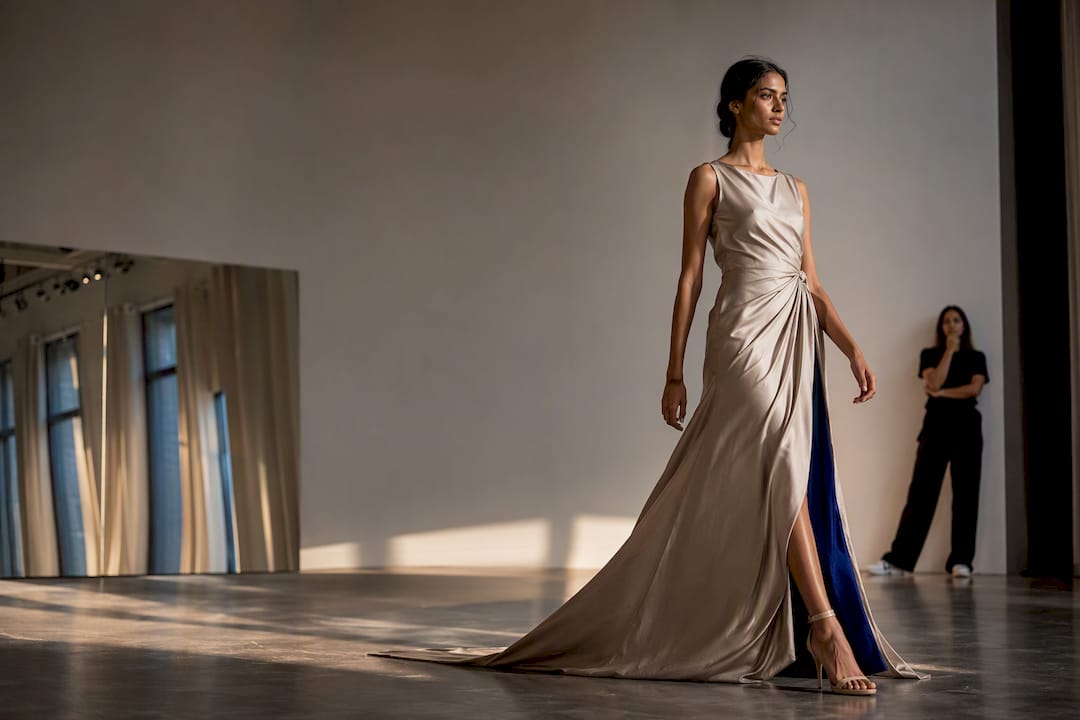
Model runway training builds a walk with intent, a body that holds tension where it should and releases it everywhere else, and the composure to survive a casting room full of strangers judging in silence. It sharpens stride, posture, and pacing until a walk reads as inevitable rather than rehearsed. Aspiring runway models, models prepping for fashion week, and anyone whose walk feels inconsistent need it. Start tonight: tape a line on the floor, film ten passes, and book one session of professional feedback before your next casting.
TL;DR:
- Proper progression includes barefoot line walking, posture holds, slow cadence, gradual heel introduction, and filmed review to catch faults like head bob and torso wobble.
- Experience as a casting director or producer, filmed feedback, small class sizes, and clear skill checkpoints are signs of a quality runway training program.
- Training in actual garments, shoes, and accessories relevant to future work improves adaptability and maintains progress over time.
- Most beginners see noticeable improvement within weeks to months of consistent practice and professional feedback, not overnight results.
- Ongoing training and rehearsal are crucial for retention, as runway skills are highly visible to casting directors and require regular upkeep.
Table of Contents
- What Model Runway Training Actually Teaches
- Your Runway Training Progression: Drills You Can Practice Now
- Choosing a Runway Training Program or Coach
- Formats, Timelines, and Costs: What to Expect
- How ANT Management Trains Runway-Ready Models
- Training As a Recurring Career Investment
- Join ANT Camp and Start Training With ANT Management
- Sources
What Model Runway Training Actually Teaches
Every credible program breaks the runway walk into distinct mechanical and expressive skills, then drills each one until it becomes automatic under pressure. The curriculum rarely stops at “walk in a straight line.” It builds toward casting behavior: how you enter a room, how you hold a pause at the top of the runway, how you exit without breaking character.
Most structured programs cover the same core modules, though the sequencing and depth vary by coach:
- Posture and alignment: shoulders stacked over hips, ribcage lifted without arching the lower back, a neutral head position that avoids the chin-forward slouch most beginners default to.
- Stride mechanics: hip-driven steps, a controlled foot placement pattern (often a near-straight line, not an exaggerated hip swing), and consistent stride length regardless of leg length or height.
- Heel technique: weight distribution toward the ball of the foot, ankle stability, and a cadence that doesn’t wobble when the surface changes from studio floor to an uneven outdoor runway.
- Turns and pacing: pivot mechanics at the end of the runway, timing a walk to music or to the rhythm set by the models ahead, and recovering composure mid-turn if a heel catches or a garment shifts.
- Facial expression and presence: holding a neutral, engaged expression that reads at a distance without looking blank or performative up close.
- Working with garments and accessories: adjusting stride and arm carriage for trains, capes, oversized coats, or heavy jewelry that changes how a body needs to move.
- Casting rehearsal: simulating the thirty seconds a casting director actually spends watching you, including the walk in, the pause, and the walk out.
Session formats differ by program. Some coaches run group drills where students watch each other and build peer feedback habits. Others work one-to-one with a camera rolling from the first rep. Naomi Campbell’s coaching philosophy centers on walking with intent and destination, treating the runway as a path with a purpose rather than a stage to perform on, and that framing shows up in how the best coaches structure drills around a fixed point at the end of the room.
The trust signals worth checking before you commit: does the instructor have real casting or production experience, not just a modeling background? Is there filmed before-and-after footage you can review, either your own or a past student’s? Does the program show a visible structure, with skills building on each other, rather than a loose series of unrelated tips?
Your Runway Training Progression: Drills You Can Practice Now
The fastest path from unsteady to castable follows a sequence that professional coaches use for a reason: each stage isolates one variable before adding the next. Skipping ahead to heels before your barefoot line is clean just bakes the wobble into every rep that follows.
- Tape a line, walk it barefoot. Use painter’s tape on a hard floor, roughly ten to fifteen feet long. Walk it slowly, focusing only on foot placement, one foot landing just ahead of the other without crossing. Do this for three to five days before adding anything else.
- Add posture holds. Between passes, stand still for thirty seconds holding your target posture: lifted ribcage, relaxed shoulders, neutral neck. This builds the muscle memory your walk will later run on autopilot.
- Slow the cadence down. Beginners rush. Walk the line at half your natural pace for a week, exaggerating control before you ever try to look effortless.
- Introduce heels gradually. Start with a low block heel, master the ball-of-foot weight shift, then move up in half-inch increments over several weeks rather than jumping straight to a four-inch stiletto.
- Film every session, front and side angle. A standard progression used by professional coaches runs barefoot line work, then heels, then filmed review, then simulated casting pressure, and that order exists because video catches faults no mirror will show you.
- Watch for three specific faults on playback: head bob (your head rising and falling with each step instead of staying level), torso wobble (your upper body swaying side to side), and arm tension (elbows locked or hands clenched instead of moving naturally).
- Add turn practice. Mark a stop point at the end of your line, practice a controlled pivot, and rehearse the walk back with the same energy as the walk out. Many models fade on the return walk. Don’t be one of them.
- Rehearse to music. Pick a playlist with varying tempos and match your stride to the beat, since industry coaching consistently emphasizes pacing to the rhythm of the room, whether that rhythm comes from music, the models ahead of you, or cues from a show producer.
- Simulate casting pressure. Have a friend or family member sit at the end of the room and watch silently, then walk for them exactly as you would for a casting director. The discomfort is the point.
A simple four-week plan makes this manageable. Week one is barefoot line work and posture holds, fifteen to twenty minutes daily. Week two adds low heels and slows nothing else down. Week three introduces filmed review every session, with a specific fault to correct each day. Week four adds turns, music pacing, and one full simulated casting run per session. Checkpoints matter more than the calendar: by the end of week two, your line should be visibly straighter on camera; by week four, your turn shouldn’t cost you any composure.
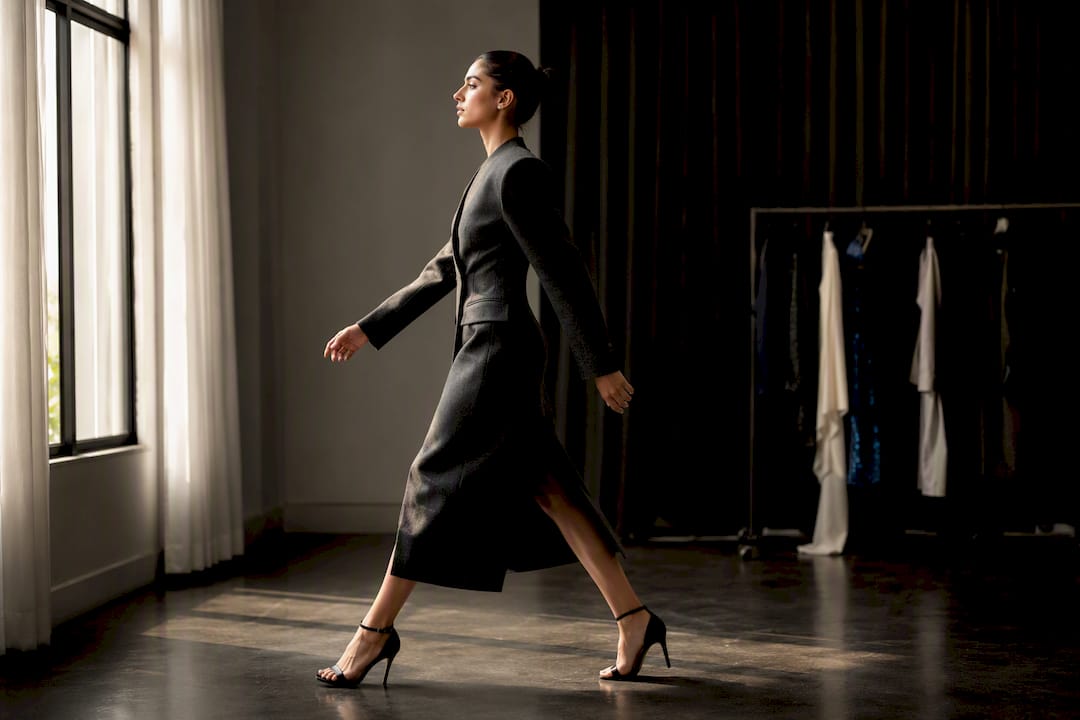
Pro Tip: Practice in the actual garment types you’ll likely wear, not just leggings and a tank top. A floor-length gown moves differently than a mini dress, and a coat with structured shoulders changes how your arms need to swing. Rehearsing discomfort, whether that’s an unfamiliar train, an ill-fitting sample shoe, or a heel a half-size too small, builds the adaptability that separates a trained walk from a lucky one.
Choosing a Runway Training Program or Coach
Not every program that calls itself runway training will move your career forward. The strongest ones share a specific set of traits, and the weak ones share specific warning signs.
Look for these selection criteria before you pay for anything:
- Instructor pedigree: has this person worked as a casting director, show producer, or agency scout, not just walked runways themselves? Coaches with real casting experience give more booking-focused feedback because they know exactly what a producer notices in the first five seconds.
- Feedback format: does the program include filmed review, or is feedback verbal only? Video catches what a coach’s memory won’t.
- Class size: one-on-one and small-group settings generally produce faster correction than a room of twenty students sharing one instructor’s attention.
- Measurable outcomes: can the program point to specific skill checkpoints, not just vague promises of “confidence” by the end?
Before signing up, ask directly: who is teaching this session, can I see filmed examples of past students, what follow-up support exists after the program ends, and what’s the cancellation or refund policy if the format doesn’t fit you? A program confident in its results will answer all four without hesitation.
Red flags are just as telling. Walk away from anything that leans on vague promises (“you’ll walk like a supermodel in one weekend”) without a visible curriculum behind it. Be wary of programs offering no filmed feedback at all, since that removes the single most effective correction tool available. High-pressure signup tactics, limited-time discounts, urgency language designed to skip your due diligence, are a bad sign regardless of how polished the marketing looks.
Pricing generally tracks depth. A single workshop teaching general technique costs less than ongoing coaching that pairs weekly sessions with portfolio and digitals guidance. One-on-one coaching costs more per session than group classes, but it also compresses the timeline, since every minute of feedback is about you specifically rather than divided among a group.
Formats, Timelines, and Costs: What to Expect
Training comes in a handful of common shapes, and each fits a different stage of your development.
- One-day workshops work best as an introduction or a tune-up before a specific casting, covering core walk mechanics in a compressed session.
- Multi-day bootcamps go deeper, typically covering posture, posing, walking, and casting preparation across several sessions, often with a confidence-building structure designed to produce visible improvement by the final day.
- Weekly private coaching trades speed for depth, building skills over a longer stretch with individualized correction at every session.
- Online masterclasses offer the lowest-cost entry point, and many academies publish free introductory modules that teach core drills before you commit to a paid program.
Timeline expectations should stay realistic. Most beginners see castable improvement within weeks to a few months of daily practice combined with professional feedback, not overnight. Bootcamps accelerate confidence fast, but that gain fades without follow-up practice; blended formats that pair an intensive with ongoing weekly coaching tend to produce results that hold up past the first casting.
Cost drivers include instructor pedigree, session length, whether you’re training privately or in a group, and whether the program bundles extras like filmed review or a test shoot. Longer-term personalized coaching that pairs weekly sessions with portfolio and digitals support commonly runs several hundred dollars per month, reflecting the ongoing mentorship rather than a single session’s fee.
Pro Tip: Before committing to a full program, try a single private session or a free masterclass module first. It tells you whether the coach’s feedback style actually clicks with how you learn, before you’ve spent real money finding out the hard way.
How ANT Management Trains Runway-Ready Models
ANT Management built ANT Camp around a simple premise: technique without a path to bookings is an unfinished product. The program folds runway fundamentals, posture, stride, heel work, pacing, casting rehearsal, into a structure that mirrors the actual progression professional coaches recommend, with filmed review built into every session so corrections happen on evidence, not guesswork.
What sets the approach apart is what happens after the drills. Training that pairs technique with career development, portfolio and digitals guidance, agency introductions, consistently opens more doors than technique-only coaching, since the walk you’ve built needs a place to be seen. ANT Camp connects that dot directly.
Participants can expect:
- Structured sessions covering posture, stride, heel technique, turns, and casting simulation, sequenced the way the drills above are sequenced.
- Filmed before-and-after review at each stage, so progress is visible rather than assumed.
- Portfolio and digitals support layered onto technical training, tying skill development to the materials agencies and casting directors actually request.
- A direct line from training completion into ANT Management’s talent network, rather than a program that ends the moment the last session does.
The goal isn’t just a better walk. It’s a walk that gets you cast, backed by a portfolio and an agency relationship built to put that walk in front of the right people.
Training As a Recurring Career Investment
Casting directors notice trained models within seconds, not because untrained walkers look bad, but because trained walkers look repeatable. A director watching forty castings in a row remembers the person whose pace didn’t waver, whose turn didn’t cost composure, whose expression held steady under fluorescent lighting. That consistency is a skill, and skills fade without upkeep.
The conventional wisdom treats runway training as a one-time fix, something you do once before your first big casting and never revisit. That’s backwards. Shows change, garments change, your own body changes across a career, and the models who stay bookable treat training as a seasonal habit, not a single course. What agents actually notice isn’t raw talent. It’s whether you show up ready, every time, without needing to be told twice.
— ANT
Join ANT Camp and Start Training With ANT Management
ANT Camp gives you the structure most models are missing: filmed feedback, casting rehearsal, and portfolio support in one program instead of scattered across a dozen unrelated resources.
The program fits aspiring models building their first castable walk and current models sharpening technique before a fashion week push. Sessions combine the drill progression covered above with direct casting preparation, so what you practice maps to what a casting director will actually see. Applicants start with an intake conversation, work through structured technique sessions with filmed review, and move into portfolio and digitals guidance once the walk holds up on camera.
If you’re ready to turn practice into placements, apply to become a model with ANT Management and take the first concrete step toward a training path built to end in bookings, not just better footage.
Sources
- Naomi Campbell’s Runway Walk Tips - MasterClass
- How Do Models Walk in Runway Shows? A Pro Guide - Online Model Academy
- Runway Bootcamp — Model Coach Online
- Model Coaching Program — By Brandon Andre