
Call Time Meaning: What It Is and How to Set It

Call time is the specific time a cast member, crew member or staff member is required to report to a set, shoot location or event venue, ready to work. It is not the moment the first shot is taken or the doors open. It is the moment the day begins for the person receiving it, and everything that follows, from styling to lighting to rehearsal, is built on it.
For a brand, agency or producer booking talent, the meaning matters because a call time is a promise made in both directions: you promise a schedule, and the talent promises to be ready inside it. Get the wording right and a shoot moves like a well-rehearsed piece of choreography. Leave it vague and the first hour dissolves into waiting.
TL;DR
- Call time is the time someone must report and be ready to work, set by the production, not the time filming or the event itself begins.
- Different people get different calls: crew and heads of department are called earlier than cast, and each performer may have a personal call on the call sheet.
- Always state whether a call means arriving at base or being on set, in costume and ready, because the two are easily confused.
- Build in buffers for travel, hair and makeup, wardrobe and check-in, and send the call sheet the day before.
- Late arrivals, overtime and last-minute cancellations carry real costs, so agree the terms in the booking.
Table of Contents
- What call time means in production
- Why call times exist
- Call time versus shoot time or event start
- Who sets the call time
- How call time appears on a call sheet
- Write the call time so it cannot be misread
- How early should people arrive?
- Call time and the working day
- When someone is running late
- Call times by type of booking
- Our perspective
- Booking talent with the call time in mind
- Book talent with a clear call
- FAQ
- Sources
What call time means in production
In film, photography and live events, call time is the designated time when people involved in a production should be on set and ready to work, as Backstage’s production guide puts it. The UK’s CCEA production-management fact file uses a more practical framing: unit call time is when the crew are expected at the location to begin preparing for filming.
The phrase is easy to confuse with unrelated meanings. In telephone reporting, “call time” is a metric for minutes spent on calls. In sport, calling time can mean calling a time out. In a studio, on a runway or at a brand activation, none of that applies: it is a scheduling term, and it belongs to the person who builds the day.
Two ideas sit inside every call time:
- Arrival. The person is physically present at the stated place.
- Readiness. Depending on the production, they are either checked in and starting preparation, or fully dressed, styled and prepared to work.
The gap between those two ideas is where most scheduling misunderstandings live, and the rest of this guide is largely about closing it.
Why call times exist
A production is a sequence of dependent tasks. Lighting cannot be finalized before the set is dressed. A model cannot step in front of the camera before hair, makeup and wardrobe are done. Call times schedule that sequence so that, in Backstage’s words, crew setup is finished when the cameras are ready and actors are called to set, which in turn keeps the day on schedule and on budget.

That is why crew commonly receive earlier calls than cast: the set must exist before anyone performs in it. A staggered call is not a courtesy to talent or a burden on crew. It is the cheapest way to avoid paying a full team to stand idle.
Call time versus shoot time or event start
The most useful distinction for anyone commissioning work is this: call time is arrival and preparation, while shoot time is when filming is planned to begin after setup, blocking and rehearsal. Fabric’s production guide draws exactly that line, and adds that there is no universal standard for how far apart the two should be. It depends on the day’s schedule, the location and the nature of the scenes.
A simple worked example for a fashion campaign:
| Moment | What happens | Example time |
|---|---|---|
| Crew call | Photographer, assistants, lighting and styling team arrive and build the set | 6:30 a.m. |
| Talent call | Models arrive and check in | 8:00 a.m. |
| Hair and makeup | Preparation and wardrobe fitting | 8:15 a.m. to 9:15 a.m. |
| Set call | Talent on set, dressed and ready | 9:15 a.m. |
| First shot | Camera up | 9:30 a.m. |
The figures are illustrative, not a standard. The pattern is the point: the talent call precedes the first shot by well over an hour because the work that makes the first frame possible takes that long.
Events follow the same logic with different proportions. A fashion show or brand launch with fittings, instructions and rehearsal may need a call several hours before doors open. A smaller activation that needs less preparation can set the call much closer to the start. The rule is to work backward from the moment the audience or camera needs the talent, and subtract every task in between.
Who sets the call time
Call times are generally set by the first assistant director or production coordinator, based on the setup and shooting requirements for the day, according to StudioBinder’s guide to call time. On a photo shoot or a brand event without that structure, the producer or the project manager takes the role. Whoever holds it should be named on the call sheet so that anyone running late knows exactly whom to contact.
If you are booking through an agency, the call time you set becomes part of the brief. Our guide to writing a casting brief shows where date, hours and location belong, and the model booking process explains how that information turns into a confirmed booking.
How call time appears on a call sheet
The call sheet is the document that carries the call time to everyone involved. At the top sits the general crew call, or unit call, the prominent time that sets the rhythm for the day. Departments and individuals may have earlier or later calls, and StudioBinder refers to calls before the general crew call as pre-calls.
For cast, the list is more granular. The CCEA fact file distinguishes MU/WD time, when actors report to makeup and wardrobe, from Set Time, when they are in costume, on set and ready to film. Its sample call-sheet grid shows one actor with an 8:00 a.m. call, 8:45 a.m. MU/WD and 9:15 a.m. set call, and another with an 8:00 a.m. call, 8:15 a.m. MU/WD and 8:30 a.m. set call. Same arrival, different readiness, because the preparation each performer needs is different.
A complete call sheet usually also carries:
- The production date, location and parking details
- Weather and sunrise or sunset times, which matter for exterior work
- The schedule, including lunch and estimated wrap
- Production contacts
- Scene and cast details, crew and equipment lists, and notes
That list reflects Backstage’s overview of call sheet contents. For a template and a walkthrough of sending one, see our call sheet basics.
Write the call time so it cannot be misread
A time on its own is ambiguous. Three habits remove the ambiguity.
State what the call means
Write whether the call is arrival at base or being on set and ready. The distinction can change expectations by an hour or more. A model who reads “8:00 a.m.” as “in the chair at 8:00” and a producer who meant “on set at 8:00” will both be correct, and both disappointed.
Separate departure from location
When travel affects the call, the call sheet should specify both the departure point and the location, as Fabric advises. A shuttle from a hotel, a pickup from a studio, and a meet at the venue are three different calls.
Send it early and ask for confirmation
Call sheets are commonly sent the night before, and the people receiving them should check them carefully, because different cast members, departments and pre-calls can have different reporting times. For talent booked in advance, send the schedule at confirmation as well, then the final sheet the evening before, and ask for a short written acknowledgment.
How early should people arrive?
Call time is when someone should be ready to start, not when they walk through the door. IATSE Local 193, a stagehands’ local in the United States, tells workers to be at the work site 15 minutes before official call time for check-in and personal setup.

Theatre offers a clear model of staggered readiness. Toronto Metropolitan University’s production handbook says performers must be in the theatre and accounted for no later than 30 minutes before curtain, while crew must be show-ready by that point and are therefore called earlier, with heads of department usually called 90 minutes before curtain and crew members one hour before.
A practical way to build the schedule:
- Fix the moment the camera or audience needs talent ready.
- Subtract hair, makeup and wardrobe time for each person.
- Subtract check-in, introductions and the briefing.
- Add travel or transfer time if you are moving talent from a hotel or base.
- Add a modest buffer, then give crew a call that precedes all of it.
For events, the same discipline applies to the whole day. A detailed event production timeline is a useful way to see where talent arrival sits among load-in, rehearsal and doors.
Call time and the working day
Call time also starts the clock. Under SAG-AFTRA’s background-actor contract guidance, the first meal period must be called no later than six hours from the time of call. Union agreements differ by category and territory, so check the one that governs your production. For any shoot, the principle holds: a call time that is early without cause lengthens the day, and a long day has consequences for meals, rest and cost.
With our bookings, the working terms are published on our booking terms page: overtime is charged at 15% per hour. Cancellation within 48 hours is charged at 50%, within 24 hours at 100%, and cancellation of confirmed trips at 100%. Late payment fees are 9% per month. A call time set carefully at the start is the simplest way to stay inside the hours you booked.
When someone is running late
Lateness is rarely malicious, and a clear protocol turns it into a small problem. The established practice in stagehand work is to contact the job steward first and, if unreachable, the business agent, a fellow stagehand who can reach the steward, or the venue office, per IATSE Local 193. The lesson for any production is to name one person on the call sheet who can be reached at that hour, and a backup.
Where talent is collected by a driver, the driver’s number should be on the sheet so that a delay is reported directly rather than discovered on arrival. Give talent a phone number they can actually call, not a general office line that opens at nine.
For your own protection, our guide to production insurance for shoots covers what to look at when a delay or cancellation affects the day.
Call times by type of booking
The principle is constant, but each kind of job tunes it differently.
| Booking | Typical shape of the call | What to specify |
|---|---|---|
| Fashion or commercial shoot | Crew first, then talent, then hair, makeup and wardrobe before set | Talent call, MU/WD and set call as separate times |
| Kids and teen models | Shorter windows, parent or guardian present | Realistic hours and break times in the brief |
| Film and stunts | Pre-calls for safety, rigging and rehearsal | Stunt briefing time, coordinator contact |
| Hostesses and promoters | Call before doors for briefing and positioning | Uniform, station, briefing time |
| Influencers and content creators | Arrival at location, then content brief | Deliverables and posting windows |
| Events and shows | Rehearsal and fitting well ahead of the audience | Load-in, rehearsal and show-ready times |
The table is a planning aid based on common production practice, not a rulebook. The right times come from your schedule and the work involved.
Our perspective
Call time is where the creative idea meets the clock. A concept can be luminous on paper and still falter if the people who bring it to life arrive without a clear sense of when, where and in what state they are expected.
We book talent for shoots, events and shows in Dubai, the GCC and anywhere in the world, and the pattern is consistent: the productions that move well are the ones whose call times are written with precision. A model, a stunt performer, a hostess and a photographer all need different calls, and a single agency that understands the whole picture, in front of and behind the camera, can align them.
That is why we work from a brief. Send us the schedule, the location and the look, and we return a shortlist of available talent within an hour in working hours, then coordinate briefing so every person arrives knowing their call, their readiness point and their contact on the day.
The call sheet is the score; the call time is the downbeat. We would rather see it written clearly than apologized for later.
ANT
Booking talent with the call time in mind
If you are planning a shoot or an event, the call time should be part of the booking conversation from the first message. Include the shoot date, the proposed talent call, hair and makeup needs, location and any travel in the brief, and you will receive a shortlist that fits the hours. Our one-page model brief template shows where each detail belongs, and the photoshoot production checklist walks through a full day. Our day-one set etiquette checklist is useful to share with first-time talent and your own team before the shoot.
Book talent with a clear call
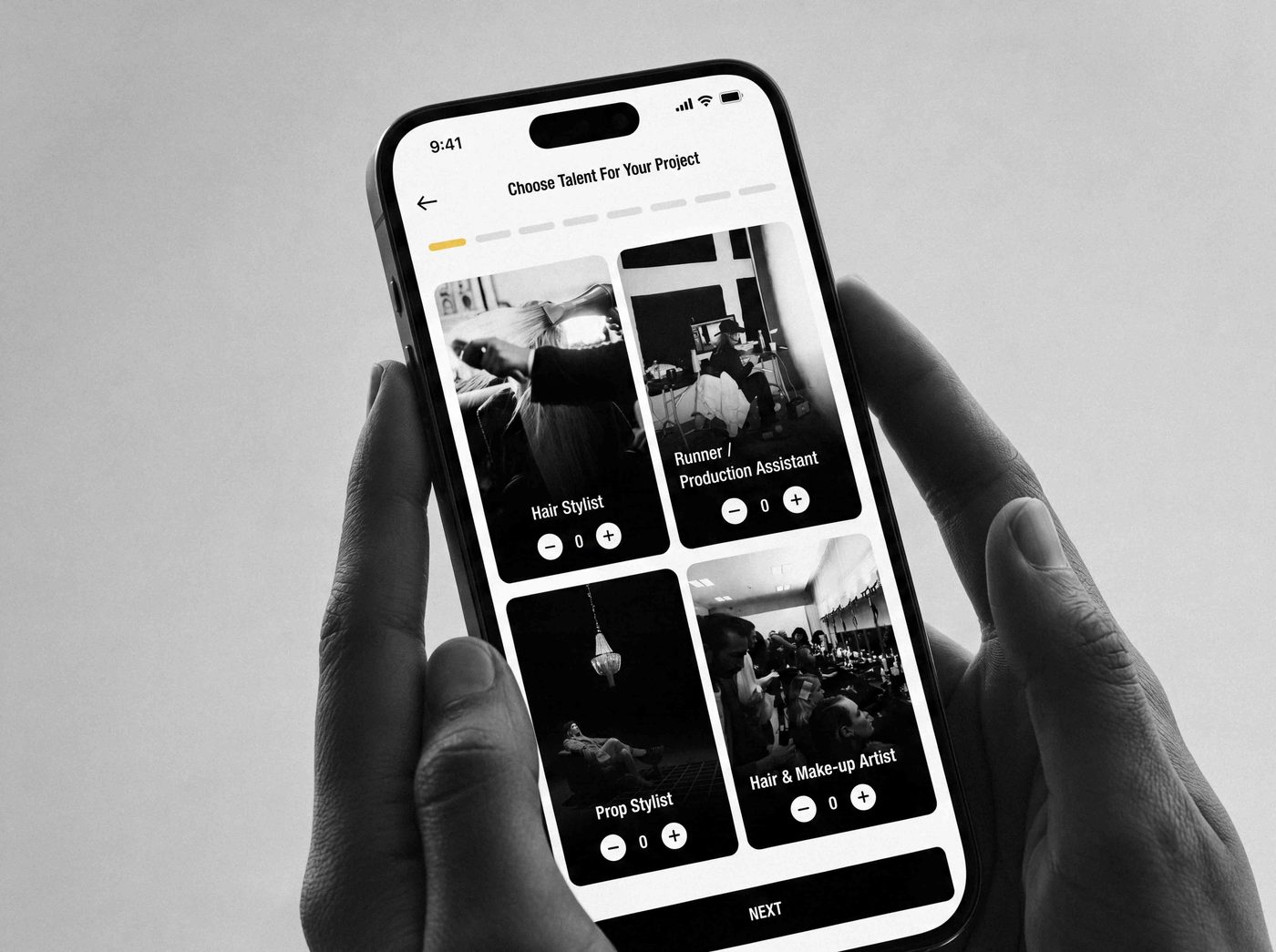
We book models, kids, actors, influencers, athletes, stunt performers, hostesses, promoters and creative crew through one agency, for shoots in Dubai and the GCC or events and shows anywhere in the world. Clients can choose a fully managed booking, or post a job on the ANT Talent App and book vetted models, actors, influencers and creatives in Dubai in minutes, with escrow-protected payment processed by Stripe and coverage across the UAE, Kuwait, Qatar and Saudi Arabia. Profiles are verified, and current prices are shown in the app.
If you prefer a managed service, start with our talent booking page or write to us directly at info@antmgmt.com. For crew, see how we handle full production crew booking, and for event days, our hostess and promoter agency page. If you are mapping the team behind the camera, our guide to production crew roles lists who is called when.
FAQ
What does call time mean on a call sheet?
It is the time a person must report to the set or location, ready to work. The general crew call appears near the top of the sheet, while each performer’s specific call is listed by name, often with pickup, makeup and wardrobe, and on-set-ready times.
Is call time the same as start time?
No. Call time is arrival and preparation, and the start time is when filming or the event actually begins after setup, rehearsal and styling. The gap can run from under an hour for a small activation to several hours for a fashion show, depending on the preparation required.
Who decides the call time?
On a film set it is generally the first assistant director or production coordinator, working from the day’s setup and shooting needs. On a photo shoot or brand event, the producer or project manager sets it and records it on the call sheet.
How early should talent arrive before call time?
Talent should be ready to begin at call time, which means arriving ahead of it. Stagehand guidance from IATSE Local 193 recommends 15 minutes early for check-in. Build travel and parking into the schedule, and name a contact for anyone who is running behind.
What if the call time needs to change?
Send an updated call sheet as early as possible and confirm receipt from each person affected. If a booking is changed or cancelled close to the date, the terms agreed at booking apply, so review them before the day is confirmed.
Sources
- CCEA Fact File: Production Management and Legal Considerations
- Backstage: What Is a Call Time?
- StudioBinder: What Is Call Time in Production
- Fabric: What Is a Call Time?
- Toronto Metropolitan University Production Handbook: Notes About Rehearsals
- IATSE Local 193: Expectations
- SAG-AFTRA: Background Actors Contracts Digest
- Atelier by RASA: Event Production Timeline
Two ways to book:
Recommended
Planning a shoot in Qatar?
Prefer to book on your phone?
Post a job on the ANT Talent App and let approved talent come to you.
- Every profile approved by ANT
- Chat with talent in the app
- Payment held until the job is done

Free on iPhone
- 5.0on Google, 200+ reviews
- Since 2022modelling and talent agency
- Worldwideshoots, events and shows anywhere
- Licensed in Dubai. See our licence and booking terms