
Avoid Costly Takedowns: Video Usage Rights for Brands and Creators

Video usage rights are the contractual permissions that define how, where, and for how long you may use a piece of footage, distinct from owning the copyright itself. Before anything else, confirm whether the grant explicitly covers paid amplification or whitelisting, or only organic, unpaid reposts. If your campaign depends on boosted or paid distribution, budget for a meaningful premium and secure the platform’s cooperation in writing, because that single variable drives both cost and legal exposure more than any other term.
TL;DR:
- Unless paid amplification is explicitly covered, licensing for boosted posts or ads requires a premium and written agreement to avoid legal risks.
- License duration, territory, scope, and modification rights must be clearly defined in the contract to prevent disputes and unauthorized use.
- Flat fees for a fixed scope are generally simpler and cheaper, but comprehensive, perpetual licenses help reduce costs of future reuse and amplification.
- Platform rules like YouTube’s monetization policies significantly restrict reuse without proper commercial rights, risking takedowns and demonetization.
- Confirm ownership, document transfers, and secure signed releases before publishing to prevent rights disputes and costly legal issues later.
Table of Contents
- What Video Usage Rights Actually Cover
- Common License Types and What Each Allows
- How Video Rights Are Priced and How to Negotiate Them
- Securing and Documenting Rights: Contracts and Releases
- Platform Rules and the Limits of Fair Use
- A Step-by-Step Rights Checklist Before You Hit Publish
- ANT Management’s Approach to Usage Rights in Production
- How to Verify That Granted Rights Are Real
- Resolving Disputes Over Rights Misuse
- What Happens When You Violate Video Usage Rights
- How Different Rights Scenarios Play Out in Practice
- Licensing as a Strategic Asset, Not a Cost Center
- How ANT Management Supports Your Talent and Rights Workflow
- FAQ
- Sources
What Video Usage Rights Actually Cover
A license is permission to use a video under specific conditions; it is not the same as owning the copyright. Ownership transfer, known as an assignment, moves the copyright itself from creator to buyer, while a license leaves ownership with the creator and grants the buyer only the rights spelled out on the page. Every usable license, whatever its label, should answer four questions clearly.
- Duration: how long the grant lasts, from a single campaign window to an open-ended or perpetual term.
- Territory: which countries or regions the footage may run in, since a license cleared for one market rarely covers global rollout automatically.
- Scope: which channels and uses are permitted, organic social, paid ads, broadcast, internal training, and so on.
- Modification rights: whether you may cut, recolor, remix, or repurpose the footage into new edits.
A creator release and a model release are not interchangeable with a copyright license. The release covers the person appearing on camera and their right of publicity; the license covers the footage itself. Brands that film people for commercial use typically need both documents signed before the video goes anywhere near production.
Common License Types and What Each Allows
License labels sound similar but carry different commercial weight. Knowing the differences protects you from either overpaying for rights you don’t need or underbuying rights your campaign actually requires.
- Royalty-free: a flat, one-time fee for broad, repeated use within the terms stated, popular for stock and B-roll.
- Rights-managed: priced per specific use case, so every new placement or market can trigger a new fee.
- Exclusive vs. non-exclusive: exclusivity blocks the creator from licensing the same footage to competitors, which raises the price substantially.
- Creative Commons: often free to use but frequently restricted from commercial applications depending on the specific CC variant attached.
- In-perpetuity or full assignment: a one-time, often higher, payment that removes future renewal friction entirely.
Brands planning heavy repurposing or long-term amplification tend to ask for assignment or a broad perpetual non-exclusive license upfront, since renegotiating piecemeal later almost always costs more.
How Video Rights Are Priced and How to Negotiate Them
Pricing moves on a handful of levers: duration, territory, scope, exclusivity, the creator’s profile and following, and how many times the footage will be reused. An organic license for a short campaign costs considerably less than a long-term global license that includes paid amplification, and our own breakdown of pricing models and negotiation frameworks for visual content applies the same logic to video.
Fee structures vary by vendor and use case:
- Flat fee: one payment covering a defined scope, the most common structure because it is simple to budget and administer, a preference reflected in the IAB Creator Ad Spend & Strategy Report 2025, which ties the preference to fragmented brand budgets and the operational ease of a single line item.
- Per-platform fee: separate charges for each channel the video runs on, common when a creator licenses the same clip to Instagram, YouTube, and TikTok separately.
- Per-impression or per-placement surcharges: additional cost tied to reach or specific ad placements, used when amplification volume is uncertain at signing.
- Per-second or per-clip pricing: typical for archival and stock footage; British Pathé’s licensing model prices by platform, territory, and length of use.
- Ad-amplification premiums: an add-on percentage layered onto the base fee once paid distribution or whitelisting enters the scope, reflecting the expanded reach and risk.
When negotiating, open by naming the exact scope you need rather than asking “what does usage cost.” Vendors price against ambiguity, and a precise scope request, for example, our guide on avoiding extra influencer usage-rights charges, tends to produce tighter, fairer quotes. Anchor your opening offer to a flat fee for defined organic use, then negotiate the amplification premium as a separate line.
Pro Tip: Reserve performance or result-based add-ons for campaigns where reach is genuinely unpredictable; lock in flat fees whenever the scope and channels are already known.
Securing and Documenting Rights: Contracts and Releases
A usable video contract states the grant in plain, specific language: exactly what is being licensed, to whom, for how long, in which territories, on which platforms, and whether edits are permitted. Indemnity clauses, payment terms, and renewal conditions round out the document; vague phrases like “all media” or “ongoing use” create disputes later.
- Precise grant language naming the exact rights transferred, not a general reference to “usage.”
- Territory and duration stated as specific ranges, not left open-ended by default.
- Permitted platforms listed by name rather than assumed.
- Editing and modification rights spelled out, since silence on this point usually means no.
- Indemnities and payment or renewal terms clearly dated.
License and assignment are legally distinct, and the Copyright Office’s assignment guidance confirms that contract wording, not intent, decides which one you have. Written signatures matter because oral agreements are difficult to enforce and nearly impossible to prove in a dispute. When people appear on camera, a model release is a separate document from the copyright license and must be collected independently, a point covered in our model release form guide for photographers and videographers.
Recording a transfer with the U.S. Copyright Office is voluntary but establishes priority between conflicting transfers and, in some cases, constructive notice, a safeguard worth using whenever significant money or exclusivity is involved.
Platform Rules and the Limits of Fair Use
Fair use is a narrow legal defense, not a general license to reuse footage because it feels newsworthy or useful. The four statutory fair-use factors, purpose and character, nature of the work, amount used, and market effect, almost always weigh against commercial reposting, since commercial purpose and heavy market overlap are exactly what the test penalizes.
Near-complete copying of a video used for the same informative purpose was held not to be fair use, because the purpose and character factor did not favor the copier. Gwinn v. City of Chicago, summarized by the U.S. Copyright Office
Platform rules add a second layer of risk. YouTube’s monetization guidance requires explicit commercial rights before monetization is permitted, and missing those permissions can trigger takedowns or demonetization regardless of what a private contract says.
A Step-by-Step Rights Checklist Before You Hit Publish
Work the sequence in order and skip nothing, even on a tight deadline.
- Identify the actual rights holder, not just whoever handed you the file.
- Request the grant in writing, with scope, territory, and duration stated explicitly.
- Confirm model and creator releases are signed for anyone appearing on camera.
- Verify platform logistics for whitelisting or paid amplification before launch.
- Record the transfer if significant money or exclusivity is at stake.
- Set a renewal or expiry alert so use doesn’t continue past term by accident.
Red flags include vague scope language, reluctance to put terms in writing, and resistance to confirming who legally owns the footage. Escalate to counsel or specialized agency support once exclusivity, high dollar value, or cross-border distribution enters the picture.
ANT Management’s Approach to Usage Rights in Production
Our bookings fold rights management into the production timeline rather than treating it as paperwork to chase afterward. Every brief states the intended scope, pricing is confirmed before shoot day, and signed releases are collected before final delivery, a workflow outlined further in our piece on negotiating content creator contracts. We maintain standard clause language for creator licenses and model releases so clients aren’t drafting from scratch each time, and we escalate to outside counsel only when a deal involves exclusivity, significant cross-border distribution, or unusual indemnity demands; standard campaign work runs on our existing templates.
How to Verify That Granted Rights Are Real
A license is only as good as its paper trail, so verification starts with the document itself. Check that the grant names the actual rights holder, not an agent or reseller claiming authority they can’t prove, and ask for the chain of title if the footage passed through multiple hands.
Cross-reference the scope language against what you intend to do with the footage. A license that mentions “social media” but never names paid advertising does not cover whitelisting, no matter how the salesperson described it verbally. If the agreement references a model or creator release, request a copy rather than taking its existence on faith.
For higher-value or exclusive deals, a recorded transfer with the Copyright Office creates a public record that resolves ownership questions faster than a private email thread ever could. When a vendor can’t produce clean documentation, or the paperwork contradicts itself on territory or duration, treat that as a reason to pause rather than proceed. Our guide to writing a creator brief that converts covers how to build rights confirmation into the intake process so verification happens before production, not after a campaign is already live.
Resolving Disputes Over Rights Misuse
Most rights disputes start with a cease-and-desist letter, not a lawsuit, and the fastest resolutions happen before legal filings ever occur. The first step is pulling the original contract and comparing its exact scope language against the use being challenged, since many disputes trace back to a genuine misunderstanding of territory or channel rather than deliberate infringement.
If the contract is clear and the use exceeded it, a direct conversation with documentation often resolves the matter: show the grant, show the overreach, and propose a corrected license or a retroactive fee. When the other party disputes ownership entirely, chain-of-title documentation and any Copyright Office recordation become decisive, since they establish a dated, public record of who held what rights when.
Formal mediation or arbitration clauses, when included in the original contract, typically resolve disputes faster and more cheaply than litigation. Litigation remains the last resort, reserved for cases involving significant damages, repeated infringement, or a counterparty unwilling to engage in good faith. Throughout the process, the original written grant is the single most valuable asset a brand can produce, which is precisely why vague contract language causes so much avoidable cost later.

What Happens When You Violate Video Usage Rights
Using footage outside its licensed scope exposes a brand to takedown notices, demonetization, and potential damages claims, and the financial risk typically dwarfs whatever the correct license would have cost. Platforms act first and ask questions later: a Content ID match or a rights holder complaint can pull a video down mid-campaign, erasing the media spend already poured behind it.
Beyond the platform layer, a copyright holder can pursue damages directly, and because fair use so rarely covers commercial reuse, as the Gwinn case illustrates, brands have little legal cover when a dispute escalates. Reputational cost compounds the financial one: creators and talent networks talk, and a brand known for skipping proper licensing finds vendors less willing to negotiate favorable terms on the next project.
The practical lesson is that rights violations are rarely cheaper in the long run, even when the upfront license fee felt like the obstacle. A clear grant purchased before production starts almost always costs less than the combination of legal exposure, lost ad spend, and strained creator relationships that follow a violation.
How Different Rights Scenarios Play Out in Practice
Consider a brand that licenses a thirty-second creator clip for one month of organic Instagram posting. The fee covers exactly that: one platform, one month, no paid spend. If the campaign performs well and the brand wants to boost it with ad dollars, that’s a new negotiation, not an automatic extension, and skipping that step is one of the most common rights violations brands commit without realizing it.
Compare that to a brand buying archival news footage for a documentary-style ad running across multiple countries for a year. Here, per-second archival pricing, territory stacking, and duration all compound the cost, and the kind of per-clip pricing used by archives like British Pathé reflects exactly that layered structure.
A third scenario: a brand wants full ownership of footage from a campaign shoot to reuse indefinitely across future projects. Rather than negotiating a license at all, the brand pursues a full assignment, paying more upfront but eliminating renewal conversations entirely. Each scenario demands a different contract shape, and conflating them, treating a one-month organic license as if it were a perpetual assignment, is where most costly missteps originate.

Licensing as a Strategic Asset, Not a Cost Center
A narrow license feels cheaper on signing day and more expensive every time you need to repurpose or extend the footage later. Brands that negotiate broader, clearer terms upfront, especially when content is likely to be amplified or reused, spend less over the life of a campaign than those who renegotiate piece by piece.
— ANT
How ANT Management Supports Your Talent and Rights Workflow
We book the talent, collect the releases, and build clear license language into the brief before a camera ever rolls, so rights questions don’t surface after your campaign is already live.
Whether you need a talent booking for a commercial shoot, an influencer marketing campaign with whitelisting built in, or full crew support through our creatives and production booking, we fold usage-rights planning into the production timeline from day one. For deeper platform logistics on paid amplification, our whitelisting playbook and this video marketing overview are useful companion reading. Visit Antmgmt to tell us about your next project, and we’ll walk through your usage-rights brief with you before you book.
FAQ
How much should I charge for usage rights?
Pricing depends on duration, territory, scope, and whether paid amplification is included, with organic-only licenses costing far less than those covering whitelisting or broadcast. Industry practice favors flat fees for defined scope plus a separate ad-amplification premium when paid distribution is added later.
What does “1 month usage rights” mean?
It means the license permits use of the footage for exactly thirty days from the stated start date, after which continued use requires a renewal. The grant typically covers only the platforms and scope named in the contract, not an open-ended extension.
What does UGC rights mean?
UGC rights refer to the specific permission a brand secures to repost or use content a creator originally made, often for social or organic use unless paid amplification is separately negotiated. The scope, duration, and platforms covered should be stated explicitly rather than assumed from the creator relationship alone.
What does “full usage rights” mean?
“Full usage rights” is a common but imprecise phrase; it usually signals a broad, often perpetual license, though it can sometimes mean full copyright assignment depending on the contract’s actual wording. Because the phrase isn’t legally standardized, always check whether the document grants a license or an assignment before treating the two as equivalent.
Sources
- §107. Limitations on exclusive rights: Fair use | U.S. Code
- YouTube: Monetization and rights guidance
- IAB Creator Ad Spend & Strategy Report 2025
Recommended
Planning a shoot in Qatar?
Prefer to book on your phone?
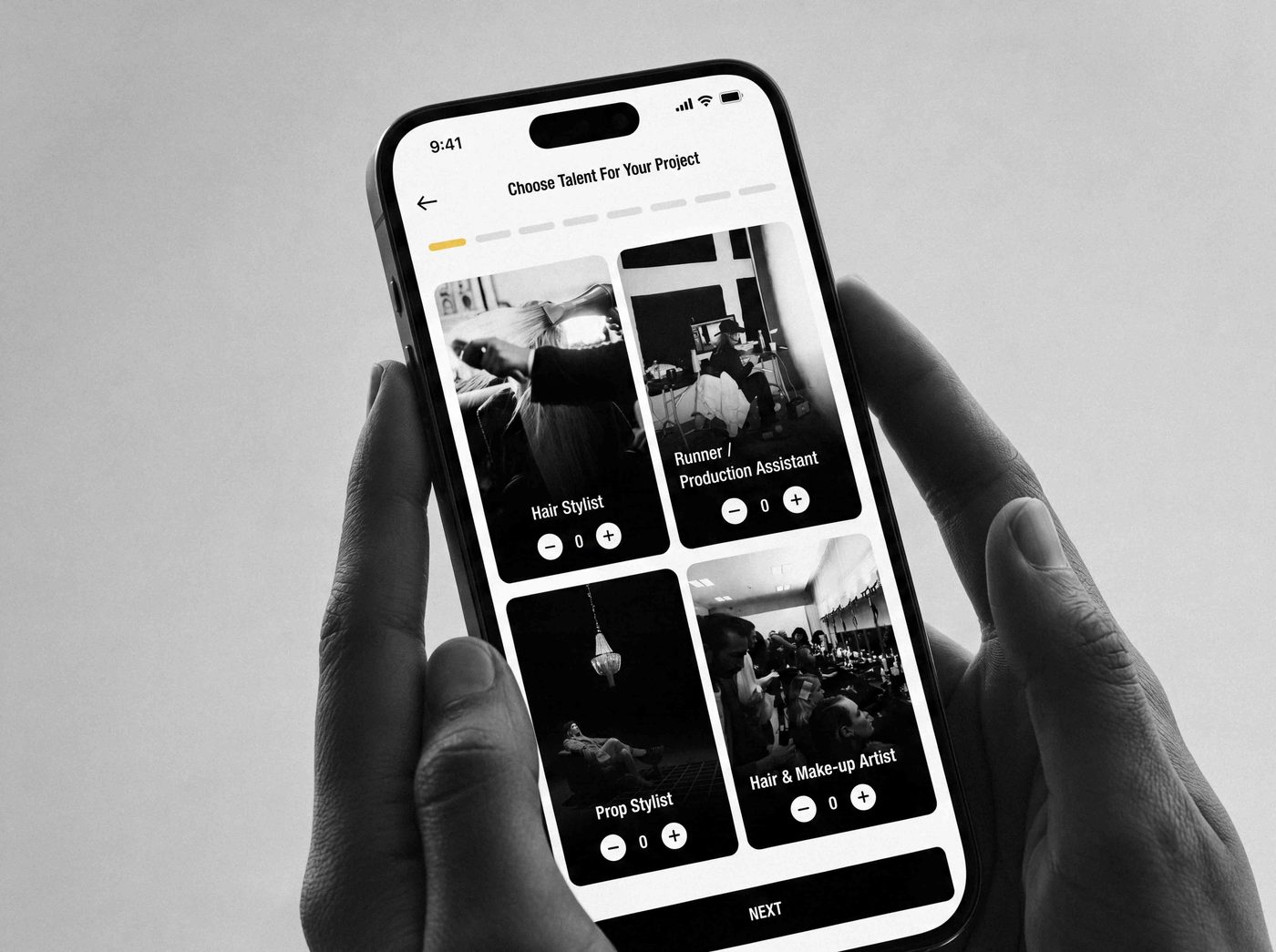
Post a job on the ANT Talent App and let approved talent come to you.
- Every profile approved by ANT
- Chat with talent in the app
- Payment held until the job is done

Free on iPhone
- 5.0on Google, 200+ reviews
- Since 2022modelling and talent agency
- Worldwideshoots, events and shows anywhere
- Licensed in Dubai. See our licence and booking terms