
AI-Generated Models: What Brands Need to Know in 2026

AI-generated models are digital people built by software, rendered so that they read as photographs, and placed into product shots, ads and social content without a camera crew or a casting day. They are fast and inexpensive for catalog work. They carry real questions on consent, disclosure and audience trust once a campaign depends on a face, a voice or a story. For most brands the answer is not a choice between machine and human. It is a decision about which job each one does.
This guide is written for the person commissioning the work: brand managers, creative and marketing agencies, producers and activation teams. It covers what the technology produces, what it costs the industry, what the research says about audience response, and how to brief real talent when the job calls for presence.
TL;DR
- AI-generated models suit high-volume, low-risk visuals such as product pages and catalog images, where speed and unit cost matter most.
- Research on virtual influencers points to a trade-off: more novelty, less credibility than human presenters.
- Consent is the legal fault line. New York has required written consent for a model’s digital replica since June 2025, and contract language on likeness deserves a close read.
- Campaigns that rely on trust, emotion, movement or live presence still call for real, vetted talent.
- ANT books models, influencers, kids, creatives and crews for shoots, events and shows anywhere in the world, with a shortlist inside an hour in working hours.
Table of Contents
- What AI-generated models actually are
- Why brands are drawn to them
- Where the format meets resistance
- AI models versus real models: a practical comparison
- Virtual influencers versus human influencers
- Consent, copyright and disclosure
- What is changing for human models
- A framework for deciding
- Briefing real talent when the job calls for it
- Our perspective
- Book vetted talent, managed or direct
- FAQ
- Sources
- Two ways to book
What AI-generated models actually are
An AI-generated model is a synthetic figure: a face, body and pose produced by a generative system rather than photographed. Vogue describes tools that can already produce hyperrealistic fashion models, and notes that brands may also license a real person’s image to be used in digital form, rather than relying on that person to be physically present.
Two distinct things sit under the same label, and the difference matters when you write a brief or a contract:
- Fully synthetic models. A person who never existed, assembled from learned patterns. No individual is paid, but the training data behind the system raises its own questions.
- Digital twins and altered likenesses. A real model’s face or body, scanned or photographed once, then reproduced or modified. Data & Society’s research found that generative tools can remove the need to hire a human model in some cases, and in others enable the alteration of a real model’s likeness or its reproduction as an avatar.
The same research describes uneven adoption across segments. Applications cluster in brand advertising, commercial catalogs, e-commerce, fit modeling during garment prototyping and social media content. Editorial and campaign work, where styling and creative direction carry the image, moves more slowly.
Why brands are drawn to them
The appeal is arithmetic. Vogue points to speed, cost-efficiency and what it calls limitless customisation as the draw. PBS NewsHour reports that AI avatars have appeared in marketing campaigns and that many brands see them as a cost-saving alternative to elaborate photo shoots. Business of Fashion, drawing on Reuters reporting, cites claims that AI-generated fashion models can cut costs by 90 percent or more against shoots with human models, producing lifelike images for retail websites.
The commercial logic is easiest to see on a product page. A single garment needs to appear in many colors, sizes and contexts. A generated figure can wear the same piece in a dozen scenes without a studio booking, a styling team or travel. For a catalog of thousands of items, that is a genuine production advantage, and fashion-tech writing on AI imagery versus photo shoots shows why the format has spread so quickly.
Where it is strongest:
- Product detail pages with consistent framing across a large range.
- Fit and prototype visualization before samples are cut.
- Rapid social variations of an approved hero image.
- Internal concept boards and pitch decks.
Where the format meets resistance
Fashion is emotion translated through form, and audiences notice when the emotion is missing. Two public episodes show how quickly goodwill can turn.
AP News reported that in March 2023 Levi Strauss & Co. tested AI-generated models from Lalaland.ai to show a wider range of body types and underrepresented demographics on its website. Backlash followed, and the company clarified that it was not withdrawing live-shoot plans or its diversity commitment. The lesson for brands is plain: synthetic representation is not a substitute for working with people who actually represent the audience.
In 2025, TechCrunch reported that a Guess ad in Vogue’s July print edition, featuring an AI-generated model, kept the internet talking for days. The debate centered on a beauty ideal that appeared to reflect North American standards, and on disclosure. Vogue told TechCrunch that the ad met advertising standards.
Neither case was a failure of image quality. Both were failures of context: who is shown, who is not, and whether the viewer was told.

AI models versus real models: a practical comparison
The table below compares the two on the criteria a booker actually weighs. It reflects the sources cited in this article and ordinary production practice.
| Criterion | AI-generated model | Real, booked model |
|---|---|---|
| Unit cost at volume | Low once the workflow exists; reported savings of 90 percent or more on catalog shoots | Higher per image, with fees, usage rights and production costs |
| Speed of variation | Very fast: new scenes without a reshoot | Limited to what was shot, plus planned reshoots |
| Movement and expression | Improving, but strongest in still images | Natural motion, timing and reaction on set |
| Audience credibility | Novelty is high, credibility is lower in research on virtual influencers | Stronger persuasion overall in the same research |
| Live presence | Not possible | Events, shows, activations, hosting, brand ambassadors |
| Consent and rights | Training data and likeness questions remain | Defined by contract and usage terms |
| Representation | Risk of backlash if used in place of real diversity | Real people from the audience you want to reach |
Virtual influencers versus human influencers
The evidence on influencers is more developed than on models, because brands have been testing avatars for years.
A Frontiers experiment showed participants similarly structured product videos presented by either humans or avatars. Human influencers were more persuasive overall, although virtual presenters could win in certain product domains. The result suggests that trust and likability explain much of the gap, and that context decides when an avatar works.
A 2026 meta-analysis in the Journal of the Academy of Marketing Science reports a systematic trade-off: virtual influencers generate greater novelty but lower credibility than human ones. Effectiveness depends on moderators, including how human-like the design is and how well the avatar fits the context in which it appears.

Audience attitudes are not hostile. Vogue cites a Sprout Social survey of 2,000 UK consumers in which half said they would be comfortable with a brand using AI influencers alongside human ones. The word that matters is alongside. Consumer response to synthetic personalities depends heavily on openness, and media planning approaches that test messaging and transparency are a sensible way to see how an audience reacts before a campaign scales.
For a brand, the working rule is simple. Use an avatar where novelty is the point, such as a tech launch, a gaming tie-in or a stylized brand character. Use a human creator where the audience is asked to believe a recommendation. If a creator campaign is on your roadmap, our influencer marketing booking covers verified creators across the GCC.
Consent, copyright and disclosure
This is the part of the brief that cannot be delegated to a prompt.
Consent for digital replicas
Vogue notes that the New York State Fashion Workers Act requires clear written consent, with details on scope, purpose, rate of pay and duration, for a model’s digital replica. According to Benesch’s legal analysis, the consent requirements took effect on June 19, 2025, and the law excludes routine edits such as color correction and minor retouching. If your campaign touches New York models, your producer or counsel should confirm how the law applies.
For brands working elsewhere, the same logic is a sound standard. Written, specific, time-limited consent protects both sides.
Contract language and reuse
Data & Society found that a single booking can produce images, body scans and measurements that companies can later manipulate with AI to extract more value without re-hiring or further compensating the model. It attributes this to murkiness in contracts and sharp power imbalances, with some models feeling pressured to give up likeness rights in perpetuity. Cornell Chronicle reports the same researchers found AI worsening reuse of photos without permission or payment, including a contractor turning one photo into a series of multi-outfit images. Business of Fashion reports contract language that asks for rights to swap a model’s face, create digital clones without extra pay, or train AI on body images.
For a responsible brand, this translates into three habits:
- Define in writing whether any image, scan or recording may be used to train or generate AI content.
- Price that use separately from the shoot. Our guide on how agencies price model usage rights sets out the factors.
- Protect unreleased work and likeness material with an NDA for the photoshoot.
Copyright and transparency
A UK legal guide from Sprintlaw states that an AI-generated image is not automatically free of copyright issues, and that permission to publish a photograph does not necessarily permit feeding it into an AI tool to create new commercial content. Vogue reports that brands using AI imagery should be clear and transparent. Law varies by country, so confirm the rules in each market where the work will run.
What is changing for human models
The trend lines are not uniform. Business of Fashion reports that some firms are using fully synthetic models and digital twins, alongside evidence of declining bookings and studio closures. The Model Alliance argues that generative AI can exploit gray areas and power inequities, intensifying the economic insecurity of models. Against that, Cornell Chronicle reports that replacing models with digital avatars is not seen as a viable future for many creative and editorial contexts, where design and style carry the work.
For a booker, the reading is practical: catalog volume is the segment most exposed to automation, while campaign, editorial, film, events and live work depend on people. Clients who treat talent fairly also gain access to better people, because the strongest models and creators increasingly ask about likeness terms before they say yes.
A framework for deciding
Before commissioning, run the job through five questions.
- Is the audience asked to trust a person? Recommendations, testimonials, ambassador roles and hosting need a real face.
- Does the work require movement or presence? Runway, events, product demonstrations, stunts and on-set performance are human work.
- Is the volume high and the stakes low? Catalog angles and colorway swaps are where synthetic imagery earns its place.
- Is representation part of the message? Then book people from the communities you are speaking to.
- Can you document consent and disclosure? If not, the workflow is not ready.
Many brands land on a hybrid: a real shoot for the hero campaign, with approved assets extended through digital variations under a written agreement with the talent. To prepare references that hold up under that kind of workflow, see what model digitals are and why agencies request them.
Briefing real talent when the job calls for it
A clear brief shortens the path from idea to shortlist. Include the usage (channels, territories, duration, any AI or digital extension), the look and casting range, the shoot or event dates, the location, the call time and the rate structure. For a step-by-step view of the process, the guide to hiring models for a photoshoot walks through it. If you need a wider cast, talent booking covers actors, kids and specialist performers.
Our booking terms are published, so there are no surprises on the day. Overtime is charged at 15% per hour, a cancellation within 48 hours costs 50%, a cancellation within 24 hours costs 100%, and cancellation of confirmed trips costs 100%. Late payment carries a fee of 9% per month. The full terms sit on the booking page.
Our perspective
We watch the AI conversation as the agency that sits between brands and the people in front of and behind the camera. Our view is simple: technology can extend an image, but it cannot replace the rhythm of a real person on set, the charge of a hostess greeting a room, or the credibility of a creator an audience already follows.
The brands that do well here treat likeness as something to be agreed, not harvested. Every booking we manage is built around clear scope, written terms and fair usage, and we encourage clients to put digital extension in the brief from the first day, so talent and brand begin from the same page.
We also see the practical side. Clients come to us for speed, and we answer with a shortlist of available talent within an hour in working hours. For jobs that need real movement, real presence or real trust, a vetted human booking remains the most direct route to work an audience believes. And because we book talent for shoots, events and shows anywhere in the world, the same standard travels with the job.
ANT
Book vetted talent, managed or direct
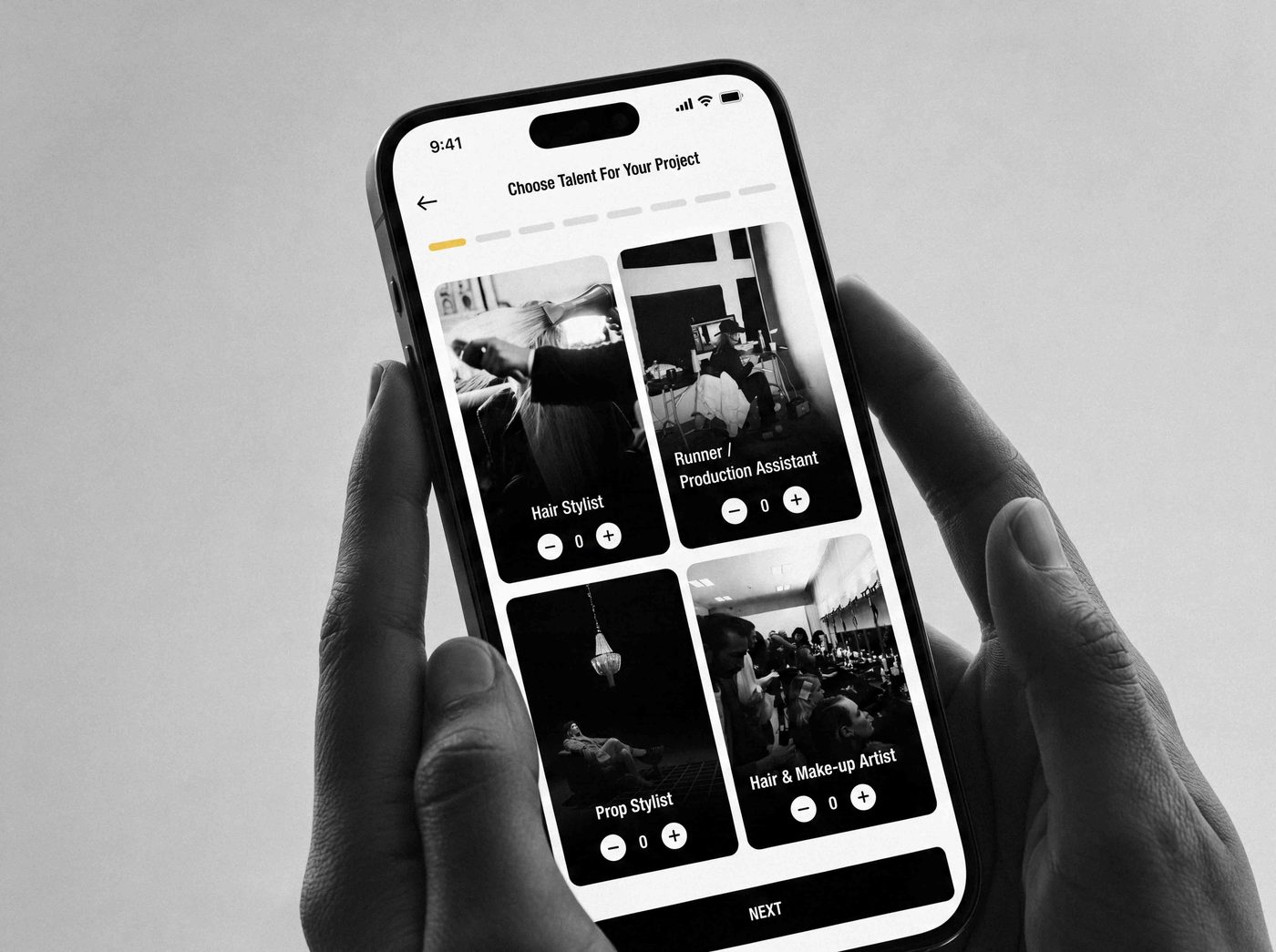
When the brief calls for a real face, ANT Management offers two routes. The first is a fully managed booking: send a brief and receive a shortlist of available talent within an hour in working hours, with selection, coordination and briefing handled for you. The second is the ANT Talent App, where you post a job and book vetted models, actors, influencers and creatives in Dubai in minutes, with escrow-protected payment processed by Stripe. Profiles are verified, coverage spans the UAE, Kuwait, Qatar and Saudi Arabia, and current prices are shown in the app.
Clients who prefer a managed service can book through ANT Management directly at info@antmgmt.com. Our team books talent for shoots, events and shows anywhere in the world. Explore model and talent booking to see how it works.
FAQ
Are AI-generated models replacing human models?
In some segments, yes. Reporting from Business of Fashion describes declining bookings and studio closures, and research finds AI can remove the need for a human model in certain catalog cases. Cornell Chronicle reports that replacing human models is not considered viable for many creative and editorial contexts, so campaign, live and trust-driven work continues to rely on people.
Do virtual influencers perform as well as human influencers?
Usually not on credibility. A 2026 meta-analysis found virtual influencers produce more novelty but less credibility, and a Frontiers experiment found human influencers more persuasive overall. Avatars can work in specific product categories and when the design fits the context.
Do I have to disclose that an image is AI-generated?
Vogue reports that brands should be clear and transparent about AI imagery, and rules differ by country and platform. Check the requirements in each market where the content will run, and label synthetic people plainly.
Can a brand use a model’s photos to create AI images?
Only with explicit written permission that covers it. Legal commentary notes that consent to publish a photograph does not necessarily extend to feeding it into an AI tool, and New York requires written consent with scope, purpose, pay and duration for digital replicas. Put AI use in the contract and price it separately.
Sources
- Are digital models about to become the industry standard? (Vogue)
- Fashion Data Doubles: How AI is Reshaping Modeling Work (Data & Society)
- AI-generated models shake up the fashion industry (PBS NewsHour)
- How AI Is Reshaping the Modelling Industry (Business of Fashion)
- AI-generated models could bring more diversity (AP News)
- The uproar over Vogue’s AI-generated ad (TechCrunch)
- YouTubers vs. VTubers (Frontiers)
- Virtual influencer marketing: A meta-analytic review (Journal of the Academy of Marketing Science)
- Models feel hemmed in by AI (Cornell Chronicle)
- Artificial Intelligence (Model Alliance)
- New York Fashion Workers Act consent requirements (Benesch)
- AI-Generated People in Advertising: UK Legal Guide (Sprintlaw)
Two ways to book
- Send a booking request to ANT Management: antmgmt.com/dubai/contact
- Post a job on the ANT Talent App: antmgmt.com/dubai/talent-app
Recommended
Planning a shoot in KSA?
Prefer to book on your phone?
Post a job on the ANT Talent App and let approved talent come to you.
- Every profile approved by ANT
- Chat with talent in the app
- Payment held until the job is done

Free on iPhone
- 5.0on Google, 200+ reviews
- Since 2022modelling and talent agency
- Worldwideshoots, events and shows anywhere
- Licensed in Dubai. See our licence and booking terms