
Get Agency Grade Clearance: Model Release Form for Photographers

A model release form is a signed contract that grants a photographer or brand the right to use someone’s likeness commercially, and it becomes mandatory the moment an image moves from personal portfolio work into advertising, stock licensing, or editorial sale. Without one signed, dated, and properly witnessed, that striking campaign frame is legally unusable. Grab a template built for your scenario, adult or minor, and get it signed before the shoot wraps.
TL;DR:
- Use the correct release template based on the subject’s age and intended media, with separate forms for adults, minors, and video or entertainment shoots.
- Include key clauses such as grant of rights, ownership, duration, territory, revocability, consideration, and restrictions on AI or biometric uses to avoid legal disputes.
- Always obtain signed releases from minors’ guardians, ideally both parents, and document their ID and guardianship proof to prevent future challenges.
- Sign releases in person with ID verification when possible, photograph signed documents for backup, and store all files securely with clear labeling by date and subject name.
- Clarify vague language before issuance, explicitly specify territory, duration, consideration, and restrictions, and seek legal review for high-value, international, or AI-related projects.
Table of Contents
- Which Model Release Form Template Do You Actually Need?
- What Clauses Belong in Every Commercial Release?
- Do Minors Need a Parent’s Signature on a Release?
- How Should You Sign and Store a Model Release?
- Fixing Vague Language Before You Send a Release Out
- When Should a Photographer Get a Lawyer to Review the Release?
- How Agencies Rely on Signed Releases to Book Talent Fast
- A Managed Alternative: Booking Talent Through ANT Management
- Sources
Which Model Release Form Template Do You Actually Need?
Not every release fits every shoot. The right template depends on who’s in front of your lens and where the final images will travel.
An adult release works for any subject over 18 who can sign for themselves. A minor release requires parent or guardian signature and typically adds authorization language absent from the standard form. Entertainment or video releases go further still, covering motion footage, voice, and sometimes name-and-likeness rights for broadcast or streaming distribution, which a still-photo release doesn’t address.
Increasingly, photographers are adding AI and biometric addenda. Stock agencies like Getty Images now bake this directly into their model release language, covering uses like AI model training and biometric data retention that didn’t exist in releases written a decade ago.
On format: PDF locks the layout and looks polished for client delivery, but Word lets you customize clauses fast for a specific shoot. A practical setup:
- Keep a master Word file for editing clause language project by project.
- Export a signed PDF as the final, tamper-resistant record.
- Store both in a labeled folder tied to the shoot date and subject name.
What Clauses Belong in Every Commercial Release?
A release is only as strong as its weakest clause. Skip one of these and you risk a licensing dispute months after the shoot, when the model or their representative pushes back on how the images were used.
- Grant of rights: spell out which media (print, digital, broadcast) and whether the grant is exclusive or a non-exclusive license.
- Ownership language: clarify whether copyright transfers or the photographer retains it while licensing usage rights.
- Duration and territory: state explicitly whether the grant is perpetual and worldwide, or bounded to a specific campaign window and region.
- Revocability: most commercial releases are irrevocable once signed; say so plainly to avoid later claims of withdrawal.
- Consideration clause: even nominal payment, a $1 fee, free prints, or “other valuable consideration,” makes the contract enforceable in most jurisdictions, according to Stanford’s Fair Use guidance.
- AI and biometric limitations: name any restricted sensitive uses, such as facial recognition training, separately from general commercial usage.
Pro Tip: Never leave the consideration line blank. Courts have struck down releases where no value, however small, changed hands, so write in the dollar amount or the in-kind trade even if it’s a printed portrait or a wardrobe credit.
Commercial releases from major stock platforms commonly grant worldwide, perpetual rights precisely because ambiguous scope is the single most common reason a licensing deal falls apart during legal review.
Do Minors Need a Parent’s Signature on a Release?
Yes, always. A release signed only by a model under 18 carries no legal weight; a parent or legal guardian must sign in their place, a point the New York Institute of Photography makes explicit in its sample forms.
Best practice goes further than the bare minimum. Whenever both parents are reachable, get both signatures. This closes a real gap: one parent signing alone can be challenged later by a co-parent who never consented, especially in custody situations. Document the signing parent’s ID and, where relevant, proof of legal guardianship.
For recurring youth programs, add layers most one-off shoots skip:
- Medical authorization language in case of an on-set injury.
- Event-specific details tying the release to a particular date or production.
- Regular re-signing, since many youth program templates, including university-issued consent forms, treat consent as expiring periodically rather than standing indefinitely.
A release for a minor is not a shorter version of the adult form. It’s a different document with its own risk profile, and treating it as an afterthought is where most disputes start.
How Should You Sign and Store a Model Release?
Signing method matters almost as much as the clauses themselves. A release with no verification trail is harder to defend if a subject later disputes what they agreed to.
- Sign in person when you can. Check a government-issued ID against the name on the form, confirm the birth date matches the release type (adult versus minor), and have the subject initial any handwritten changes.
- Use an e-signature platform with a real audit trail if remote signing is unavoidable. Require timestamped IP logging and a verified signer email, not just a typed name in a text box.
- File the signed release immediately, named with the subject’s name, shoot date, and project code, so it’s searchable years later when a client asks for proof of clearance.
- Back up to at least two locations, a cloud drive and a local archive, since a lost release effectively voids your usage rights even if the signing itself was solid.
Pro Tip: Photograph the signed page and the ID side by side before the subject leaves the set. It costs ten seconds and gives you a verification backup if the original document is ever misplaced.
Fixing Vague Language Before You Send a Release Out
Stock templates are written to cover broad scenarios, which means they often leave gaps that only show up when a client’s legal team starts asking questions.
Tighten these before every use:
- Vague territory or duration: “worldwide” and “in perpetuity” should be stated outright, not implied.
- Missing consideration amount: write the number or the in-kind trade, never leave it blank.
- Ambiguous revocability: state clearly whether the model can withdraw consent later, and under what conditions, if any.
- Absent identification fields: full legal name, date of birth for minors, and a signature date, not just a signature line.
- No carve-out for sensitive uses: you can restrict specific applications, like political advertising or health-related content, without weakening the broader commercial grant. Add a single limiting sentence rather than rewriting the whole clause.
A release with two of these gaps is a release a licensing buyer’s attorney will likely kick back for revision, costing you the deal timeline.
When Should a Photographer Get a Lawyer to Review the Release?
Templates handle the vast majority of commercial shoots fine. Certain situations still call for an attorney’s eyes before signatures go down.
- A major ad campaign with six or seven figures in media spend behind it.
- International distribution across multiple countries, where governing-law and venue clauses actually get tested.
- Any use tied to AI training data or biometric datasets, an area still evolving fast.
- A minor-heavy production, especially one recurring across seasons.
Governing-law and venue clauses decide which country’s courts, and which country’s law, apply if a dispute lands in litigation. A release drafted under one jurisdiction’s assumptions can behave unpredictably when a subject or buyer sits somewhere else entirely. Government sites, including Oklahoma’s official sample forms, state plainly that their templates are convenience starting points, not substitutes for legal advice tailored to your project.
Before that consultation, bring the signed release, the shoot brief, the list of intended markets, and any client contract referencing usage rights. That saves billable hours and gets you a faster answer.
How Agencies Rely on Signed Releases to Book Talent Fast
Agencies clear talent for multi-market campaigns by checking one document first: the signed release. A clean, complete release lets a booking move from photographer to agency to brand without a pause for legal clarification, which is often the single biggest delay in a licensing timeline.
Loose paperwork slows payments to talent too, since most agencies won’t release usage fees until rights are documented. After a shoot, deliver the signed release alongside clear usage notes for the images, specifying intended markets and media. That pairing is what separates a smooth handoff from a stalled one.
— ANT
A Managed Alternative: Booking Talent Through ANT Management
Freelance model sourcing means you handle release paperwork, negotiation, and clearance verification alone, on top of the shoot itself. This agency model removes that burden by booking pre-vetted talent with clearance and usage terms already built into the arrangement, so your production team spends time shooting instead of chasing signatures.
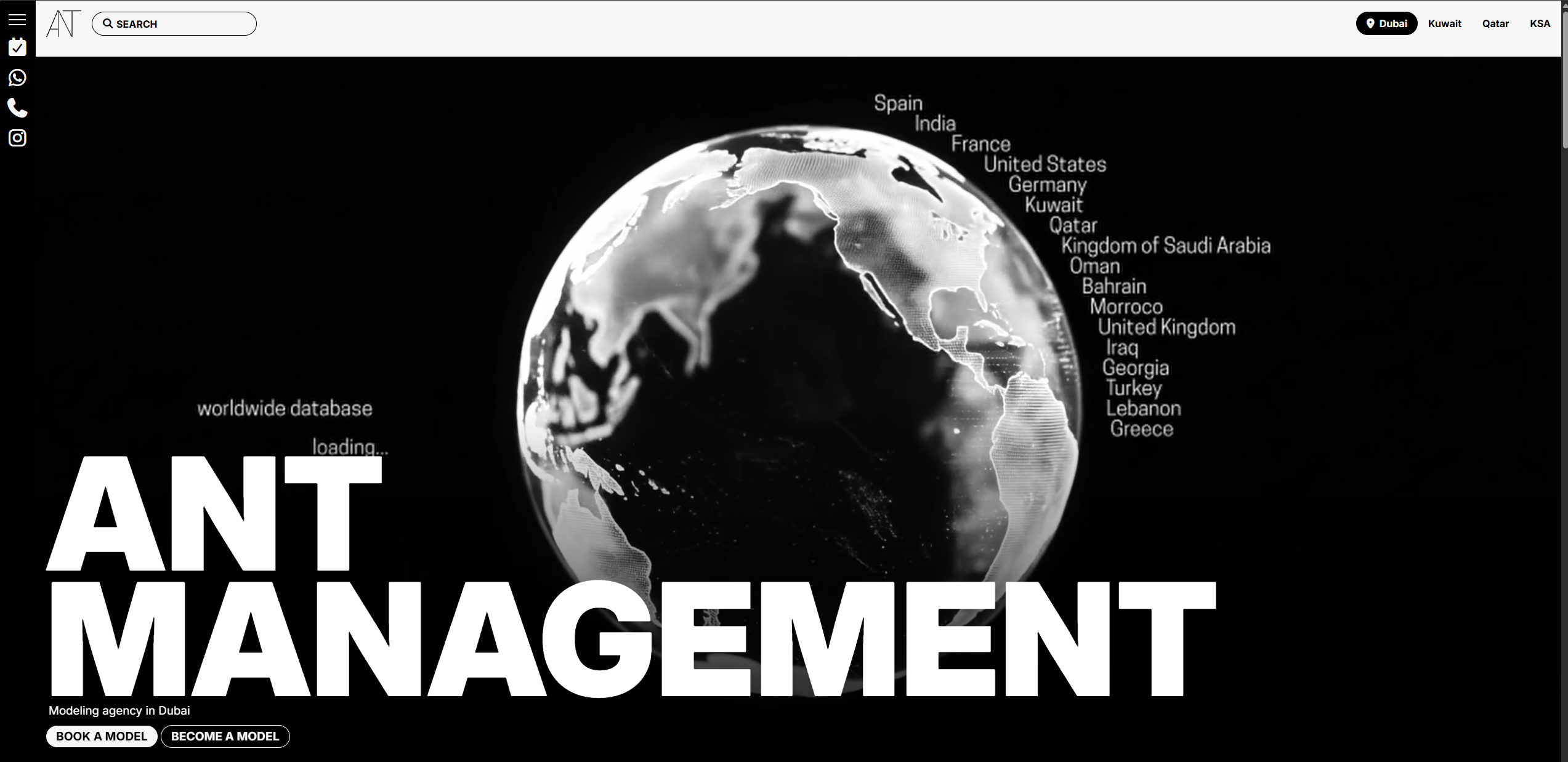
That matters most on multi-market or high-value campaigns, where a single missing signature can hold up an entire launch. The network spans fashion, commercial, and kid models alongside influencers and creatives, curated and supported through development programs rather than sourced ad hoc. For teams weighing agency-managed talent against freelance hires, the calculation usually comes down to how much clearance risk you’re willing to carry yourself.
If you’re producing a campaign in the Gulf region, check ANT Management’s talent and clearance services in Kuwait or its modeling agency presence in Saudi Arabia to see availability and start a booking conversation for your next shoot.
Sources
- Here’s a sample model release form | New York Institute of Photography
- Release agreements | Fair Use | Stanford University
- Ok
- MODEL RELEASE — Getty Images (English) March 2026