
Pre-Production Meeting: Agenda, Checklist and Who Attends

A pre-production meeting, or PPM, is the final sit-down between client, agency and production company before cameras roll. Its job is to confirm, not to invent: every creative question is settled, every commitment is signed off, and everyone leaves knowing what happens on the shoot day. Held well, it turns a brief into a plan that survives contact with a real set.
TL;DR
- A PPM is a confirmation and approval meeting. Creative decisions are made before it, not in it.
- Hold it at least seven days before the first shoot day, with the authorised decision makers from client, agency and production company in the room.
- The agenda runs from the approved script and shot list through casting, locations, wardrobe, schedule and deliverables, and ends with a list of open items, each with an owner and a date.
- Circulate written notes within 24 hours, and confirm any cost changes in writing.
- Talent is part of the agenda: first choice, backups, fittings, usage and call times should all be locked here.
Table of Contents
- What a pre-production meeting is, and why it exists
- When to hold it, how long it runs and who attends
- The agenda: a running order that protects the decisions
- A PPM checklist you can print
- Talent at the PPM
- Running the meeting
- Approvals, costs and what changes after the PPM
- From PPM to shoot day
- Our perspective
- Book the talent your PPM will confirm
- FAQ
- Sources
What a pre-production meeting is, and why it exists
In advertising and film, preproduction is the phase between the confirmation of the assignment and the first day of filming. According to the BCP production guide, that phase concludes with the PPM. By then, scripts, storyboards and other materials should align with the agreed creative guidelines, and all parties must agree on the production’s objectives and direction.
Think of it as the last clean exit. Before the meeting, a change is a conversation. After it, a change is a cost, a delay, or both. The European production guidelines for advertising describe the final pre-production meeting as a “confirmation” meeting rather than a “creative” one, because all relevant issues should already have been dealt with and agreed.
That distinction is the whole discipline. A PPM that drifts back into debating the concept wastes the one hour in which everyone with signing authority is present. A PPM that stays disciplined produces a single shared document that client, agency and producer all stand behind.
PPM, production meeting and tech meeting
The terms blur on set, so it helps to separate them:
- Internal prep meeting: the production company and director rehearse what they will present.
- PPM: the meeting where the client is in the room and decisions bind everyone.
- Production or tech meeting: department heads work through the practical mechanics of the shoot, scene by scene, usually led by the first assistant director.
On a feature or a series, the production meeting is the one most people mean. On a commercial or a brand campaign, the PPM is the milestone that matters, because it is where the advertiser’s approval is secured.
When to hold it, how long it runs and who attends
Timing
The BCP guide says the PPM should take place no later than one week before the first shoot day. The European guidelines agree: at least seven days before the first shooting day. Compressed schedules exist, and a gap of two or three days is workable for a simple shoot, but it leaves almost no room to replace a location, recast a role or reprint a wardrobe piece.

Schedule it after the pieces are mature enough to present: locations scouted, casting shortlisted, wardrobe concepts drawn, a draft schedule on paper. If those are still vague, the meeting becomes a brainstorm, and the date should move rather than the standard.
Length
There is no official duration. A single-day commercial with one location and a small cast often fits in one to two hours. A multi-day campaign with several locations, stunts, children or international travel earns a longer session, or two sessions split by discipline. Plan the length by the agenda, not the calendar slot: if the list cannot be covered, split it before the day rather than rushing the last items, which are usually logistics and the most expensive to get wrong.
Attendees
The guidance is consistent: the people in the room must be authorised to decide. The European guidelines call for the responsible and authorised representatives of client, agency and production company. The BCP guide lists the advertiser (if involved), the communication agency team assigned to the project, and the production company representatives.
On a larger film or TV production, the list expands to the director, first assistant director, director of photography, production designer, costume designer, hair and make-up heads, and the post-production and VFX leads. For a brand shoot, a practical list looks like this:
- Brand or marketing lead with approval authority
- Agency creative lead and agency producer
- Producer and production manager
- Director and director of photography
- Stylist or wardrobe lead
- Talent coordinator or booker
- Location manager, when the site is complex
- Post-production lead, when deliverables are intricate
If you are unsure which crew roles belong in the room, our guide to production crew roles lays out who owns what.
The agenda: a running order that protects the decisions
A PPM agenda is a sequence from the idea to its consequences. The European guidelines supply the most complete professional checklist, and the order below follows its logic, adapted for a brand shoot.
- Recap of the brief and the approved script. Confirm that what is on the table matches what the client approved, including legal sign-off on the script.
- The director’s approach. The director presents the interpretation, references and visual language. Questions here are about clarity, not preference.
- Shot list and storyboard. Walk it shot by shot, with durations. This is where the client confirms that the film on paper matches the brief.
- Casting. Present a first choice for each role, plus alternatives. Confirm featured and background talent, and any special models, stand-ins or extras.
- Locations and recces. Show location stills, discuss what will be altered on site, and confirm permissions.
- Wardrobe, hair and make-up, props and product. Approve outfit boards, set fittings and confirm product versions and packaging.
- Technical points. Camera, lighting, special effects, and any specialist units.
- Schedule and logistics. Shoot dates, call and wrap times, weather contingency, travel, permits.
- Post-production and deliverables. Lengths, formats, cut-downs, music and rights.
- Decisions and open items. Read back every decision, with an owner and a date against each unresolved point.
The last item is not a courtesy. It is the product of the meeting.
A PPM checklist you can print
The European guidelines list the topics a pre-production meeting agenda should cover, including script and storyboard, casting, wardrobe, props, post-production work, music, voice-over, stunts and specialist personnel, special models, animals under veterinary supervision, copyright permissions, visas and work permits, location permissions, safety and security, and insurance including weather cover. Sorted for practical use, they become the table below.
| Area | Confirm before you leave the room |
|---|---|
| Creative | Final script and storyboard approved; director’s interpretation agreed; version count and cut-downs listed |
| Talent | First choice and alternatives named; wardrobe and fittings scheduled; usage terms and work permits clear |
| Locations | Permissions secured; recce stills reviewed; power, parking, holding area and weather backup identified |
| Specialists | Stunt coordinator, precision drivers, animal handlers, food stylists and other specialist crew assigned |
| Product and props | Versions, quantities and condition agreed; packs and artwork approved; copyright permissions cleared |
| Schedule | Shoot dates, call and wrap times, meal breaks and weather contingency on paper |
| Safety and insurance | Safety plan agreed; insurance in place, including weather cover |
| Post | Editor, deliverable specs, music and rights plan confirmed |
Insurance deserves its own conversation when a shoot involves stunts, minors or expensive equipment. Our guide to production insurance for shoots explains what to cover. For the shoot-day layer, the photoshoot production checklist breaks the work into setups.
Locations and paperwork
Location permission is the item most often assumed and least often documented. Anything that touches private property, a venue, or a public space needs written consent from the person entitled to give it. A location release for a music video shows what such an agreement typically contains, and the same principle applies to brand films and photo shoots: get it in writing, name the dates, and keep it in the production binder.
Talent at the PPM

Talent is the most visible line on the agenda and often the most fragile. Models, actors, kids, hostesses, stunt performers and influencers all arrive with their own availability, usage terms and logistical needs. The PPM is the moment to turn a casting shortlist into a confirmed cast.
The BCP guide notes that preproduction includes booking and confirming talent, and that the advertiser and agency must attend costume and wardrobe fittings. Bring that discipline to the meeting:
- Name a first choice and a backup for each role. A backup is not pessimism; it is how a late withdrawal stays a minor event.
- Fix the fitting and wardrobe schedule. Who supplies what, and when fittings take place.
- Confirm usage and exclusivity. Territory, duration and media must match what the client intends to run.
- Confirm call times and hours. Our booking terms list overtime at 15% per hour, and cancellations within 48 hours at 50% and within 24 hours at 100%, so a firm schedule protects the budget as well as the talent.
- Plan special requirements early. Children, stunts and travel each carry extra rules, paperwork and supervision.
For stunt work, the coordinator should be in the room, or at least briefed in writing. See stunt coordinator requirements for what to ask before signing. The full chain from brief to final payment is mapped in our talent coordination checklist.
Running the meeting
A PPM is only as strong as its chair. According to the BCP guide, when a communication agency is involved, its producer prepares the agenda, coordinates and leads the meeting, takes notes and distributes the report. Where no agency producer is available, one person responsible for the production on the agency side assumes that role.
A few habits make the difference:
- Send the agenda and the book in advance. Nobody should see the storyboard for the first time at the table.
- Go in script order. The first assistant director’s method of working scene by scene keeps the discussion anchored; the FSUFILM Handbook describes the first AD as running the production meeting by reading the action of the script.
- Solve, do not just flag. Every concern leaves the table with a proposed fix and a named owner.
- Ask what could go wrong. Weather, a late arrival, an equipment fault, a client request outside the boards: give each a one-line answer.
- Read back the decisions. Close with a recap of what was agreed and what remains open.
The BCP guide requires that notes detailing all points discussed and decisions made be shared with all project personnel within 24 hours. Treat that as the minimum. The notes are the contract of the meeting.
Approvals, costs and what changes after the PPM
The PPM often exposes small differences between what was quoted and what has now been defined. The BCP guide says that following the meeting it may be necessary to revise the production briefing and amend the final production offer, that changes to production costs must be confirmed by the agency in writing, and that the agency is responsible for obtaining the advertiser’s approval.
Contract practice points the same way. The ACCP contract states that when the agency or client requests changes from the script or storyboard as quoted, and those changes add cost, the production company must notify the agency producer of the amount before incurring it and proceed only after written approval. In short: after the PPM, nothing moves without a written yes. For the budget lines that most often shift, see the production budget breakdown.
From PPM to shoot day
Once the meeting closes, the work becomes mechanical, and that is a good sign. Typically the first assistant director turns decisions into the shooting schedule and arranges the tech scout, then approves the call sheet. According to the FSUFILM Handbook call sheet guidance, call sheets go out no later than 12 hours before call time on the first day, and no later than the previous day’s wrap afterward, with the second AD distributing the PDF to cast, crew and relevant parties. Our call sheet basics explain how to build and send one.
The handbook also notes that on shoot days the first AD holds a safety meeting with the full crew covering the emergency plan and location hazards. That conversation is easier when the PPM has already settled safety and security. If the unexpected still arrives, our guide to on-set crisis management covers keeping a shoot moving, and a realistic campaign production timeline shows where the PPM sits in the calendar.
Our perspective
We book talent and crew for shoots, events and shows in Dubai, the GCC and anywhere in the world, and we see the same pattern every time: the shoots that move like choreography were decided in the room a week earlier.
The PPM is where a brief stops being an idea and becomes a commitment. It is also where talent becomes real. A model, a child, an actor or a stunt performer is not a line on a call sheet but a person with availability, wardrobe, travel and usage terms, and each of those needs an answer before the first frame.
That is why we prefer to be briefed early and brought into the PPM when casting is on the agenda. A shortlist of available talent within an hour in working hours gives the meeting real names to approve rather than hypotheticals, and one agency across talent and crew means fewer handoffs to reconcile.
ANT
Book the talent your PPM will confirm
A PPM is only as firm as the cast and crew behind it. ANT Management is a licensed agency in Dubai, founded in 2022 and rated 5.0 on Google from more than 200 reviews. Brands, agencies, producers and event companies book models, kids, actors, influencers, athletes, stunt performers, hostesses, promoters and creative crew through one agency, for shoots in Dubai and the GCC, or for events and shows anywhere in the world.
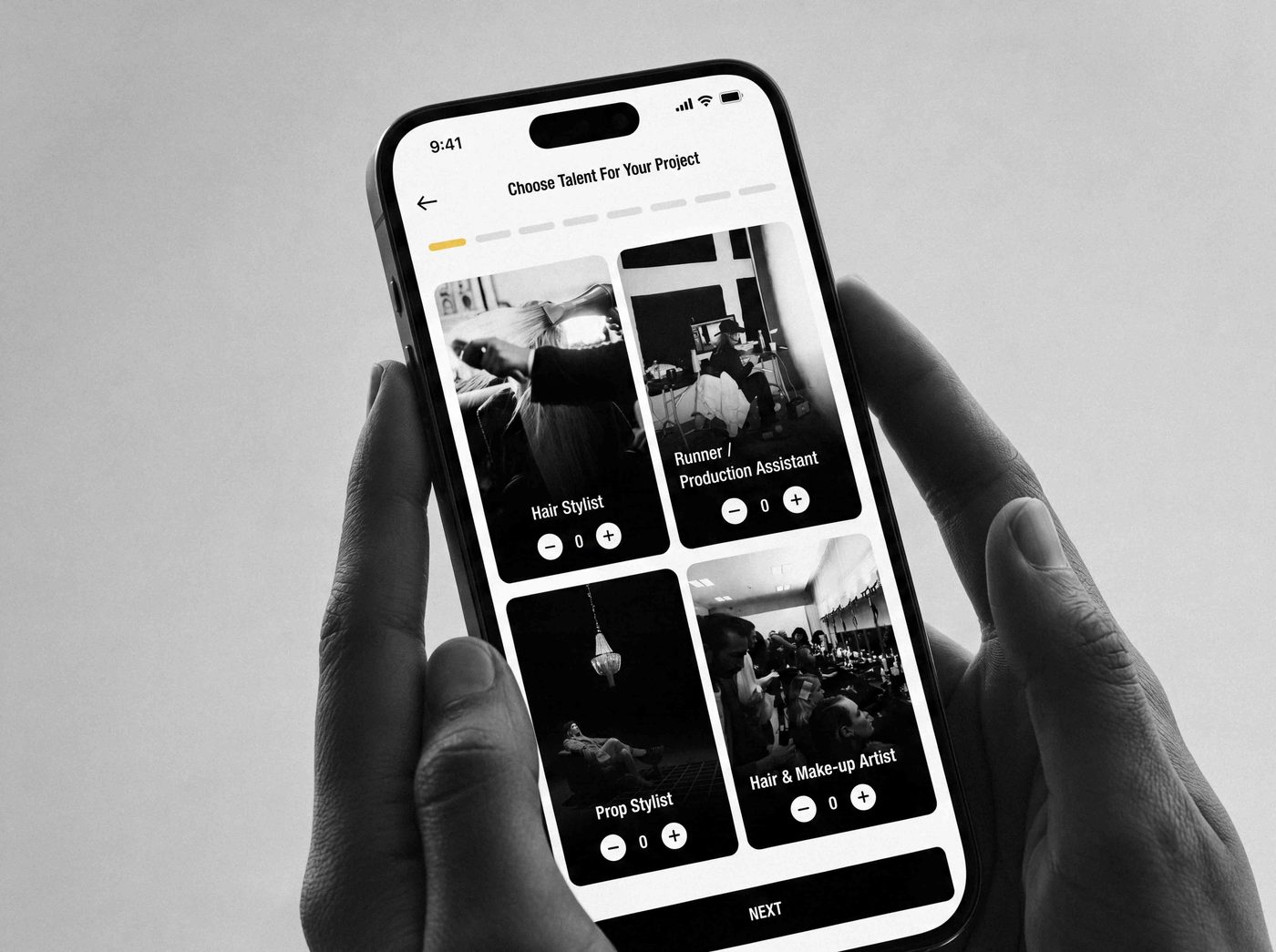
Send a brief and receive a shortlist of available talent within an hour in working hours, ready to present at your PPM. Or post a job on the ANT Talent App to book vetted talent directly in minutes, with verified profiles and escrow-protected payment processed by Stripe, across the UAE, Kuwait, Qatar and Saudi Arabia. Current prices are shown in the app. Clients who prefer a managed service can book through ANT Management directly at info@antmgmt.com. Start from our talent booking page or the full production crew page.
FAQ
What is a PPM in advertising?
It is the pre-production meeting that closes the preparation phase of a commercial. Client, agency and production company confirm the script, storyboard, casting, locations, schedule and deliverables. It works as a final approval, not a creative session.
How long should pre-production take?
There is no fixed duration, because it depends on the scale of the shoot. What the guidelines do fix is the PPM: it should take place at least seven days before the first shoot day. Plan the earlier steps backward from that date.
What is the purpose of a production meeting?
Its purpose is to make sure every department understands the plan and every open issue has an owner. On a film set the first AD usually leads it scene by scene. It ends with a clear list of what remains unsolved and who solves it.
Who should send the notes after the meeting?
When an agency is involved, its producer prepares the agenda, leads the meeting and distributes the report. Notes with all points discussed and decisions made should reach everyone on the project within 24 hours.
What happens if something changes after the PPM?
The production briefing and offer may be revised. Cost changes must be confirmed in writing, and the agency obtains the advertiser’s approval before the work proceeds.
Sources
- BCP production guide, Chapter 10: Preproduction and the PPM
- European production of advertising commercials (G4 guidelines)
- ACCP contract 2021
- 1st AD Responsibilities, FSUFILM Handbook
- Call Sheet, FSUFILM Handbook
- Location release for a music video
Two ways to book: send a booking request to ANT Management, or post a job on the ANT Talent App and book vetted models, actors, influencers and creatives in Dubai in minutes, with escrow-protected payment.
Recommended
Planning a shoot in Qatar?
Prefer to book on your phone?
Post a job on the ANT Talent App and let approved talent come to you.
- Every profile approved by ANT
- Chat with talent in the app
- Payment held until the job is done

Free on iPhone
- 5.0on Google, 200+ reviews
- Since 2022modelling and talent agency
- Worldwideshoots, events and shows anywhere
- Licensed in Dubai. See our licence and booking terms