
Agency Backed Production Budget Breakdown: 10 Line Items for Brands
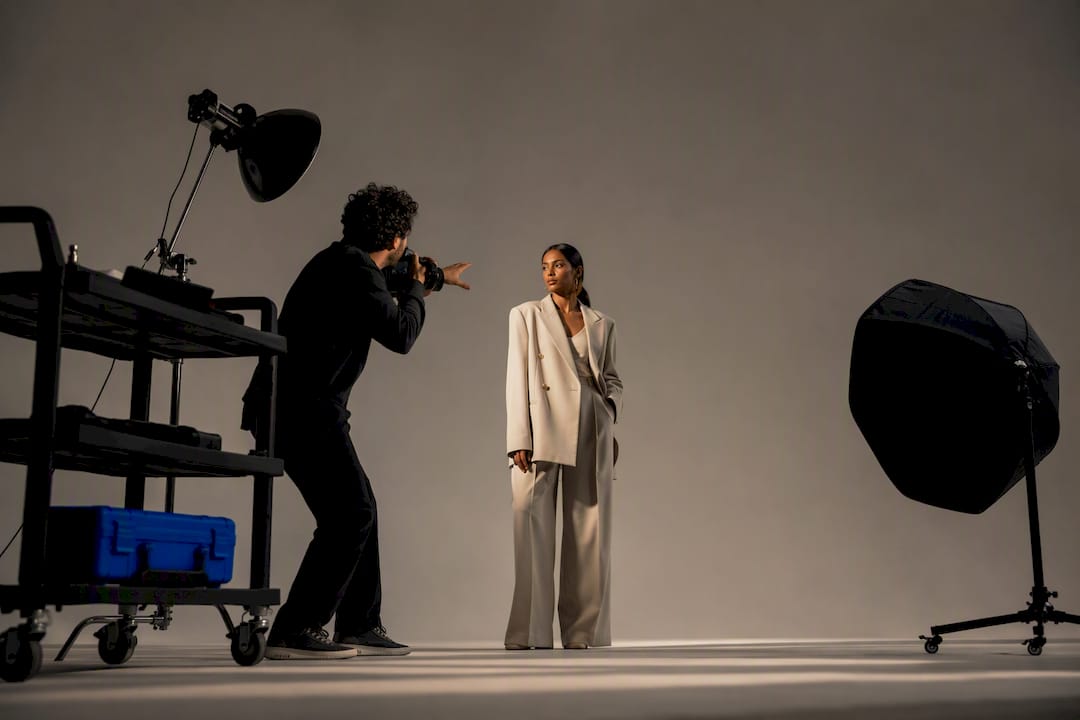
A working production budget breakdown sums ten line items: talent (day rate plus usage), photographer, studio or location, hair and makeup, stylist and wardrobe, crew, equipment rental, post-production, travel and permits, then adds contingency and a production margin to reach the all-in figure clients actually pay. The formula is simple: line items + contingency + margin = quoted total. Usage rights, reshoots, and post-production are where that total most often breaks.
TL;DR:
- Talent fees vary from $300 to over $10,000 per day, with agency commissions and usage multipliers significantly increasing the total cost.
- Post-production and licensing fees, especially for digital use and extended rights, often double or triple the initial budget, making detailed planning essential.
- Location shoots incur additional costs for permits, scouting, and transportation, with travel and variable equipment handling charges adding unpredictable overheads.
- Building a detailed spreadsheet from project inputs and applying separate contingency and markup lines improves accuracy and helps prevent budget overruns.
- Clear itemization of costs and having a single point of contact reduce disputes and manage costs more effectively during execution.
Table of Contents
- Every Line Item in a Production Budget Breakdown, Explained
- Building the Spreadsheet: From Project Inputs to Final Number
- Why Usage Rights Multiply Your Talent Line
- Contingency, Markups, and What Actually Blows the Budget
- A Copy-Ready Sample Budget by Production Scale
- Why ANT Favors Line-by-Line Transparency Over Flat Quotes
- Let ANT Management Handle the Booking While You Manage the Budget
- Sources
Every Line Item in a Production Budget Breakdown, Explained
Every commercial shoot estimate is built from the same skeleton, whether the project is a single-location catalog day or a three-city campaign. The line items rarely change. What changes is the multiplier behind each one, and that’s where most first-time budget builders lose control of the number.
Model and talent fees anchor the budget, and they carry more nuance than a flat day rate suggests. New-face or local talent typically runs $300 to $800 per day, established commercial models land between $800 and $2,500, and top editorial names can clear $10,000 or more per day. On top of the day rate, expect an agency commission of roughly 20%, plus a separate usage fee that scales with where and how long the images run. A rough estimating formula: models × shoot days × day rate × usage multiplier. Our guide to hiring models walks through how to scope that number before the first call with an agency.
The photographer’s fee covers the shoot day, but also preproduction planning and a set number of edit hours. Budget separately for any creative concept work billed outside the day rate.
Studio or location costs split into rental, scouting, permits, and parking. A controlled studio day is predictable; a location shoot adds permit fees and often a half-day scout that many first-time budgets forget entirely.
Hair, makeup, styling, and wardrobe are billed by day rate plus prep and pull time. Stylist responsibilities extend well past the shoot itself, covering sample sourcing, returns, and shipping.
Crew rounds out the physical production:
- Digital tech and photo assistants, usually one to two per shoot day
- Production assistants for logistics and set support
- Grip and lighting support on location-heavy jobs
- Defined crew roles prevent double-booking the same function under two titles
Equipment rental (lights, specialty lenses, props) often carries a handling and transport markup worth confirming up front.
Post-production is billed per image following creative industry photo standards explained for buyers, and this is where budgets quietly balloon. Retouching pricing typically scales with revision rounds and volume, so a bulk discount on 200 catalog images looks nothing like the per-image rate on 10 hero shots.
Catering, transport, sample shipping, accommodation, insurance, and permits are pass-throughs. The clearest estimates separate these from creative fees entirely, an approach industry pricing guides recommend precisely because it stops clients from questioning why a “photography fee” includes a hotel bill.
Building the Spreadsheet: From Project Inputs to Final Number
A production budget breakdown starts as a set of inputs, not a guess. Before opening a spreadsheet, define the number of looks, final deliverables, models booked, shoot days, and the territory and duration the images will run.
- List project inputs first. Looks, deliverables, models, days, usage territory, usage duration.
- Apply rate ranges to talent. Day rate × models × days × usage multiplier gives the talent subtotal.
- Price the day-based lines. Photographer, studio, crew, and equipment are quoted per day; multiply by shoot days and sum.
- Price post-production separately. Per-image rate × deliverable count, adjusted for bulk tiers.
- Add contingency. Apply a baseline percentage, then layer a realistic hidden-cost buffer on top.
- Total the all-in figure. Subtotal + contingency + production margin = the number you quote.
Your sheet needs seven columns: line item, unit cost, units, subtotal, supplier, notes, and actuals (filled in after the shoot to track variance against the quote). Give usage licensing its own row rather than folding it into the talent line. Contingency gets its own row too, positioned right above the final total so nothing gets missed when the sheet is skimmed under deadline pressure.
Pro Tip: Build the actuals column into your template from day one, not after your first overrun. Comparing quoted versus actual by line item, shoot after shoot, is how you learn which suppliers or categories consistently run hot.
A tight creative brief upstream makes every one of these estimates more accurate, because vague deliverables produce vague post-production line items.
Why Usage Rights Multiply Your Talent Line
The day rate and the usage fee are two different charges, and treating them as one is the single most common budgeting mistake on a commercial shoot. A model’s day rate pays for their time on set. The usage fee pays for the right to run their image, and it’s priced separately because usage rights, post-production, and coordination frequently drive the final invoice higher than the shoot day fee itself.
Multipliers scale with reach and duration:
- Website or social use for a limited window sits at the low end of the multiplier scale
- Paid digital advertising raises it
- Regional broadcast or out-of-home use raises it further
- Global, unlimited-duration usage commands the highest multiplier, sometimes several times the base day rate
Agency commission, typically around 20%, stacks on top of the talent and usage total rather than replacing it. Budget for renewals too. Usage rights expire, and re-licensing the same image for a second campaign cycle is a fresh negotiation, not a courtesy extension. Put usage on its own invoice line every time. Our photo licensing guide breaks down how buyers and talent typically structure these terms before a shoot, not after.
Contingency, Markups, and What Actually Blows the Budget
Push it higher for location shoots or anything involving international travel, where weather, customs, and permit delays are real variables, not hypotheticals.
Common markups worth budgeting explicitly:
- Equipment handling and transport fees
- Rental administration charges
- A producer or project management fee, often quoted as a flat percentage of the production subtotal
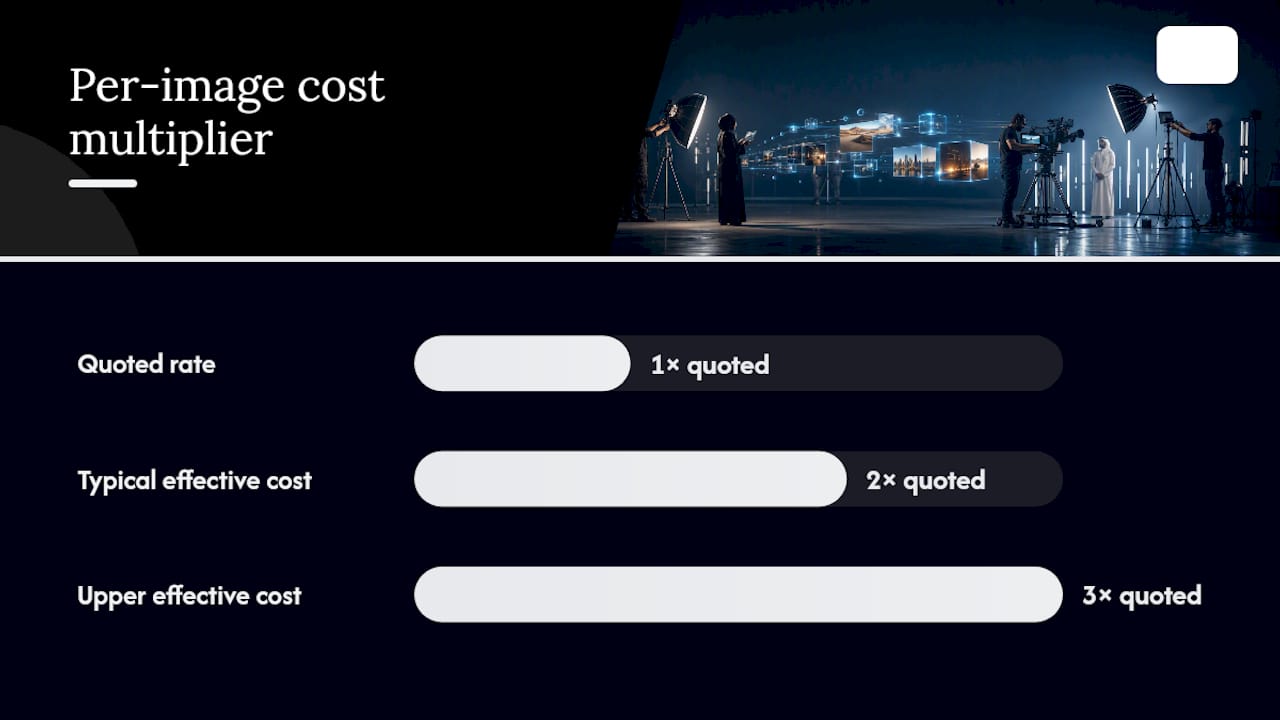
The overruns that actually hurt come from a shorter, sneakier list: reshoots, usage renewals nobody scheduled for, schedule slip on location days, an extra round of retouching the client didn’t ask for until proofs came back, sample shipping both ways, and the internal team hours spent managing all of it. Effective per-image cost commonly runs two to three times the quoted rate once those items land. Presenting contingency and markups as their own visible line, rather than folding them silently into a padded day rate, is what makes clients accept them without a fight.
A Copy-Ready Sample Budget by Production Scale
Line items scale differently depending on whether you’re running a lean single-location shoot or a multi-day campaign with global usage. The ranges below reflect entry, mid, and premium tiers for a one-day commercial shoot with a single model.
| Line Item | Entry | Mid-Tier | Premium |
|---|---|---|---|
| Model day rate + usage | $500–$1,200 | $1,500–$3,500 | $4,000–$10,000+ |
| Photographer | $800–$1,500 | $2,000–$4,000 | $5,000–$10,000 |
| Studio/location | $300–$700 | $800–$2,000 | $2,500–$6,000 |
| Hair & makeup | $400–$700 | $700–$1,200 | $1,500–$3,000 |
| Stylist & wardrobe | $400–$700 | $700–$1,200 | $1,500–$3,000 |
| Crew & assistants | $500–$900 | $1,000–$2,000 | $2,500–$5,000 |
| Equipment rental | $300–$600 | $600–$1,500 | $2,000–$5,000 |
| Post-production (per image) | $25–$50 | $50–$150 | $150–$400 |
| Catering/transport | $150–$300 | $300–$600 | $600–$1,500 |
| Production fee | 10% | 12% | 15% |
| Contingency | 10% | 10% | 10% |
A mid-tier one-day shoot core production cost typically lands between $2,500 and $8,000, and once retouching, coordination, and the inevitable reshoot are factored in, treat that as roughly half your realistic all-in number. On a 20-image mid-tier deliverable set, dividing the all-in total by image count usually lands cost-per-image in the low to mid hundreds USD, a useful sanity check before you send the quote.
Why ANT Favors Line-by-Line Transparency Over Flat Quotes
Itemizing every production charge, rather than folding costs into one flat number, is the single biggest lever a brand has against budget disputes. When talent, usage, crew, and post-production sit on separate lines, approvals move faster because finance teams can see exactly what they’re paying for, not just a total they have to trust blindly. It also protects the production side: a client who understands why sample shipping costs what it costs rarely disputes it later. For more on the mechanics behind specific lines, our casting brief resources and campaign timeline guide go deeper into the planning steps that keep a budget honest from the first draft.
— ANT
Let ANT Management Handle the Booking While You Manage the Budget
Building an accurate production budget breakdown is only half the job. Executing it without cost creep depends on who’s booking your talent and running your production day. Talent booking, usage and licensing support, on-set production coordination, and talent development programs are often managed under one point of contact rather than multiple separate vendors.
That single point of contact is the real advantage over piecing a shoot together vendor by vendor: fewer handoffs mean fewer surprise line items showing up after the quote is signed. ANT Management operates across Europe, the US, and Asia, with regional support including Kuwait, Saudi Arabia, and Qatar. If you’re scoping a shoot and want a talent partner who presents costs the way this article just described, itemized and negotiable rather than bundled and vague, start by reaching out through ANT Management’s main site to talk through your project inputs and get a real quote against them.
Sources
- The Guide To Pricing Commercial Photography Part 2: Production Costs | Fstoppers
- What a Fashion Photoshoot Actually Costs (2026 Breakdown) | Astria articles
- The Real Cost of a Fashion Photoshoot in 2026
- The True Cost of Fashion Photoshoots in 2026 (With Calculator)